
Making Audio Magic with Melissa Kaitlyn Carter
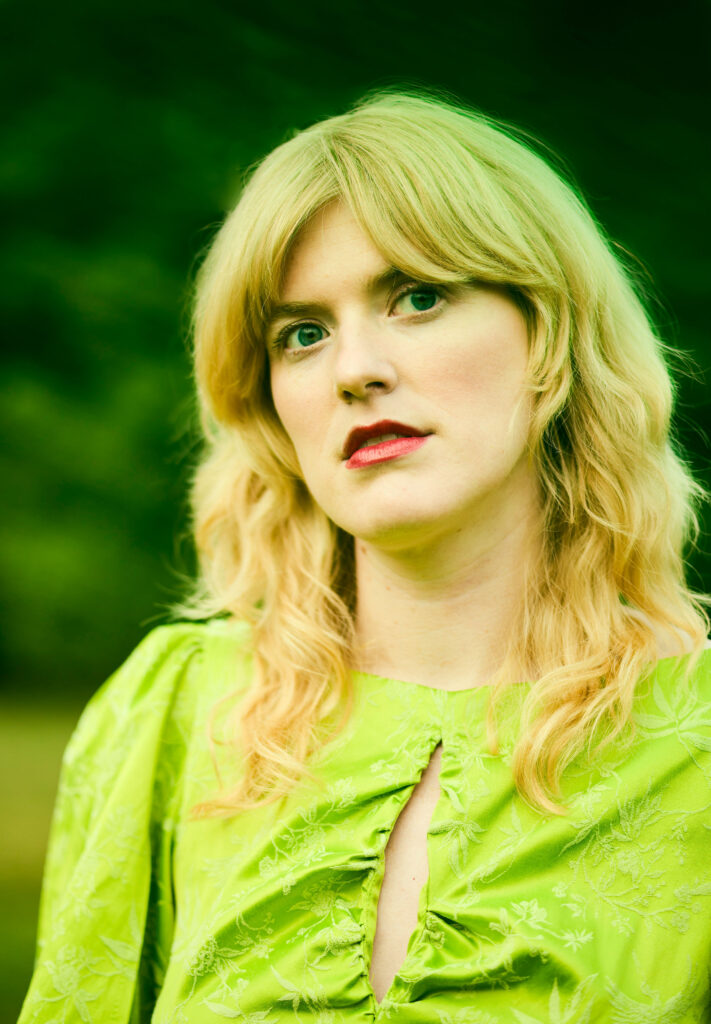
Welcome back to Honing In and to my interview with Melissa Kaitlyn Carter.
Today’s episode features brand new theme music, created by Melissa herself!!!
Melissa Kaitlyn Carter is a Brooklyn-based musician, performer, and creative facilitator. She is the frontwoman of the indie-folk project Hattie, described as “achingly honest and full of heart.” As a performer, Melissa has worked across the United States with artists including Mary Zimmerman and The Bengsons, and in theaters such as Berkeley Repertory Theatre, Z Space, Joe Goode Studio, and The Huntington Theater. She has been an artist-in-residence at The Sable Project and Paul Dresher Ensemble Artist Residency. She has received funding from The Awesome Foundation and Musicians Foundation, and was a Music/Sound Artist Fellow for the New York Foundation for the Arts.
She is the owner and operator of Making Audio Magic, where she teaches songwriting, music production, and DIY-At-Home Recording. When she’s OOO, she aims to spend her time practicing yoga, learning about herbs, reading tarot, and bathing in nature. Learn more about Melissa’s musical projects: Hattie & Rosalind.
Here are some of the things Melissa and I discuss:
- How our early creative training influenced our artistic journeys
- Melissa teaches Kate different audio components in her favorite songs (this was so fun!)
- Learning new things about yourself through making art
- Melissa’s act of generational healing through her musical project, Hattie
- The magic that happens when we trust our relationship to creativity
Resources & Links:
- Melissa’s website
- Melissa’s newsletter
- Melissa’s bands: Hattie and Rosalind
- The North Node
- Elizabeth Gilbert’s talk about “having a genius”
- Julia Cameron’s The Artist’s Way
- “Nobody” by Hattie
Transcript
Kate Henry [00:00:28]:
Hi everybody. Welcome back to Honing in. I am Dr. Kate Henry and today I am sure we’re gonna have a fun interview because I’m interviewing Melissa Caitlin Carter, who’s a Brooklyn based musician, performer and creative facilitator. She’s the front woman of the indie folk project Hattie. Described as achingly honest and full of heart, which I agree with, being a Hattie fan. As a performer, Melissa has worked across the United States with artists including Mary Zimmerman and the Bengsons, and in theaters such as Berkeley Repertory Theater, Z Space, John Good Studio, and the Huntington Theater.
Kate Henry [00:01:35]:
She has been an artist in residence at the Sable Project and Paul Drescher Ensemble Artist Residency. She has received funding from the awesome foundation and Musicians foundation and was a Music and Sound Artist Fellow for the New York foundation for the Arts. She is the owner and operator of Making Audio Magic, where she teaches songwriting, music production, and DIY at home recording. When she’s out of office, she aims to spend her time practicing yoga, learning about herbs, reading tarot, and bathing in nature. Thanks so much for joining me. I’m so excited to talk to you about all things today, not just audio.
Melissa Kaitlyn Carter [00:02:18]:
I’m excited too, and I loved hearing that end of my bio. I was like, yes, I do aim to do those things, especially living in New York. It’s like, can I bathe in nature more? But yay.
Kate Henry [00:02:29]:
Do you get to bathe in nature often? Or do you count bathing in nature as like walking through a park? Or does it need to be like an all or nothing kind of thing?
Melissa Kaitlyn Carter [00:02:40]:
I definitely count Prospect Park. I have to. And also, it’s Olmsted’s best work.
Kate Henry [00:02:46]:
I don’t know New York very well at all, but I talk to so many people who live there and love it. So that sounds lovely. Now I feel like we’re doing a little bit of a quantum time leap with recording this episode and chatting. And when this episode comes out, folks are actually going to hear you in the new theme music that you’re creating and I’m so freaking excited about that. I’m going to talk to you a lot about making music today and making things like theme songs for podcasts today. But before I get into that, I always love to open up this podcast asking folks how they feel about like a capital P Project and I’m curious for creatives if that’s a helpful framework. Is that a framework that feels too restrictive? Do you use it when you’re thinking about creative work or professional work, or is there like an entirely different sort of container or word or approach that you use for creating?
Melissa Kaitlyn Carter [00:03:46]:
Yeah, I think my definition of project as a term really shifted when I started the North Node run by Michelle Pelizan.
Kate Henry [00:03:56]:
I see you in there sometimes. I see your little initials, and I don’t know if you see kh, but I see you. I listened to a recording recently. I don’t always make it, but I saw you and I saw you like ask a question and Michelle talking to you and I was like, I know you.
Melissa Kaitlyn Carter [00:04:12]:
Yeah. So Michelle talks about projects and I think at first or prior to being in the North Node, which is for those who don’t know, it’s a program for entrepreneurs, but also creatives and squiggly brained people, as Michelle has coined, to organize around their projects and getting shit done in their lives that they want to do. So that might be a business, but it might also be the way that you kind of live your whole life. She talks about doing laundry sometimes, like when it comes to projects. But for me that really shifted my relationship to project itself, the term project. And so I think of Hattie, my musical project, as an entire big umbrella project. An album would be a project, a song, interestingly, I don’t know if a song would be a project, but it is, I guess if you really break it down. So I think of it as in terms of the day to day.
Melissa Kaitlyn Carter [00:05:17]:
I think I am relating to my creative work more as a practice. But I’m very project driven actually in some regards. I do well with the deadline. Sometimes I freak out around deadlines, and this is where I’m really interested in your work for a while. Like not knowing that and I’m more self-diagnosed but not knowing that I’m like a bit ADHD and not neurotypical. I was like in school and then beyond school I would have a project, and I would just procrastinate, not do it, avoid the hell out of it. And then like a couple days before I would be like fuck and then race to get it done. So it’s helped for me to have my projects but also continue my practice on a consistent basis or as consistent of a basis as I can.
Melissa Kaitlyn Carter [00:06:23]:
And by my practice I mean writing music for podcasts. And I, I really mean like, yeah, my practice of being a singer and guitarist and writing and, you know, getting better at making music. But if I have that going, then I’m kind of less avoidant hearing you.
Kate Henry [00:06:43]:
Talk about this also, like, it’s not lost on me thinking about practice as a musician. Like, I remember when I, like, learned to play the clarinet when I was, I don’t know, 12, or, like, learned to play the piano when I was, like, 6. But I didn’t stick with it because I didn’t want to practice.
Melissa Kaitlyn Carter [00:07:01]:
Right.
Kate Henry [00:07:02]:
So, like, we just kind of, like, dissected project a little bit. But I’m curious, like, thinking about practice, do you feel like practice is showing up and doing the work not necessarily tied to, like, a direct outcome or like there’s like, an exchange value for that? Or does practice for you as a musician also mean, like, creative filling the cup or, like, spiritual experience or just like, honing skill or keeping up to date or muscle memory or something like that? Like, a bit about, like. Does practice have an extra meaning because you’re a musician?
Melissa Kaitlyn Carter [00:07:34]:
Definitely. Definitely. I started my creative career as an actor, and practice as an actor looks really different. Actors who I really admire take practice into their home studio and, for example, they’ll get a script and they’ll really break down beat by beat what their actions are. So, like, what they’re doing in a scene, for example, and they’ll get really into character. And it’s not that I wouldn’t do that, but I really loved how collaborative acting was. And the practice itself was about getting in the rehearsal room with other performers and with the director and making the thing. And so when I shifted to making music primarily, I was in bands kind of from the outset of that shift.
Melissa Kaitlyn Carter [00:08:27]:
But it was hard for me to adjust to, like, the solo practice component. And like, when I was a kid, also learning piano or learning cello or learning guitar, I avoided practice like the plague. So I think it helps me. At its best, it’s a spiritual experience. But if I’m being honest, I don’t always get into that flow state. And it helps me to set many goals with my practice. So something that I was doing earlier this year was with Ashley Jones. She has made this magnetic habit, bingo practice, where you make a bingo card of the habits that you want to have in your day.
Melissa Kaitlyn Carter [00:09:19]:
And so I would say, sing for five minutes, play guitar for five minutes, write one section of a song. People talk about this a lot. But making these goals, like micro, has helped me have a more consistent practice because forever, I guess, practice for a long time was a bit more spiritual in a sense of Like I would be called to sit down and play guitar or, or called to sit down and sing, write something. But it was so sporadic because I had to wait to be called by creativity itself. And so it’s kind of like practice has to be tied to project or goal or some sort of kind of greater understanding of what I’m making.
Kate Henry [00:10:10]:
Mm, that’s lovely to hear. And I relate to what you’re saying around the like, micro goal. Like I have in my app that I use for tracking habits, three minutes of spiritual practice and it could literally be anything. And like, so if I had therapy, I checked that off easily. Or if I like talk to a friend and it was nourishing, I get to check that off. Things that are like, to interpret like that. But I also, one of my things is like, did you go outside today measuring in like this small way? But you’re like, no, this is going to be like nurturing to me. Wow, that’s cool.
Kate Henry [00:10:42]:
It was fun to pick your brain about practice there. And you told me a little bit here around like having been an actor before and then shifting primarily or maybe fully to working with music. And I’ve heard you talk about your practice now, but I’d love to know a little bit more about like, how did you get here? What was your journey to becoming a musician and a songwriter? Is this something you always knew you wanted to do? Is it something like that you did for fun? And then you were like, oh, I want this to be my career. Like, tell me a bit about the evolution of that.
Melissa Kaitlyn Carter [00:11:18]:
I’ve always written songs for as long as I can remember. And I’m 35, so I grew up with the Spice Girls when I was very young, and I was obsessed with them. I was like, I’m gonna be a pop star from like a very, very young age.
Kate Henry [00:11:33]:
Which one did you identify with? I’m 39, so I was slightly older, but also grew up with the Spice Girls.
Melissa Kaitlyn Carter [00:11:40]:
You know, I would play Spice Girls with my friends every day and I was a different one every day.
Kate Henry [00:11:45]:
Look at you. That’s probably like reflective of like a really balanced young mind or something.
Melissa Kaitlyn Carter [00:11:52]:
But also, I did. I remember I had some friends who would pick.
Kate Henry [00:11:56]:
They’d be like, you’re Sporty Spice today.
Melissa Kaitlyn Carter [00:11:59]:
And I’d be like, okay.
Kate Henry [00:12:02]:
I was a redhead. I mean, I still am, but when I was little, I had orange, red hair. So I feel like I was like Ginger spice because of there was not that many red-haired people.
Melissa Kaitlyn Carter [00:12:12]:
So, you know, now that you say that I did like Ginger the best. And I also liked Scary Spice, But Ginger I identified with a lot. But I would, you know, default to Baby Spice because I was so blonde. But I didn’t feel that I was Baby Spice.
Kate Henry [00:12:32]:
This is fascinating.
Melissa Kaitlyn Carter [00:12:34]:
Like, rabbit hole, like, mini research project.
Kate Henry [00:12:38]:
Survey everyone, write in. Did your hair color make you be a certain Spice Girl?
Melissa Kaitlyn Carter [00:12:47]:
Oh, my God. So I was, like, writing songs forever, like, from that point, and also making a new band every week. Then I got into theater, musical theater first, and I fell in love with it. I really loved the community aspect of it. And I think there’s something about the pressure of having to decide what you want to do with your life from a young age, especially growing up. I grew up in Washington, D.C. area and growing up there, but I feel like this is many places in the States and beyond. By the time I was 13, people were like, okay, you’re an actor.
Melissa Kaitlyn Carter [00:13:28]:
And I very much felt like an actor, loved being an actor. I still identify with that part of myself I was sculpting myself to. And I was primed to go to school for acting and not question that. And I remember when I was a senior in high school, I was like, I really wish that I could apply for music school, but I haven’t done any music theory courses.
Kate Henry [00:13:56]:
Oh, wow. I’m amazed that anyone would do that in high school. But maybe in D.C. yeah, in D.C.
Melissa Kaitlyn Carter [00:14:05]:
It was like you had to do AP music theory and Honors Jazz Band, and I was an honors jazz band, but I was mostly doing theater. I was entirely doing theater. It was my whole life, and again, I loved it. And still some of my best friends are either from my theater program in high school or from theater school that I went to in undergrad. And also, for me, I didn’t realize that I kind of thought everybody wrote songs as a way of processing. I was like, this is normal. And it took me a while to be like, no, not everybody does that. This is something that’s special to you, and this is something that you are channeling, that maybe it’s time to share with the world, but that took me time.
Kate Henry [00:14:57]:
That’s really special to hear you talk about that. Do you feel like you, at that point when you were like, oh, this is not something that only, or this is not something everyone does? Did you have a reflection at the time to be like, I’m quite talented at this? Because what’s also coming to my mind is that I had a similar experience growing up where I was very into painting and very into poetry in high school and middle School. And there was a point at which I decided I have to pick which one of these I want to focus on and get good at and train in. And it’s harder to train to be a painter than to train to be a poet. This is what I thought when I was like 16. So at that point I was like, okay, from here on out, I just optimize my. I mean, I loved it. I wanted to write poetry and read poetry, but from that point on it was like poetry camps, poetry degrees, going to get my mfa.
Kate Henry [00:15:49]:
Even as a teenager I was like, must be best. And for you to be like, well, I didn’t take this particular class in order to do this. So I’m curious, did you have reflection at the time to be like, I’m really talented at this?
Melissa Kaitlyn Carter [00:16:06]:
I did from outside sources. I didn’t see it for a long time. I felt very behind and in some ways, I was never behind. But I didn’t have all of the tools that would make it easy for me to write a song and put it out. There’s a lot that goes into it, but that’s really what drove me to start making Audio Magic is because for many years I at least felt and thought that I was blocked because I was super into the artist way and that type of. I mean, God bless Julia Cameron, I love her. But I now don’t know if I agree with the notion of being blocked. I think there were parts of me that were trying to protect myself from being vulnerable or from being judged because it felt very raw to put my music out without totally having all of the tools since I wasn’t formally educated and coming from acting and having all of the tools and more and all of the accolades and being like, yeah, I know that I’m really good at this and having my ego really tied up in that because I think performance can be very ego oriented and ego driven.
Melissa Kaitlyn Carter [00:17:35]:
And I don’t think that that’s a bad thing inherently. But then to switch to something which I had gotten really very little affirmation in and to just be like, but this is the thing that I’m deeply called to do. And it’s not about that was hard for me as a 20 something especially. So I wish that I could say that I immediately believed in myself, but that’s really been my path to reorient how I practice being an artist and therefore a musician in my case.
Kate Henry [00:18:12]:
Do you feel that, like you mentioned making Audio Magic here and like creating your business where you’re supporting other folks in making music and I’m sure that your individual experience, like as you said, feeling like you didn’t have all of these traditional tools or traditional training know, like to have everything already scaffolded to make it very like easy to be like, yes, I’m super comfortable and here’s all of my songs, right? Maybe that was not your experience, but with Making Audio Magic, you approach this. I mean it’s literally called Making Audio Magic. And I love the language you use. Thinking about it like songwriting as spells, which I’ve heard you mention before. And this magic, when I think of is just like this beautiful faith in creatively bringing something to life, right? There’s like faith in, I don’t know, this is just personal experience. Thinking about magic is just this like beautiful putting faith in like a creative process to generate whatever sort of result even it was just a result in my own self esteem or like nervous system regulation. So could you tell us what you see as the relationship between music and magic?
Melissa Kaitlyn Carter [00:19:32]:
I think the practice of engaging in any art form has to include for me, trust in the unknown. Or another way of saying that is trust in your relationship to creativity itself. And to shout out Julia Cameron again because she’s really informed my creative practice in a lot of ways. She talks about the notion of having muse. Elizabeth Gilbert also talks about this in her very well-known TED talk from, I think it was like 2011 or something about having a genius rather than being a genius. I think the magic comes from trusting that you’re not doing it all by yourself. And so the way in which my experience of songwriting being a spell has gone down is like I’ve written a song, for example, my song Nobody, which is a Hattie song. I wrote that song.
Melissa Kaitlyn Carter [00:20:42]:
And I was like, yes, this is about falling in love with this person who I’m dating. And then after finishing that song, I was like, this is a song about being love bombed and feeling like I’m nobody in the relationship. It’s not good to say that I’m nobody in a relationship. I think what I thought I meant was like, I’m giving myself over to this, but it’s like I don’t ever want to lose myself in a relationship that much. I want to bring myself and make it about both of us and feel that I’m full in relationship to that person, you know, so that was a spell in that the song was like, hey, pay attention. This is not good. But I didn’t realize it until later.
Kate Henry [00:21:36]:
That is real magic. I love interviewing well, I just love doing this whole Freaking podcast to hear how folks make art in ways that I just am not doing. And that is so special and direct. I’m going to ask you a lot more about the work that you do with clients, but do you find that the folks who you’re working with also have similar sort of like, oh, my gosh, realizations through the creating that they’re doing, or, like, reflections on having something that they know at the end of the process that they didn’t at the start of the process, like, something that emerges for them? It’s kind of an abstract question, but I am interested in this idea of, like, what gets alchemized or something new that’s created or reflected.
Melissa Kaitlyn Carter [00:22:36]:
Yes. I would say most of the students who I’ve worked with are in the phase of their process where they’re either just beginning or they’re beginning and they’re learning a bunch of new skills. For example, I just ran a class called let’s Make a Demo, and it was pretty technical because it was like, how do you use a recording software? How do you record yourself at home? How do you plug in your mic? And so we’re not really getting into the magic. We’re getting into setting the container. That being said, I felt like the songs that the students in that class created, it’s like alchemy. I don’t know. It feels like alchemy. I was gonna say they were alchemizing something, but I don’t know what I would say.
Melissa Kaitlyn Carter [00:23:32]:
The songs in the class were really deep and really vulnerable. So it’s like, I can’t say, I guess, if it’s a spell for them 100%, but in the sense of, are they learning something new about themselves that they didn’t know before? Because also, I think this takes time. It’s like, maybe in a year, they’ll be like, oh, this is what this was really about for me. But I’m getting the songs fresh. And usually that part of the process, in my experience, it takes some months to even a year or so to receive a new meaning about your song than what you think it is at the outset.
Kate Henry [00:24:15]:
What is your experience or, like, reaction to creating a song and putting it out there and being like, this is how I feel about this song. This is what it means. And then to have reception from listeners who are like, this entirely different thing is what it means to me. Or this is what I think about this. Or, like, you had that experience with writing. Nobody. Right. But I’m curious, like, from the audience or listeners, like, what that’s been like for you is the creator to have folks share back to you if things resonated with them in a different way than you intended?
Melissa Kaitlyn Carter [00:24:53]:
Yeah, I think people really resonate with not only the lyrics, but often people are resonating with the music and the composition itself or the production. That’s usually the first point of feedback that I get is what people love about what it feels like to be immersed in the song. And I’m somebody who I think coming from being an actor, I’m so story driven that I’m always hearing the lyrics first. But I think a lot of people hear the music first and that’s always cool because it’s cool for me to be like, okay, what works about this? What are people loving? Like, what do I want to do more of for me? But also like, what’s working for my audience.
Kate Henry [00:25:36]:
I always butcher this name, which is wild because it’s my favorite band. But like Bon Iver, I really like this. Well, the new album is good, but I like the two albums before that are just like doing such weird shit. And I’m like, this is so satisfying. And like, as a non-musician myself, I love mashups of songs. Like, I love when like. And not knowing what any of the terminology is or like, even like when I shared with you when. When I hired you to write theme song for Honing in, I was like, ooh, you asked me to share inspirations with you and I was like, I like this second to this second.
Kate Henry [00:26:10]:
I like this thing. And like, I don’t know what the thing is, but I’m able to be like, I really like, you know, when this kind of thing happen as the listener. And so I imagine for you as the person who knows all the technical stuff that’s like, ah, yes, Kate likes blah blah, blah or like whatever it is. That’s so cool to me as a non-musician to know that my level of it. I can communicate that to you when we’re both saying similar things. But like, you have all this extra knowledge around what it means. Does that resonate or is that just I’m projecting and assuming?
Melissa Kaitlyn Carter [00:26:46]:
Definitely. I mean, for example, with the Honing in theme song, you sent me Noah’s Ark by Coco Rosie, and I was like, okay, in this song there’s a sample of a breakbeat.
Kate Henry [00:26:59]:
I don’t know what that is, but it sounds like something I’m like, yes.
Melissa Kaitlyn Carter [00:27:02]:
I do like the drums. The drums in that are some sort of sample. And that was really an anchor as well as heartbeats. Those are electronic drums. But I was like, okay, we’re going in the direction of electronic drums. But Heavy Bend by Big Thief that you also sent me, that’s much more acoustic and homegrown feeling. And it’s a little bit weird in the sense of, like, they have. You know, even though it’s very acoustic, it’s also got some interesting production, like, quirky production.
Melissa Kaitlyn Carter [00:27:40]:
So I was like, okay, we’re going for something that feels, like, homemade, but also with electronic drums.
Kate Henry [00:27:49]:
This is so cool. I feel like when we get our numerology or our tarot or something read. I would pay you to be like, here’s all of my favorite, favorite songs. Like, tell me what kind of stuff I like. Because I think I like Folktronica. And, like, it took me a long time to even be like, I like all of these bands. What does that mean? So anyways, that would be a very. Maybe you’re like, that sounds terrible.
Kate Henry [00:28:12]:
I don’t want to do that. But I would love that as someone who consumes music, to be like, tell me what these things are that I like. What is my reading?
Melissa Kaitlyn Carter [00:28:23]:
Or, you know, I love that. I’m also like, I need to call Hattie Folk Tronica, because I think that’s what it is.
Kate Henry [00:28:30]:
That checks out for me. I do start when I’m listening to music being, like, really into, like, the weird, cool stuff or, like, the way that things, like, a schism in the music or, like, the overlay of different sounds we don’t expect. And then I go to the lyrics, like, Big Thief’s song, Vampire Empire is on a. And I’m like, every time I listen to it, I’m like, oh, like, my spouse had an ex once. And, like, this is such a good description of her. Or, like, just, like, getting into the meaning of the words and then being like, oh, that’s such a smart rhyme or a smart slant rhyme or something, you know? So that’s, like, the depth of my, like, not connoisseur, but, like, the, like, delectable part of it where I’m, like, noticing the things, and I’m like, ooh, that was cool. That was fun. That was witty.
Kate Henry [00:29:19]:
Do you have a similar experience when you’re creating. Are you like, oh, that’s so fun, that thing I just did in this song that I’m making.
Melissa Kaitlyn Carter [00:29:26]:
Definitely. Definitely. Yeah. One of my newer songs called Dog and Bone, which is not out yet, actually, this is another example of the song being a spell, because I was like, what is this line? Rumor has it you were just a Dog that ate my bone. And then I realized it was about a friendship that I really value, but that is not currently in my life right now. And so it was like that processing of that tension. And at first, I was like, that’s such a weird line, but I love it. And then I was like, oh, that’s what it’s about to me.
Melissa Kaitlyn Carter [00:30:07]:
And then it helped me also, like when I have those moments, it helps me really hone in on writing the song.
Kate Henry [00:30:14]:
Yeah. Is your experience when you’re writing songs, like for like if you’re songwriting, doing solo work or if you’re working with bandmates, I’m always curious when I talk to musicians, like, is the experience similar or different for you? If you’re doing something that you know you’ll be co creating with others, or like, if you’re creating something that will get like contribute like vocals or something to contribute to someone else’s project, or if it’s just something mainly solo, how does your experience, does it differ? I guess if it’s something you’re doing mainly solo or if it’s something you’re co creating with fellow musicians, I think it definitely differs.
Melissa Kaitlyn Carter [00:30:53]:
I think every project is an entity unto itself and project being musical project. And so these projects have their own energy and also, they’re asking different things of me. So Hattie, my solo project, which is not entirely solo because I collaborate with a ton of people on it, it’s named after my great grandmother. And one of the things that I say about it most is it’s, for me, it’s an act of generational healing. And what I mean by that is Hattie was my grandmother’s mother on my mom’s side and she was the first woman to come over to the States and she came over during the Spanish flu and lost her mom and had to take care of her siblings and became a mother after that and was very creative, but didn’t have the outlet to be creative, I think in all the ways that she wanted to. And my grandmother then was a sculptor, and she came into being a sculptor later in life. So she had five kids and then she divorced my grandfather or they got divorced and she moved to Colorado and built an art studio and just started making these beautiful sculptures. And she always had a lot of, according to my mom, a lot of self-judgment around her art.
Melissa Kaitlyn Carter [00:32:39]:
So this project for me has been like, how do I really move through? I feel like this self-judgment that’s been passed down to me by generations and just do the thing and love doing the thing as much as I can. So that is a very different way of making music than my project Rosalind, which has been a trio. And the way that we write is there’s a lead writer on each of the songs, but then we come in and we collaborate, and it’s all three-part harmony. So you’re writing pretty differently when you’re writing for three voices rather than one. And then I was in a project called the Long Run before that, and that was a folk band through and through. And so that changed kind of my style of writing. So it can really depend on the project.
Kate Henry [00:33:37]:
That’s very cool to hear you say that The Long Run changed your style of writing. Do you feel like your style of writing or like, creation of music, is it like a sort of. Not like, bricolage, but is it sort of like if we were to, like, listen to what you’ve created three years ago or five years ago or 10 years ago, like, could you think about, like, oh, these not just the influences you had, but, like, do you feel like that that is something that, like, you’ve been shifting and growing or like, how did. Like, tell me a bit about, like, the. I’m sure it’s like a not linear, like a pretty, like, just like, natural thing. So, yeah, I’d love to hear a little bit more about how you feel about the way that your maybe, like, creation has shifted or grown or, like, influences on that.
Melissa Kaitlyn Carter [00:34:28]:
Yeah, I think a big part of it for me is that in the last 10 years, I have been in now three main musical projects, and I’ve also been through graduate school where I studied music production and audio engineering. And so in that time in grad school, the way that I started writing was so much more production heavy. So that means writing a song but then finishing writing it by recording a demo and producing it in a recording software, which is very different than how I was starting out. Because, for example, to go back to the Long Run, that was all about just writing the song and then coming to the band and learning how to play it live together and then going into the studio and recording it. But it was only acoustic elements. And now I feel like my practice is shifting more back to what can I play, what can I play live, what can I play solo? And does the song have legs as an entirely acoustic song? Even though I know in my heart that it’s Folktronica. Yeah. And there’s like, all of this production that I want to add on top.
Melissa Kaitlyn Carter [00:35:46]:
So that’s kind of where I’m at, is I’M getting really into, like, playing and singing. I also had a vocal surgery in 2024, and that changed my practice a lot. But now one of my main focuses is, like, keeping up my vocal health. And so part of that is having a consistent or almost every day vocal warmup practice. And then when I get into that, I just want to play. I don’t want to sit down and, like, be at my computer producing. I want to have my instrument in my hands. And so it’s kind of come almost back to my roots of just playing.
Melissa Kaitlyn Carter [00:36:31]:
Hmm.
Kate Henry [00:36:33]:
Thanks for answering that question. I, like, always have somatic experiences when I’m interviewing folks, and I just feel very warm and a lot of gratitude right now talking to you about this stuff. So thanks for going behind the scenes and sharing how this feels for you. It’s like, such a treat. It’s not a masterclass, but it’s just like, what a beautiful glimpse and getting to try on and hear how this feels for you. You describe it really well. So you just talked about going back to school and learning more about production. And we’ve been talking about your own music that you create.
Kate Henry [00:37:16]:
But a lot of what you do is also teaching and mentoring and supporting clients. So I’d love if you could talk us through your teaching offerings. I know there’s multiple things that are encompassed by Making Audio Magic and tell me a bit about the teaching side of it.
Melissa Kaitlyn Carter [00:37:36]:
Yes, I love teaching and to go back to my family lineage, like, everybody in my family is a teacher. So for a while I was like, I’m not an educator too. I’m an artist. And now I’m like, I’m a teacher. I love it. So in Making Audio Magic, the first offer to, I would say, for those who have never written a song before is called songcraft. So that’s all about the nuts and bolts of how to write a song, but it’s also looking at how do we channel songs, so how do we get out of our own way and collaborate with creativity itself and just enjoy the process of writing as much as we can, Even if we feel like we’re kind of moving through muck of like, how the heck do I play piano? And I offer tools for people who don’t play instruments. So there’s some cool online resources or apps that you can use.
Melissa Kaitlyn Carter [00:38:36]:
And then there’s let’s make a Demo, which is about as it sounds, making a demo and a demo recording is. We know demos because artists will release them from time to time. But it’s the rough recording. Your first Recording before you go into the studio often. But I think what’s cool about demos in this day and age is a lot of folks are recording everything from home. And a lot of my students who come to me to work privately or in class together want to learn to record themselves at home. So that demo building class is the first step. And then I work with students one on one a lot of the time on songwriting.
Melissa Kaitlyn Carter [00:39:23]:
But also, I have an offer called let’s make an ep, which right now is just a one-on-one offer. Because it takes so much, we have to really just work together to focus on getting it done. I think in a class it would be spread a bit too thin. So we focus on doing three songs over the course of 10 lessons. So usually students come in with those songs written to an extent, and sometimes students come in with them already recorded a little bit, but it has depended from student to student. And then at the end of that process, I mix those three songs and then you can put them out on streaming platforms, which is my favorite offer of all. That’s kind of like the whole arc goes from Songcraft all the way to let’s make an ep. And I’m this year filling out with some other one-off offers.
Melissa Kaitlyn Carter [00:40:19]:
I have a free workshop called Songs are Spells.
Kate Henry [00:40:26]:
Wow, this is cool. I hope that there are people listening who are like, I want to hire Melissa for this. Do you find that folks who reach out to work with you, are they like, I’ve been wanting to do this for a while and I finally like hype myself up to do it, or I’m finally ready to commit to myself in this way, or not commit to I’m gonna do the thing, but put in the time and money and effort to their own creative practice. Yeah. I’m curious about when folks generally do reach out to you in their process.
Melissa Kaitlyn Carter [00:41:01]:
For Songcraft, I’ve had students who want to learn to write a song for fun. I also ran a level 2 of Songcraft last year, and that was more students who were like, yeah, I’m ready to commit. I want this to be a part of my day to day. And if not my day to day, I want it to be a part of my creative expression. A lot of students who sign up are also copywriters or therapists or creative in some way. Music lovers for sure. But it’s really just so beautiful to see the students who I work with just get deeper and deeper into their practice and to get more and more confident at recording or just at being able to sit down and write.
Kate Henry [00:41:53]:
I’d like to close this out by asking you what’s one thing you’re honing in on right now?
Melissa Kaitlyn Carter [00:42:00]:
I am honing in on writing an album this year.
Kate Henry [00:42:05]:
Yay. I can’t wait.
Melissa Kaitlyn Carter [00:42:07]:
Which is also like, shh.
Kate Henry [00:42:09]:
No pressure, no pressure.
Melissa Kaitlyn Carter [00:42:11]:
Don’t tell people that because there’s so many.
Kate Henry [00:42:13]:
Sorry. You just told tons of people.
Melissa Kaitlyn Carter [00:42:17]:
But I actually feel happy and confident about telling people. Sometimes I’m like, I want to keep it to myself, but with this project, I feel like it’s happening. I already have a number of songs that will go on the album, so.
Kate Henry [00:42:30]:
Oh, that’s excellent. You’re partway there. I can’t wait to listen to this album and tell people about it when it comes out. Could you tell us where folks can find you online and things that you have coming up? I know when this episode comes out, some things might have already been done, but what’s coming down the line for you and what should we keep an eye out for in addition to your new album?
Melissa Kaitlyn Carter [00:42:52]:
People can find me on Substack at Making Audio Magic and at Hattie and Friends. My websites are hattiemusic.co and making audiomagic.com and I’ll be offering courses for this entire quarter in songwriting and in music production. So you can head to my website to find more about that. And I’m on all the streaming platforms. Check out Rosalind, check out Hattie, and definitely get excited. I guess when you hear this, you’ll hear our new theme song. But I’m on various podcasts in the ether. Yes.
Kate Henry [00:43:40]:
And I’ll link to all of these things in the show notes, too, so people can hear and see and easily access all of it. Thanks so much for talking to me and teaching me and going behind the scenes with me today. I feel not like a total musician, but like a musician, you know, Like. Like I know more about it. I know what a demo is. Yeah, of course.
Melissa Kaitlyn Carter [00:44:03]:
I mean, that’s my whole thing, too, is no gatekeeping.
Kate Henry [00:44:08]:
Hell, yeah. That is a big, important thing here at Honing In, and so is DIY, so I’m thrilled. All right, thanks so much, Melissa.
Melissa Kaitlyn Carter [00:44:18]:
Thanks, Kate.
Kate Henry [00:44:35]:
Yeah, I know. I’m honing in. Thanks so much for joining me. You can learn more about honing in and my work as a productivity coach on my website, katehenry.com.
Newsletter
Sign up below to access my free newsletter, Tending with Dr. Kate Henry.