
Liberating Yoga and Mindfulness with Harpinder Mann
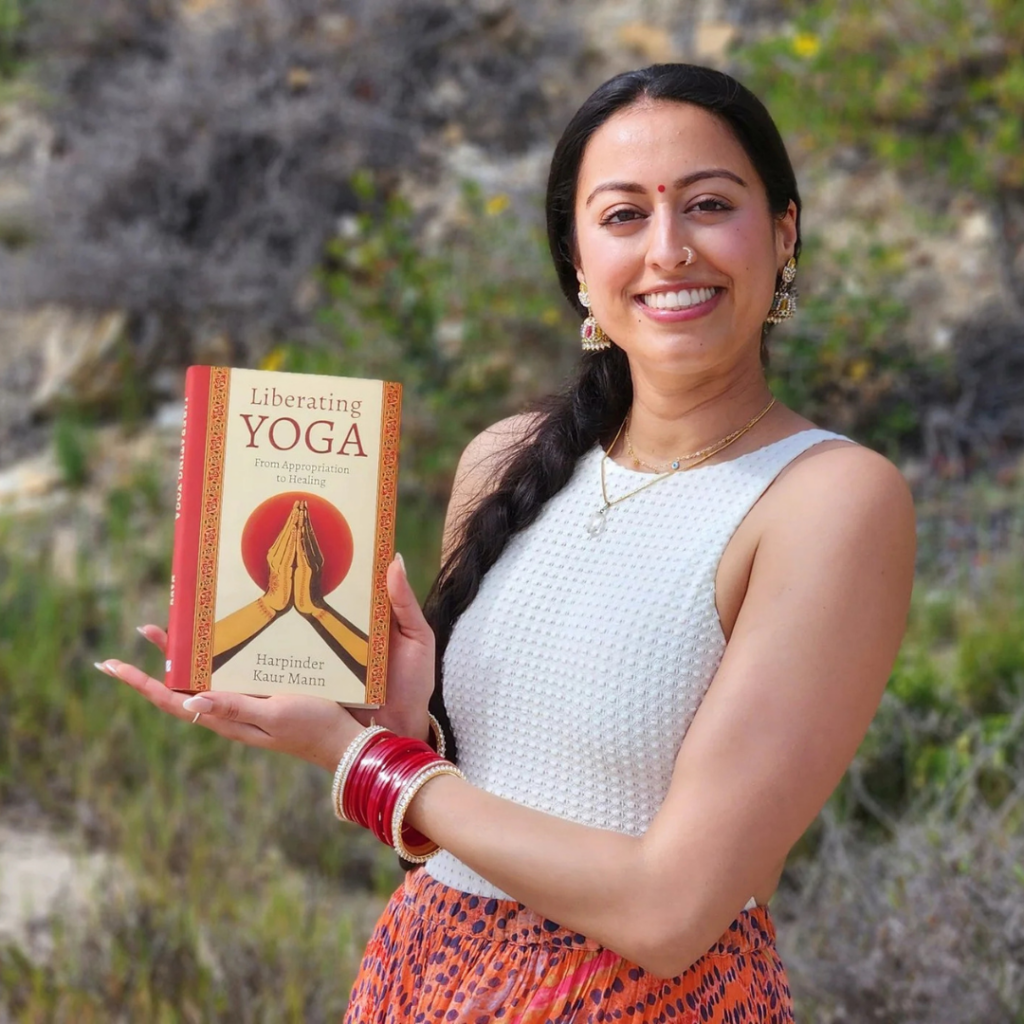
Welcome back to Honing In and to my interview with Harpinder Mann.
Harpinder Mann, RYT-500, SEP (she/her), is a trauma-informed yoga teacher, Bhakti student, and author based on Tongva land (Los Angeles). Rooted in her Sikh spiritual background and Panjabi ancestry, she shares yoga as a sacred path of remembrance and liberation. Practicing since 2013 and teaching since 2018, she guides students in weaving sādhana and the eight limbs of yoga into daily life to cultivate resilience, meaning, and connection. Her work bridges social justice and healing, honoring collective liberation. Her book, Liberating Yoga: From Appropriation to Healing, invites readers to reclaim yoga as a practice of integrity and wholeness.
Here are some of the things we discuss:
- Challenging the packaging of yoga and mindfulness as relentless self improvement
- Why working with students and clients doesn’t feel like a project to Harpinder
- Decolonizing yoga through honoring where practices have come from
- Harpinder’s book journey and the sense of responsibility she felt while writing Liberating Yoga
- Giving yourself space between projects to allow ideas to come to you
- The many ways we can deepen and practice yoga
Resources & Links:
- Harpinder’s website
- Events with Harpinder
- Harpinder’s book, Liberating Yoga: From Appropriation to Healing
- Harpinder’s Instagram
- Harpinder’s Podcast (we referenced Episode 3: Understanding Yoga Exclusion, Fatphobia + Racial Trauma with Leah Saliter)
- Books mentioned: Edward Said’s Orientalism and Bessel Van Der Kolk’s The Body Keeps the Score.
Transcript
Kate Henry [00:00:31]:
Hi, everyone. Welcome back to honing in. I’m Dr. Kate Henry. I always say our episodes are going to be a delight and I am personally very excited for this. I’m excited to share this conversation with all of you who are listening, and I’m very excited to have this conversation myself.
Kate Henry [00:01:09]:
Today I’m interviewing Harpinder Mann, who is a trauma informed yoga teacher, Bhakti student and author based on Tongva Land, Los Angeles. Rooted in her Sikh spiritual background and Punjabi ancestry, she shares yoga as a sacred path of remembrance and liberation. Practicing since 2013 and teaching since 2018, she guides students in weeding sadhana and the eight limbs of yoga into daily life to cultivate resilience, meaning, and connection. Her work bridges social justice and healing, honoring collective liberation. And her book, Liberating Yoga From Appropriation to Healing, invites readers to reclaim yoga as a practice of integrity and wholeness. I love to read people’s bios because I’m like, how does it feel to hear that bio?
Harpinder [00:02:06]:
Yeah, I had, like, a thought of, like, should I have offered a shorter bio?
Kate Henry [00:02:10]:
No, claim it. It’s all there. I love it. Thank you for taking time to talk to me today. I’m really excited for this conversation.
Harpinder [00:02:19]:
Yeah, I’m delighted to be here and, yeah, excited to see what comes out of our conversation. Yay.
Kate Henry [00:02:29]:
I’ll start us off with a question that sort of was the motivation for this whole podcast, which is how we think about projects. Like, when we make something a project, do we gain something? Do we lose something? And I’d love to know how you feel about the concept of a project. Is it a helpful framework for you for your own, like, professional or creative work? Or is there another word or framework that you like to use when you are doing the things that you do?
Harpinder [00:03:01]:
Yeah, that’s a fantastic question. And I feel like the first thing that kind of arose for me is I will often think about, like, bigger things as projects. Like, I used to run an organization called the Woman of Color Summit. And so that felt like, oh, this was my project for two and a half years. And then from there it kind of transitioned into writing this book and I was like, oh, now liberating yoga and is my project. And I have been, honestly, in the last maybe eight months, I’m like, what’s my next project? Like, what’s my next kind of big thing that I’m really sinking myself into? And I don’t have the answers for that yet. I think I’m still in sort of this phase of, like, discovery. I find the idea of a project to be helpful in that I feel like it kind of, like, takes it.
Harpinder [00:03:56]:
It feels tangible. Like, it feels like here is this thing within me and my mind, but also materialized out into, like, an external thing that I get to work on. So in that way, it feels helpful. But it’s interesting. Like, I think about the work with my students and clients and how I don’t consider that a project like, that is, like, my work. And so it’s really interesting. Kind of the little differ, but also the larger differences of. I do consider my wedding a project.
Harpinder [00:04:28]:
I got married last year and I was like, this is a project and this is a. Yeah. So for me, I’m like, it feels like a project is kind of a larger thing that I am really committing to. I’m like, I know it’s going to take time and effort. There’ll be steps. I’m not going to hop from the bottom of the ladder to the very top, like the projects at the top. And I’m going to take one step at a time.
Kate Henry [00:04:55]:
I don’t think I’ve heard folks use this framework before, thinking about work as not being the project. As you said, the work that you do with clients or with students. And that feeling a different framework than a project. And that sounds. I don’t know, we don’t have to tease, get into the etymology of the words, but that sounds really nice to hear you say that. Also, yes, a wedding is a project. When I got married in 2022, both myself and my spouse do project management work. And I was like, we’re not to be the project manager.
Kate Henry [00:05:28]:
We’re going to have helpers, you know, I was like, no, do not. It was a project. But it was nice to have helpers to help with that project.
Harpinder [00:05:36]:
Oh, my goodness. Yeah. I had a wedding planner that I hired pretty soon after. We’re like, we’re having this, right? Because it’s also like, we have the project. But then, yes, who is the one managing the project? Even when I think about, like, the woman of color summit in the book, it’s like, I had to bring in people. I’m like, I need support in doing this. And I think maybe that’s another sort of difference, potentially, where I’m like, here’s a project and then I’m like, who will come in to support this project?
Kate Henry [00:06:07]:
I love it. Does it feel nice to not have a project right now on the horizon? Or how does it. I’ll ask you later. We’re going to spend a lot of time talking about your book and your process for that. But I’m curious what it feels like now to have accomplished this huge project and put that out into the world and now have a little space.
Harpinder [00:06:30]:
Yeah, I definitely notice maybe some of, like, hustle culture or, like, the must have activity, must accomplish, keep doing one thing after another. I definitely can notice, like, that conditioning and how that might come out as, like, a thought process or, like, restlessness within my system. And there are times when it takes over and it’s like, you have to do something. And then I, like, let myself get kind of, like, stirred up into a frenzy, and I’m like, okay, let me sit down and figure it out. But ultimately, I think I’ve just had to. One of my friends I met at a retreat was talking about there’s almost like a postpartum, like, with the book. There’s this period of needing, like, rest and healing and enjoyment and time to just savor that. You did this thing.
Harpinder [00:07:31]:
You birthed a book. And so I’ve been, like, trying to hold. Okay, yes. I feel some of the restlessness and the maybe the conditioning or the desire to have something. And how can I also just let myself be? I talk about this a lot, and I know other folks do. Right. When we let ourselves, like, take a shower or go for a walk or meditate or contemplate how things will arrive in that way. And so I think for now, I’m trying to, like, yeah, let myself enjoy the spaciousness and the space and trust, like, the right project will come.
Harpinder [00:08:09]:
I’m, like, really giving the space to hear it. I’m calling upon Goddess and my healed ancestors and spirit guides and kind of being like, okay, like, I am listening, like, guide me towards the next thing instead of, like, the restlessness and the frenzy. Being the one to be the one driving. Driving the car, because it’s very different. Different, like, who was driving the car?
Kate Henry [00:08:33]:
Whatever your next project is, I’m excited to read it or see it or listen to it. I want to lead us now to think about project in a different way, which is asking you what your thoughts are on yoga or mindfulness as, like, a quote unquote project. And as I was drafting up this question, I was thinking, like, ooh, like. Or is this even, like, a product, like, Yoga or mindfulness as a product that is like sold or marketed to folks. And I know that like, for me, like on the Insight Timer app, when they’re like 10 day challenge, I’m like, I’m gonna do the 10 day challenge and get my stars, my virtual stars or whatever. But I’m curious to hear your thoughts on how commodification and capitalism have affected the ways that we. That’s like a really broad we. I don’t know, I’ll.
Kate Henry [00:09:21]:
I’ll leave that open and you can hone in as you like how commodification and capital have affected the ways that we think about mindfulness or yoga.
Harpinder [00:09:30]:
I feel like yoga mindfulness have become both a project and a product. I lead a dismantling cultural appropriation workshop at studios and I’ll be offering one in May online. And I will talk about how when we view yoga mindfulness as a project and product, it’s as if of it’s like this relentless self improvement project. It’s like, I need to be different, I need to be better. Whether it’s we’re focused on our physical health or our mental health, it can become very relentless. And something I, I like to share when I’m talking about that is ultimately to me, yoga is reminding us of our innate goodness. It’s saying that you are whole enough just as you are. And we’re practicing to remember that.
Harpinder [00:10:35]:
We’re not practicing to say, you need to practice to become good. No, it’s like you already are. And I think that allows us to shift how we understand, study and practice. I find it creates a lot more spaciousness, compassion, grace for ourselves. And then when I think about sort of similarly like when yoga mindfulness gets turned into a product, if we have a product, there might be like a pain point and then what’s the solution that we’re trying to offer? And so I find sometimes with yoga mindfulness, it’s like we’re picking at like pain points of like, oh, are you not able to cope with what’s happening collectively? Just meditate. And it’s like, well, is it not the systems of oppression, that’s what actually change. And you’re asking us individually to pacify, to accept. When ultimately all these emotions like the grief, the anger, the frustration, the disbelief are just really normal responses to seeing what’s happening in the world.
Harpinder [00:11:43]:
I know that’s a slightly like a little bit of a tangent that I’m going on when I talk about that. And with like yoga mindfulness as a product, right? If, if we are the consumer. What part of yoga, mindfulness, are we able to take apart that we’re able to easily market and then actually sell? And so I think that’s why, like, asana, the physical practice, now really just seen as an exercise, why that’s such a big part of it, why mindfulness gets extracted. And if we’re kind of pulling mindfulness, say, from Buddhism, there’s so many. There’s ethics, there’s wisdom. Right. It’s like we’re pulling these, like, parts out and not taking in the whole. And that’s kind of the same thing.
Harpinder [00:12:28]:
When it’s like the self improvement project, we’re not remembering the wholeness of ourselves. We’re saying this one part needs to be different or changed. And let’s do our darnest to, like,
Kate Henry [00:12:39]:
change that hearing that makes me think of, like, whether it’s like asana or mindfulness or meditation or something that’s marketed almost as a little stopgap or a little, okay, plug the hole to feel a little bit better or whatever today. But you use this language of pacifying, and I think that that’s such an interesting, good word to think about that sort of marketing or consumerism around it. I’d love to ask you about some of the frameworks and language and work that you do. And you talk about this, like, really well in your book and in the podcast research that you’ve done. I’d love if you could talk to us about the work that you’re doing to decolonize wellness, both in terms of what this means to you as a researcher and a practitioner. And I love the way you’ve talked about how your interest in community and community building is something that supports this effort and this goal of decolonizing wellness. I know probably you’re like, okay, I talk to everybody about this, but I know the listeners of myself are gonna really look forward to hearing you tell us a bit about that.
Harpinder [00:13:50]:
Yeah. Decolonizing yoga. Decolonizing wellness. There’s so many different aspects of that. To decolonize, we have to look at what has happened. Colonization. And so for those of us that live in North America on Turtle island, right, we sit on these lands, for many of us were settlers, uninvited settlers to this land. For those of us that don’t have ancestors that were indigenous or were forcibly brought over as enslaved peoples.
Harpinder [00:14:25]:
And so even this recognition of, I am an uninvited settler on this colonized land, that as a recognition. And when we think about yoga, yoga coming from South Asia and How India, Pakistan were colonized, were colonized by the British, by the Dutch, and how that had an impact on the way yoga was allowed to be practiced and studied. And also at that time, what parts of yoga were seen as. Again, maybe, like, the meditation were allowed and like, okay, you just stay quietly in your home and practice versus there were hatha yogis that were mercenaries and carried weapons. And the British were like, no, that’s not acceptable. Why? Because they were fighting back against the British. And so for me, to decolonize is also to understand what has colonization done? What has colonization done to country, to language, to culture, to spiritual practice? And so it’s even kind of working back to understand the history of it. To decolonize is to really honor where the practices come from, because it matters.
Harpinder [00:15:44]:
It matters that over the thousands of years that yoga was shared and spread and. Right. There’s so many different lineages and paths of yoga as well. So it’s not just like this monolith as that was being spread, it was being spread through culture and language and different spiritual practices and philosophies. And it’s important to understand that source culture because it provides context. It provides context for why we may pray a certain way or why there might be. I was interviewed for another podcast a couple days ago, and she was talking about, like, this faith, having this faith. And what it kind of brought up for me is this.
Harpinder [00:16:30]:
And Orientalism is a great book by Edward W. Said, a Palestinian writer and professor. And he talks about this binary that gets created between the west and the East. So the west seen as, like, rational, logical. East seen as, like, spiritual, mythical, illogical, chaotic. And so there’s this false binary that gets created where it’s like the west has to come in and say, I need to write down your practices for you. I need to be the one to. And this happened to the Yoga sutras and the Bhagavad Gita, where it’s like these white scholars and folks came in and did their translation and did their translation in these very racist ways.
Harpinder [00:17:18]:
And so decolonizing is also. How do I go back to source culture, to these writings, and take away that lens and perspective of a racist white person that did the translation, that hated the people, but felt like he had to take ownership of actually translating the text. And so for me, when I also think about decolonizing, it’s thinking about if maybe if it’s like white supremacy, what are some tenants of white supremacy? And how does that get mixed in with yoga?
Kate Henry [00:17:47]:
Right.
Harpinder [00:17:47]:
We talked a little Bit about maybe that sense of perfectionism, that sense of needing to fix. I also think about how there’s some like, urgency around that. And so how can we also practice and have yoga be accessible to folks that are in bigger bodies or in disabled bodies? How do we make yoga spaces feel accessible but also feel like brave spaces to be in where it’s not just this hyper focus on yoga as exercise. Right. If we’re thinking about. And Prasad Rangankar, my teacher, has this definition of yoga that I was like, oh, that’s kind of what I’ve been working with and I’m glad you spelled it out in this way, where yoga is an umbrella term that encompasses different philosophies and modalities of practice. And it does this with the aim of transforming mind and body to realize that we’re spiritual beings. And I think what’s happening with yoga as it’s practiced and seen now is we’re just focused on the body, but we’re forgetting that yoga also transforms the mind.
Harpinder [00:19:01]:
It transforms our beliefs, it transforms our, the way that our perspectives, our opinions, our identities, our roles. And it’s this reminder that we’re spiritual beings. And so for me, decolonizing is to really take yoga as this whole sacred philosophy, teaching as a way of life instead of just being like, it’s just a practice for flexibility. And so, yeah, that’s really important to me to bring it back to the wholeness of it instead of just focusing on a part of it.
Kate Henry [00:19:36]:
Thank you for that. Something that I’ve reflected on in my yoga practice over the years as I’ve learned more about my body and how being hypermobile makes me prone to injuries. And being injured is like how I can fall into being ego driven in my practice, in my asana practice. And that’s when I do come back to trying to think with my mind, with compassion.
Harpinder [00:20:05]:
Right.
Kate Henry [00:20:05]:
But that is something I’ve been reflecting on is like, oh, I’ve spent many, many years being ego driven in my yoga practice. And now I’m like, okay, it’s time to start over, you know, like, which is good, it’s fine. But yes, that does come to my mind. Thinking about that in your bio and in the work that you do, you talk about having a trauma informed approach to teaching yoga. How does taking this trauma informed approach, many folks will probably know what that is, but if not, could you describe what a trauma informed approach to teaching yoga is? And I’d love to hear how does this inform the decisions that you make?
Harpinder [00:21:04]:
I find this question lends a little bit to what we were speaking about earlier around. I study Vinny yoga. So Vinny Yoga in the lineage of desiccation yoga therapy. And so yoga therapy and I mean this is true for many different paths of yoga was taught one on one. And so it’s taught with the belief that it’s not that like you have to force yourself into the yoga that’s being taught, but it’s like how can the yoga be adapted to where you are? And so I find that really to me helps also inform my trauma informed yoga where I’m understanding each individual that walks into the room is shaped in different ways, right? Not only maybe physically, but then also mentally and then by trauma. Every person has their own story and we never really know what someone is currently battling with, has battled with before. And so for me, a trauma informed approach is really creating a lot of spaciousness to like hold it all. It’s inviting me to have a lot of compassion.
Harpinder [00:22:25]:
My other teacher, Juliana Mitchell, who I have so much love for, and she doesn’t say that she’s a trauma informed teacher, but she just is like she has so much care and compassion. She really takes the time to build rapport with every single person. She doesn’t assume anything about anybody. There’s a saying that she shares that says or not a saying, but something that she says is when I’m working with a student, I view them as whole already. Like there’s nothing that needs to be changed or fixed about them. And to me that is a trauma informed perspective in that when someone comes in, I’m not there as someone to fix them or change them. I’m there to just be like, here’s a space for you to be just as you are. And so when that comes to actually how we’re guiding students, it’s a lot of invitational language.
Harpinder [00:23:23]:
It’s offering ability for them to choose agency to decide, do I want to do this, do I not want to do this, do I want to do it in a different way? I’m also a somatic experiencing practitioner, which is a trauma healing modality that Dr. Peter Levine has. And especially through that, it’s like there’s so many subtleties, like little things affect our system. And so for me, when I’m teaching, that means I really will slow things down. I’ll let folks as soon if we’ve done one thing, kind of take a moment to pause and notice, like has anything shifted? What do you notice? Yeah, I find like the speed is really different, invitation is different and it’s even different, more so different. When I’m working one on one with a student then there’s time for them to share what feels comfortable for them. Maybe we might work with some of the story or content and then there’s an individualized practice for them that they’re able to use. And when I think about trauma informed yoga, right.
Harpinder [00:24:31]:
There’s like that individual trauma that we might have. And I came to this work as an individual with lots of individual trauma from the way that I was raised. But then I think about all the collective trauma, like all the vicarious trauma that we’re taking in just by witnessing. And so I’m like it’s important to be trauma informed because we live in a traumatized world. And so I am like to be a teacher is to take into account the reality of the world that we live in and in a way sort of adapt to fit that.
Kate Henry [00:25:09]:
It was lovely to hear you talk about this for practice with individuals and could you tell me a little bit about how this influences then writing when you don’t know who the reader is who’s going to come across something. Or like you mentioned you’ll be doing the like training online in May. That’s coming up, you know. So like how do you approach stuff when there might be like a wide audience of folks who may engage with your work and you don’t know their, their experience?
Harpinder [00:25:48]:
Yeah, I mean I was thinking about as you were asking the question how I take like a trauma informed approach with myself. Cause I, I like to start with myself, kind of broaden out when I’m thinking about then these individuals that might join for my training in May. I feel like it really changed a lot for me once I realized how much trauma skews our view, how much it shapes our perspective. I think it’s in the body keeps the score which many problems through that book but I, I do enjoy it. There’s other better somatic books by BIPOC authors. He shows this image of people making happy faces, sad faces, angry faces and for a child that’s been traumatized or has trauma versus not, you’re more likely to interpret even a neutral face as being mad with you. And that’s something I really have had to have a lot of compassion for myself because I would go into these, like something small would happen. And then it was just like, oh my God, everything’s gonna fall apart.
Harpinder [00:27:02]:
Like, I’m going to end up on the streets. And at first I was perhaps had judgment towards myself for like, just chill. And then I had to realize like, no, that’s just the way trauma has skewed my worldview and my perspective. And so having a lot of compassion for myself and then when I extend that out to the work that I do, it’s like not pushing myself, like overriding my needs. I’ve done that for many years where it’s like my body is saying, it’s time to sleep, it’s time to eat, it’s time to go for a walk. And I’m like, no, must finish this, whatever it is. And like, and then I just feel depleted. And so I think a.
Harpinder [00:27:53]:
Yeah, trauma informed or just like this approach of like realizing we’re human beings is. Yeah, really learning to listen. And then on a, on a greater sort of like, as I invite folks into this training. Yeah, I think with my trauma informed work, I was speaking about this with my husband yesterday. Is building rapport. And trust is so important. And I’ve noticed this for myself. Like in Somatic Experiencing, we’ll do these like practice sessions.
Harpinder [00:28:24]:
And I notice when I am the practice client and there’s a practice therapist when they haven’t taken the time to build rapport or trust or feel like they know me and there’s kind of straight want to get into whatever the thing is, my whole system’s like, no. Like I am not engaging, like I will not. And instead of having judgment for that, I’m like, oh no. Like, here’s my body trying to protect me. Here’s some like healthy resistance. And so for me it’s important when having these programs and doing these things, like, am I putting enough out there? Am I really honing my ability to listen? I think listening is a big part of that. And it’s like listening yes to what someone is saying, but right, like what’s also being said non verbally. And I think that to me is a skill that I’m like, I am skilled at because I practice it and I care about building relationship in that way and something I’m like, I’m wanting to keep getting better at.
Harpinder [00:29:25]:
Am I really listening instead of just wanting to step in and be like it needs to be this way or do that. And it’s like, no. If I’M trauma informed. I’m listening to you. I’m listening to your innate wisdom. You have gotten to this point because some innate wisdom protective defensive mechanism. Something has gotten you to this point and so I see that. I value it and I will listen to you.
Harpinder [00:29:53]:
And then I’m Once you feel like you trust me, then like bring me in. I’ll share my wisdom as I can. This feels good for the person I’m working with.
Kate Henry [00:30:02]:
Well, thank you for that answer. And thinking about this listening practice is such a natural transition into talking about your book, which is the next thing I want to talk to you about because something I love so much. Well, I love many things about your book. It has a lot of post it notes in it. Over here is that interviews with others really inform the work that you do too. Like this book is rich with history. This book is rich with your personal story and narrative questions, like honoring folks whose wisdom you are citing, bringing in yoga literature and scripture, and also the interviews that you did with folks which I always love to see honoring individual experience alongside like academic literature as well. So it was a delight to read.
Kate Henry [00:30:52]:
And I was telling you before we recorded that I’ve long sought a book like this. So I’m really happy to have read it and I hope that folks who are new to yoga practice will also read it as well. I’d love to hear about your process for creating this book again, podcast about creative projects. Again, two questions in a trench coat. Maybe like three or four. So we’ll take our time on this question. I’d love to know about like the making the book process and like the publishing process. So in terms of like timeline, like how long did it take for to make this book? When did you know you were done? And also like to get in even deeper.
Kate Henry [00:31:32]:
Like what was it like to research this, edit it, prepare for it? Did you know that you wanted to have these different sections? Did you know you wanted to do interviews or use your personal narrative in it? So I’ll just hand the mic over to you and sit back and enjoy everything you’re gonna share now.
Harpinder [00:31:54]:
Oh goodness. Yeah. I even kind of notice in my body some like fluttery feeling. Cause I was like writing this book was a whole journey. It was, my goodness, it’s a comprehensive text.
Kate Henry [00:32:10]:
It really is rich.
Harpinder [00:32:11]:
Thank you. Yeah. I consider myself a writer. I’ve been writing since I was very young. I think about my fifth grade teacher, which I don’t remember her name, and I would write these just like fiction books. And I remember one about Like. Like Santa Claus on the roof or something. I don’t even know.
Harpinder [00:32:31]:
And some sort of creature. And she pulled me aside one day, and she was like, you need to keep writing. She’s like, you have a skill. Fifth grade, was that like, 10? Like, I was just like, I do, really. I really just like writing these stories. And I’ve. I love reading, like, nothing. I’m reading a really good book right now.
Harpinder [00:32:55]:
Like, nothing gives me greater joy than, like, reading and writing. And I find myself, even when I’m writing, especially in the last, like, 10 years, I just always have to bring in the voice of others, and I feel like a part of it, and I’ve had to kind of sit with it. I’m like, do I feel like I’m not enough? Do I feel like I need to be validated? And so I’m like, maybe there’s some of that. And I was like, there’s such rich knowledge and wisdom out there by people, authors that I respect. And so it feels just really like honoring to, like, be like, this is what I think, and this is what this person thinks and this person thinks. And, like, how do I kind of bring it all together? It just feels really lovely to weave in that way. And so I was like. I knew for this book, I was like, that’s just the way I write.
Harpinder [00:33:52]:
Like, I. I have to. And I just had this idea again. I think probably while meditating or going on a walk or showering of, like, oh, I’m gonna interview people who I find are really, like, expertise in this, who are really devout, who are scholars or teachers or gurus, and get their perspective. There were certain chapters of the book, especially the ones around, like, I think it was like, How Colonialism Lives in Our Bones, the chapter on decolonization, that were really hard to write. Like, it was almost like I would sit in front of my computer, and I was just like, I’m hitting my head against a wall. Like, it took months of just hitting my head against the wall until finally there was, like, a breakthrough. And I was like, oh, no, I can write it in this way.
Harpinder [00:34:51]:
And I was like, oh, I guess that’s just a part of it too. Sometimes the answers will come when it’s ready. And sometimes you just have to. I’m like, maybe you don’t. Maybe I could have gone through it in another way. It’s possible. And we were talking about, with projects, bringing people in for liberating yoga. I brought in two different coaches, two different writing coaches.
Harpinder [00:35:12]:
And so I feel very thankful because When I first was like, okay, I’m writing this book, I was like, what does it mean to write a book?
Kate Henry [00:35:20]:
What was your process for being like, I’m gonna write a book for some folks. Some people reach out to them. Some folks make a proposal and submit it. Like, tell me a bit about, like, what was the. How long did it take? It takes years to do this stuff, you know, so I’m curious, like, what was it like when you were like, you know what? I’m writing this book.
Harpinder [00:35:38]:
I love telling this story. It’s like one of my favorite stories to tell. I really feel like my. And I feel like others probably maybe feel this way, maybe don’t, who knows? But a very short thing I will say is like, yeah, I feel like half of my business strategy is prayer. And I feel that way about my life where like, half of my life, the way that it goes, the way it does is through prayer and just this higher power shifting. And even in the moment, I’m like, no, I don’t want it like this. And then years, I’m like, no, actually. Right, okay.
Kate Henry [00:36:10]:
Thank you.
Harpinder [00:36:11]:
For many years. And I remember certain spaces, like at the end of my 350 hour yoga teacher training in Australia, like, I was very like, we were doing like, what do you want to do in five years, 10 years at our closing retreat, and I was like, I had said, I’m going to be a New York Times bestselling author. I’m not there yet, but, right. I’m going to like publish a book. And everyone’s like, yeah, you will. And I’ve done that other times. I have a. I worked with a business coach for a few years at a retreat.
Harpinder [00:36:37]:
I was like, I’m going to write a book. And so just like really being like, I’m gonna do it. I really do think that’s a part of it. Like, whatever the thing is, it’s like you are feeling it, you’re believing it, you’re saying it. So it stays top of mind, it stays. Whoever, like supports you, seen or unseen, is also like, okay, yes, that is a part of your path. And I was with my business coach, we were having like a two day. She called it a VIP retreat.
Harpinder [00:37:10]:
And she was like, what is like your affirmation or intention for the year? I was like thinking about it and I was like, you know what nice surprises. I was like, I love that.
Kate Henry [00:37:22]:
I feel like, ooh, what delight hearing that, right?
Harpinder [00:37:25]:
And I was like, nice surprises. Cause like, there’s so much in my life like me, like, Meeting my husband or like, the clients that I work with, where it’s like, they all of a sudden, they’re just like, here, right? I think about, like, meeting my best friend, right? All these things. I’m like, I couldn’t have planned for it. I wasn’t like, I’m gonna be at this point, and then at this part, like, this person’s gonna come in, and then we’re gonna. And I’m like, no. It just so happened. And so I told her. I was like, nice surprises.
Harpinder [00:37:53]:
I kid you not. I checked my email. Like, she’s there. I’m there. And I had received an email maybe like 30 minutes before, and it was Andrew from Broadleaf Books being like, hey, have you ever thought about writing a book? I found some of the things you’ve written online about yoga and social justice. And, like, we actually would love to publish a book talking about this. If you’re interested, email me back. Talk about a nice surprise.
Harpinder [00:38:22]:
I was like, are you. And every time something. Something like that happens, I ha. I literally. I’m just like, for those. Just listening, my hands go up in the air. I’m just looking up. I’m just like, oh, my God.
Harpinder [00:38:34]:
And it was just one of those moments where I was like. And really, I had some disbelief for a while. I was like, is this a really sophisticated scam?
Kate Henry [00:38:48]:
Like, keyword search?
Harpinder [00:38:52]:
I was like, is this really sophisticated? Really tailored towards me. They’re gonna ask me for money first.
Kate Henry [00:38:57]:
And did you write back? And you were like, let’s get on a call.
Harpinder [00:39:01]:
Absolutely. No. I was just like, right. Like, that was basically if I shortened. It was just like, hell fucking yes. Yeah. Had the call with him, and I really still took some time to deliberate. I was like, is this project my next project? Is this it? And then from that point of that meeting to when the book came out, that must have been three years.
Harpinder [00:39:32]:
So it was about two years of researching writing. When Andrew had initially in our call, I think he was like, okay, we’ll give you eight months. And I was like, okay.
Kate Henry [00:39:45]:
Not knowing any better, my mouth just dropped open. That’s so short. I don’t know, maybe people are like, yeah, whatever. But that feels really short. Especially for, like, the whole publishing, like, how many years it takes to get a book out.
Harpinder [00:39:59]:
And so at first I was like, yeah, sure, why not? And it took me four months to even wrap my head around that I am writing a book. And then I hired a book coach. Cause I was like, I don’t know. After the four months of Kind of wrangling with, like, I was like, oh, I actually don’t know how to write a book. And then I hired a book coach and. Yeah. And then it was the process of deciding who do I want to interview, what do I want to include in the book, how much detail. There’s so much imposter syndrome that arose
Kate Henry [00:40:28]:
through
Harpinder [00:40:30]:
was definitely a journey to get it out into the world. But I’m very grateful for it.
Kate Henry [00:40:37]:
It sounds like it was a lot of work and also joyful. Maybe pockets of joy. I don’t know. Maybe there was pockets of joy alternating with stress. Like, oh, no, what did I get myself into? You know? And also, like, you share in the book, like, you mentioned earlier, like, in a particular chapter, like, being like, o really, like, feeling stuck on this. And like, you, like, narrate and talk us through your experience emotionally and physically and somatically of like, okay, what will doing. I think breath work, you know, to. To move through the.
Kate Henry [00:41:09]:
The stuckness there. And it being like a, like, physically felt sounds like really stressful and hard experience. So this book sounds like it was a lot of work for you to. I don’t. That sounds judgy and I really didn’t mean it. I mean, like, I’m like. Like, I’m like, it was a lot of work for you.
Harpinder [00:41:28]:
That’s not what I mean.
Kate Henry [00:41:29]:
What I mean is, like, I really. Something I admire about the book is that you do share, like, what that experience was like to write about colonization and to, like, walk us through. I imagine it was stressful to all of the history. Like, it was traumatic maybe for you to write the like, okay, this is the history of this. Does that resonate at all? I’m like, feeling a little like, oh, geez. But, like, no, that.
Harpinder [00:41:55]:
I mean, I feel like I said on three different occasions, writing this book was like, it was a big undertaking. It was a big endeavor. And I’m. I’m thinking about. Yeah. The different pieces of content. And I find one of the things that made it really tough is I felt a great sense of responsibility when writing about yoga and sharing it. From my perspective, it felt like, do I know enough? Will I be able to share this in a way that also feels respectful? That, of course.
Harpinder [00:42:45]:
Right. Like, you’re writing a book. So there’s a certain level of, like, expertise and confidence in that. Like, I’m writing it. I offer some sort of perspective of, like, balancing that with, like, I’m also really humble. Like, I’m like, not that I’m humble all the Time or generally. But like there’s a certain like humbleness to being a yoga teacher and writing about this and wanting to have a lot of reverence for it. And so I think it was like also balancing those things that, yeah, that made it a bit more difficult but I think it was a part of it.
Harpinder [00:43:22]:
I think even outside of just writing a book for those that are yoga teachers, there’s a lot of responsibility I think in being a yoga teacher. I think it, there might be the sense of it can feel good. Like we get to like when we’re sharing, like students are, are listening to us. Like there’s a sense of like we have attention and people are giving us their awareness and we’re teaching. And Indu Aurora talks about like when we. Another really great Indian yoga teacher, she talk about like when we’re the ones teaching, you are the one that’s the greatest student of them all because we’re actually learning from our students. And so that’s again for me this reminder of like, I don’t know, I’m like, is it not that I. It’s like I don’t want to have like an ego trip, but there’s a certain level of confidence you have to have in doing this.
Harpinder [00:44:18]:
And so there’s like a, there is a balance, like a little bit of a balance. And yeah, just understanding that for myself
Kate Henry [00:44:24]:
with this book, the reverence comes through and yeah, I really love the richness of this book in terms of the way that you blend your narrative, the narrative of the folks you interview literature. I hope everyone gets a copy and reads it. Let’s make you bestseller, please. Yes, let’s do it. You work primarily with folks on a one to one basis as you mentioned before. And that must be such a special experience. You do talk in the book about it being a special experience. I’ve been working one on one with my teacher since 2017.
Kate Henry [00:45:01]:
It’s a really special experience to have a decade of working with someone every week for that long. Actually I texted her yesterday while I was preparing. I was like, I feel so much gratitude for you right now. Yeah, it makes me like wanna tear up the thinking about it. But I’d love to hear what led you to focus your attention on person to person relationships. Like this is as you said earlier, this is not new to yoga to have a person to person relationship with teaching. So I’d love to hear from this as your perspective as a teacher and also if you could reflect on what you think leads students to work with you in a one on one capacity. I am going to ask you about yoga studios later.
Kate Henry [00:45:40]:
So if that naturally comes up here as well, that’s fine as well.
Harpinder [00:45:44]:
I remember my first couple months of teaching. I tried to go down normal on my fingers and into like air quotes route of teaching, which was like a yoga studio. And it was not for me. Like, I just. There was like so many expectations. I remember someone coming over and asking, can we make sure we have a good glute workout? And I was like, wait, what? What are we doing here? I remember teaching there and then someone just had a freakout and they tried to exit through the back door and like kind of got caught in the chairs and I’m just like, wait, what’s happening? And then like finally got out and like ran off and left the mat. I was just like, oh my goodness. And so there’s like certain things that were happening that I was just like, wait, I don’t.
Harpinder [00:46:36]:
I’m not. Maybe I’m not actually one, maybe prepared. But then two, I was like, it really feels like the expectation of folks coming into these classes is that yoga is exercise. And I was like, and that’s not the way that I would like to teach it. Of course I teach asana. I teach asana a lot actually. But it’s like, why are we practicing the asana? Like, what’s the sort of deeper intent and focus here? I first worked with a teacher one on one in 2016 at the Ananda Yoga center in Larchmont Village. And I just found it such a deeply enriching experience.
Harpinder [00:47:21]:
I remember after one of the sessions, we were sitting together and I remember who started crying first, but one, one of us did. And so like, I’m crying, the teacher’s crying. And it just felt like this sort of cocoon that was like created around both of us. There was some sort of. There was like, like a felt experience within me that was like, oh, there’s something here. And it was just one of those things of nice surprises. One of my very first private clients, Archana, who’s now a dear friend, she was one of my bridesmaids for my wedding.
Harpinder [00:48:04]:
She reached out to me on social media. This is when I was living in New Orleans. And she was like, oh, I’m looking for a private yoga teacher. Do you do that? And she was specifically looking for a South Asian. I had just moved to New Orleans. And like, I was like, googling, what does it mean to be a private yoga? Like, what forms do I need? What questions should I ask when I Meet them. I think I worked with her like a year, year and a half and it was just again like really getting to see what aspects of the practice or the philosophy were helping her individually. And then Archana reached out because she was like, I want a South Asian yoga teacher.
Harpinder [00:48:48]:
I want to learn the roots of yoga. I don’t want these appropriated forms. And so yeah, there’s just been certain things of like yoga’s been taught one on one that I was just like, I want to work with folks one on one, I want to work. And a lot of my clients are South Asian and particularly Punjabi and that has felt, oh my God, it just has felt so like fruitful and beautiful. And it’s not only like at the end sometimes there’s like tears and like thank you so much. And I’m just like, yeah, me too girl. Like I am also crying, thank you so much. Like this gets to be like my livelihood that I get to support in this way.
Harpinder [00:49:34]:
And I think there’s an aspect of then why I started studying yoga therapy that’s really like that one on one why I started going down the three year program of somatic experiencing. I was like, how do I become even more skilled at holding space in a one to one way? And so yeah, I just, I just see that there’s so much transformation that can happen. And yeah, I, I just really love it.
Kate Henry [00:49:57]:
You’re. The love that you have for it is really just like radiating from you right now. It’s really beautiful to witness. We just talked about the one on one experience and you shared briefly about your experience with just starting teaching in studio and I know folks that you’ve interviewed for the book talked about their experience with studios as well. I wonder if we could talk a little bit about that. I shared with you before the meeting and I mentioned it earlier like I’m recovering from an injury that I sustained last year and it’s really like if I haven’t attended an asana class in months and months after like you know, years and years of regular practice and it’s like it was really like a grief process for me to move through and there’s like real self compassion that I’ve been experiencing that I would not have as well. And I mentioned earlier, I’m like, oh, I’m starting over in my, my yoga journey and not just with, with asana as well. So my experience, like I am a thin, white middle class CIS woman and I would love to hear if you could share from your experience or the experience of students who are Black, indigenous people of color, women of color, or students who practice and who live in a fat body.
Kate Henry [00:51:20]:
I’m sure that my experience may be different from their experience. And I know it is from the interviews that both in your podcast and in the book, could you share a bit about your thoughts on studios or teaching programs in like, harm, either intentionally or unintentionally, that may be done through them and ultimately like your reflections on how we might improve these spaces or maybe create new spaces. Or maybe the spaces are like clients who are reaching out to work with you individually. And that is a space outside of a, you know, like just standard Western yoga studio.
Harpinder [00:51:56]:
Yeah, I do talk about, I think maybe my 200 hour yoga teacher training isn’t enough chapter where sometimes students that aren’t even looking to teach but just want to deepen their own understanding and practice will sign up for a 200 hour. And so there are trainings out there that like, specialize. I’m studying the Bhagavad Gita right now with one of my teachers where it’s like, you could deepen in that way. You could work with a yoga teacher, Yoga therapist, one on one. Maybe what you’re looking for is an Ayurvedic practitioner. There’s so many different ways to deepen, study and practice yoga outside of the yoga studio, outside of a teacher training. And I also say that there’s also yoga studios that I love, that I’ve also practiced at for many years and teachers that I love. I’ve been a part of countless yoga teacher trainings that I’ve gained so much from.
Harpinder [00:52:57]:
It’s almost like I temper my critique also with a great love because I’m a part of it. Like, I too am a yoga teacher in the West. Like, I am also, in a way, a product of these teacher trainings. And yes, I have a slightly different perspective. Being raised with Bhakti yoga and raised with Sikhi with my family and then being Punjabi and coming from source culture and so. Right. It’s like I’m kind of like holding both and sometimes there’s some conflict there, which is okay. I think there’s okay for there to be conflict and for there to be disagreement.
Harpinder [00:53:37]:
And so I think my problem is with those studios and teachers that really promote asana, that really promote. And Leah talks about her experience of being judged for being in a fat body. Like, being really judged. Like, oh, can this person actually do anything? And also being black. I love Leah and I love that podcast.
Kate Henry [00:54:07]:
I love that interview. I’ll link to that in the show notes so folks can check that out too.
Harpinder [00:54:12]:
Yeah. Leah is such a wonderful speaker and she has such power, and my gosh, yes. So I think my. My problem is when, like, the accessibility isn’t there. There’s not space for. I was supposed to lead a training on the Yamas and Niyamas at a yoga studio many years ago, and they’re like, oh, that not that many people signed up or is canceling it. And so I was like, well, was there a couple people could we still have gone forward? And so I’m like, there’s a aspect of. Also, what are students looking for their understanding of what yoga is? And so ultimately a problem is when, like mainstream, whether magazines, media, yoga studios, core power, I have a problem with when they proliferate this idea that yoga is exercise for a certain race, body shape, body type, with a certain economic level, and that’s who it’s for.
Harpinder [00:55:13]:
And so my thing is like, how do we actually expand out to say, well, yoga’s been practiced and studied for thousands of years before we reach this iteration. And it’s beyond that. And so for students that are coming to practice and study, if you feel like, oh, wow, I feel kind of weird, find another teacher, find another space. Like, there’s just certain spaces and teachers that are really committed to harm, that are really committed to violence, even though right there might be some them speaking to that it’s not yoga’s non violence and non judgment. And it’s like, well, you are both committing harm and violence. Mm.
Kate Henry [00:55:56]:
You use this language when you’re just talking about this, like, balancing your critique with your deep love for this. And I love that. Thank you for your answer to this. I’ll start to close us up, even though I’d love to hear you talk about this so much. When you do your next project, I’ll have you back on to talk about the next project when it descends from the heavens to your brain and you create it. I love to ask my guests to share one thing that they’re honing in on right now. So what are you honing in on?
Harpinder [00:56:29]:
Yeah, what I’m honing in on is. And this is a result of I interviewed llama Rod Owens for my podcast. Oh, my God, such a. I really admire, really admire him. And there was this conversation around guilt and looking out at all this suffering and what’s our role and responsibility. And his response to me, I was like, oh, I need to hone in on what are my strengths? What are the resources that I have what are my privileges? Not in a way to like feel bad about it because others don’t, but as a way to really own it and say like, I have all of this. Thank you. And then knowing that I have all of this, how can I share for the betterment of this community or that community? And there’s like some disappointment that I can’t help everybody or it’s going to change everything and holding space for that.
Harpinder [00:57:32]:
So I think what I’m honing in on right now is I truly have so much and I’m grateful for it. And then how can I share in a way that brings healing or brings some sort of help to what’s happening right now?
Kate Henry [00:57:50]:
Oh, my heart feels so warm hearing you share that. I love that that’s a practice for you right now that you’re honing in on. I’ll close this up today by asking you to share where folks can find you or if you have suggestions in addition to purchasing a copy of your book, which I really recommend they do. You mentioned that you have something coming up in May. Do you have other things coming up down the. Yeah.
Harpinder [00:58:14]:
So folks can find me on my, on my Instagram HarpinderMannYoga, my website, HarpinderMann.com in May, I’ll be sharing my Dismantling Cultural Appropriation workshop. It’ll be three and a half hours long online and then every month. So June, July, August, I’ll also be offering another online workshop in the lead up to a longer program that I’m going to be offering in August, which is, is actually a project. And so I’m excited for folks. Yeah, that’s that project is going to combine really tapping into faith and practice in the face of what is happening right now.
Kate Henry [00:59:00]:
Okay. I can’t wait to hear more about this. Thank you so much for your wisdom, your kindness, your creativity, your laughter. This is a real warming, exciting conversation for me. So I really appreciate you taking the time.
Harpinder [00:59:16]:
Harpinder, thank you so much for having me on. It was. Yeah, sometimes there’s certain like conversation. I’m like, wow, an hour has flown by, I could keep going. So thank you so much and yeah, just your very like, thoughtful questions and I felt, I felt really good to be here.
Kate Henry [00:59:34]:
My pleasure. And if folks want to hear you continue talking, I’ll make sure to link your, your podcast in the show notes. Thanks so much.
Harpinder [00:59:41]:
Bye.
Newsletter
Sign up below to access my free newsletter, Tending with Dr. Kate Henry.