
Contemplating Practice and Presence with Gabrielle Ione Hickmon
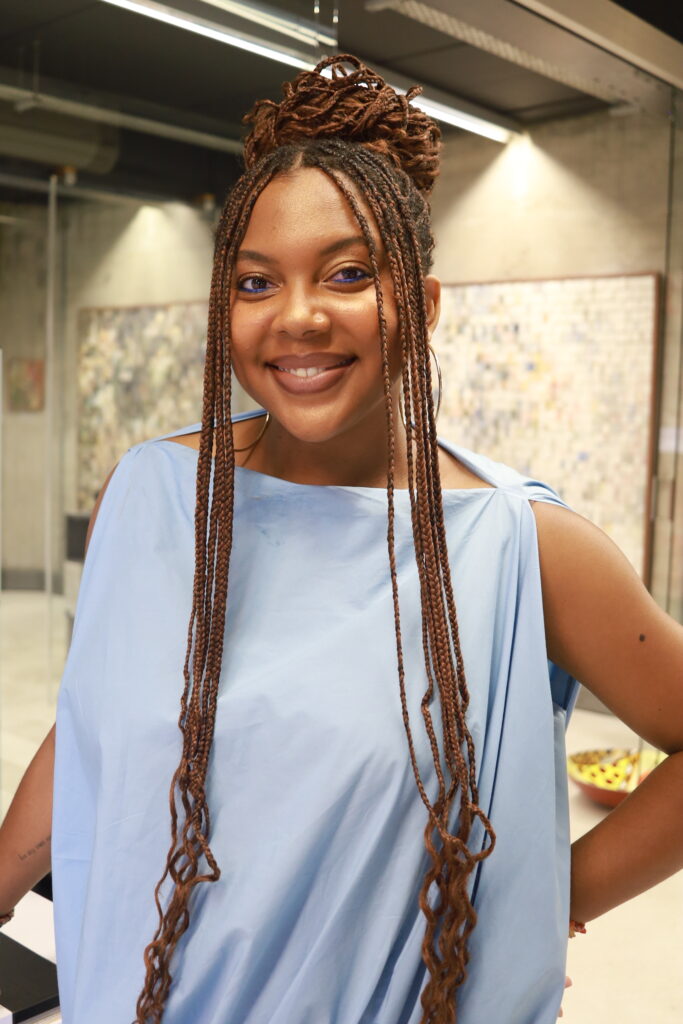
Welcome back to Honing In and to my interview with Gabrielle Ione Hickmon.
Some of the things Gabrielle and I discuss:
- Differentiating projects, practices, and offerings
- Integrating place and family history into an art practice and scholarship
- Calling attention to young Black women’s experiences with breast cancer
- Working with different materials and techniques as a visual artist
- Gabrielle’s rituals and routines in her ceramics studio (this was such a delight to hear!)
RESOURCES & LINKS
- Gabrielle’s website and newsletter
- Gabrielle’s offerings, including Applications for Artists
- WORKING PROCESS podcast
- The Cancer Journals by Audre Lorde
- The Cancer Quilts
- Imerman’s Angels
- Worthwhile Paper Inquire Within deck
- Nala Sinephro (Gabrielle’s reading music)
- Sisters of the Yam by bell hooks
- When Things Fall Apart by Pema Chödrön
Big thanks to Softer Sounds Studio for podcast editing and support.
Transcript
Kate Henry [00:00:00]:
Welcome to Honing in a podcast for creative thinkers where we’ll hone our skills, explore our passions and nurture our dream projects into being. Hi everyone. Welcome back to Honing In. I’m thrilled today to interview someone who is doing such a magical, interdisciplinary, meaningful work. So today I am interviewing Gabrielle Ione Hickmon. Gabrielle is a Black woman from a Middle Ypsilanti, Michigan. A visual artist and history PhD student at the University of Michigan. Gabrielle’s practice is concerned with African American and indigenous histories, presents and futures in the Great Lakes region.
Kate Henry [00:00:54]:
As a breast cancer survivor, Gabrielle’s practice also engages illness, disability and health toward an attempt at clarifying her experience to herself and exploring cancer’s intersections with history and culture. She is concerned with breast cancer, its aftermaths and its impacts, especially on Black women. Her writing has appeared in Vox, Conde Nast Traveler, the Baffler, the Pudding and Literary Hub. She has exhibited ceramic work domestically and internationally. Her ceramics are in the private collection of the North Carolina Historic Sites Division and the Modern Ancient Brown Foundation. Gabrielle has been an artist in residence at Pocoapoco, Moss, Palou, Mudhouse, John Bower Ceramics, the Visual Arts center of Richmond, and the Modern Ancient Brown Foundation. She lives, works and studies in her hometown, Ypsilanti, Michigan. Thanks so much for taking time to chat with me today.
Kate Henry [00:01:59]:
I’ve said to you multiple times that I know I could talk to you for many hours, but I will not do that. I will be precise. So thanks for taking the time.
Gabrielle Ione Hickmon [00:02:08]:
Yeah, thank you for having me. I’m excited to be here and to talk about honing in.
Kate Henry [00:02:16]:
So I’ll dive in by opening with the question I always open with, which is about projects. I started this podcast because of my interest in projects and you are doing so many cool different projects.
Gabrielle Ione Hickmon [00:02:29]:
Probably too many, but yeah, I’ll list some of them out. Right.
Kate Henry [00:02:35]:
So your PhD studies, your visual arts, your ceramics practice, your podcast working process, your writing, teaching classes to artists. And I know that there’s more and I’d love to hear about your experience with the concept of a quote unquote project. Is that something that resonates with you? Does that feel helpful? Is there a different framework that you think about maybe for all or some of these different practices that you do?
Gabrielle Ione Hickmon [00:03:03]:
I don’t know if I think about the sort of various things that I’m doing in my work as projects. I think I lean more into the framework, approach, practice and like practices in my brain. When I think of like a project, it’s something that has like a definitive Sort of, like, start and end point. Like, I have a bulletin board in one of the spaces in my house, and I’ve got a list of, like, summer 2025. And it’s stuff like, you know, clean out your closet, make this, hang your art. Those, to me, feel like projects, because I can go to the store or I can order, I can find what I need. I do the thing, and then it’s done. I think when I’m thinking about, you know, sort of the various offerings or efforts that you listed off, I think I think about them as, like, practices or.
Gabrielle Ione Hickmon [00:03:54]:
Or actually offerings. Yeah. So, like, teaching classes to artists and even the podcast feel like offerings that I’m giving of. Like, and this comes from Audre Lorde, like, sharing what I know. She talks about that in the cancer journals, which is just, like, a biblical text for me. And so I think about offerings as ways that I share what I know with other people. And then I think about practices as. I mean, ultimately, they do end up getting, like, shared with other people, but I think they start in a different place.
Gabrielle Ione Hickmon [00:04:28]:
Like my PhD work or my visual arts practice or my writing. Like, those all kind of start from an internal place. And I’m much more interested in, like, the practice and process of showing up to the studio or showing up to the page or, like, showing up to the archive to do the work than I am necessarily with what the outcome of that might be or what the, like, reception of the outcome of that might be, you know, and obviously, I’m human and, like, I care about those things, but it just kind of emanates from a different place. Whereas I think when I’m thinking about, like, creating a class or even, like, working process, my podcast, that’s kind of that. That is emanating from more of, like, an external direction inward. So it’s like, I want there to be an archive of black women working with clay. So, fine, I’ll do it myself. Right.
Gabrielle Ione Hickmon [00:05:25]:
Or, you know, I started doing all of these different artist residencies, which I’m, like, so grateful for, and, you know, getting some fellowships and things like that. And then people both, like, in my sort of community, right. So people who. I have their phone number and we could call or text, but also people in kind of, like, a wider community space of, like, you know, social media or my newsletters or, like, friends of friends were kind of asking me, like, how did you. You know, like, how did you start to do that? How did you. How did that start to happen for you? So then I said to myself, oh, okay. Well, like, this is something that I could teach. And like, my mother is a teacher, my aunt is a teacher, my cousin’s a teacher, my grandmother is a teacher.
Gabrielle Ione Hickmon [00:06:05]:
So I think my offerings are often kind of like, within that matrilineal lineage of, like, teaching and sharing what I know so that other people can use it and, like, do what they need to with it. And then the practices are things that I’m, like, constantly coming back to, always in relationship with. They don’t have. They do have a start, and I guess, you know, maybe they’ll have an end. And hopefully that end will be, you know, when I die, hopefully in, you know, 80 years from now. Right? Like, so it’s. I think the practices for me are like a longer durée. And offerings can also have a longer.
Gabrielle Ione Hickmon [00:06:47]:
But they’re. I don’t know, they. I feel like they shift a bit more. And the practices feel really, like, steady and returnable too. And projects in my life or in how I think about them are just like, I could do this in a day. Like, I. I had on a list of, like, a summer project, Hang up your art. I went about the frames, it’s hung, that product is finished, right? But, like, the offering of teaching, the classes, the offering of the podcast is something that I return to and will hopefully do for a long time.
Gabrielle Ione Hickmon [00:07:18]:
And then the offering or like, the sort of process of these practices is just, I think, intrinsic to who I am at this point and how I want to be in the world and how I try to, like, access, like, right livelihood for myself.
Kate Henry [00:07:35]:
Hearing you share that makes me think about, like, something like hanging your art. It’s like, oh, end point, outcome done, right? And like, other things being like, Like, I. I think, like being like, in present, like, in time. Like, it, like there’s something here around, like, not like, enjoying the experience necessarily, but like, it’s less like, like, perhaps even like generating an offering through your podcast, right? Like, the experience is being present with your guests is like having these conversations, right? Less like, you know, I gotta hit my ROI or something like that, right? I don’t know. Like, for some reason there’s something that feels like, like, really, like, wonderful around, like, the experience for you in the moment or in the practice that is not necessarily, like, okay, yes, you want to publish your. Your podcast, right? But I don’t know. I know there’s not like, necessarily a question here, but like, for some reason, like, time and presence and like, maybe like savoring or something like that comes to my mind when I hear you Talk about that. I don’t know if that resonates at all.
Gabrielle Ione Hickmon [00:08:38]:
Yeah, I mean, I think I’m not a very ROI driven person and have always been relatively intrinsically motivated. Obviously I have larger goals and ambitions and you often need. Can need other people right within that. But I think I try to create, lead, live, do from like what do I want to do or what is there something that I see is like a need that I know that I have the capacity to kind of like step into and fill or be a part of like a course of people who are filling it. And yeah, I mean, I kind of like hate metrics within that. Like, you know, I host my podcast through Substack and like the first thing that you see when you log in is like, you know, your metrics of things. And I’m like, I don’t care about this is this. This is not why I’m like doing the thing which can be hard in the world that we live in, which can be almost all about metrics and very transactional.
Gabrielle Ione Hickmon [00:09:44]:
I think maybe that’s the thing. I don’t think of myself and hopefully people that know me would concur with this as a transactional person. And so when you talk about presence or savoring the experience, I think that that’s part of where that comes from because there is kind of joy in just like having a great conversation with someone and then sharing it, regardless of like if five people listen to it or if, you know, thousands do. I always have to like recalibrate back to that because we don’t live in a world that is right sort of like minded in this way. But as long as I can kind of like return to the reason for the thing, I think that that makes doing them more sustainable and hopefully more just like hard led or community driven or minded. And hopefully that like translates through to folks.
Kate Henry [00:10:43]:
That’s beautiful. Thank you. We’re thinking here around like the different practices and projects and offerings that you’re working with. And in addition to like this time and this savoring, when I was preparing for our interview today, I really noticed that it seems like place is really important to your practice. So like you call your hometown a middle place. You’re studying looking at the Great Lakes region. And I’m curious if like this interest in place informed your decision to pursue the PhD in history. Also, props to you because history PhDs are freaking hard.
Kate Henry [00:11:21]:
I was not in a history program.
Gabrielle Ione Hickmon [00:11:23]:
But I have so many friends that I have clients who are.
Kate Henry [00:11:25]:
And it is just so there’s a lot of proof of your studies you have to do to complete a history PhD program. So I’m curious about, like, how does place inform that? And, like, also then from there, do you feel like the history PhD pursuing that informs creation of art, or does your art making inform that?
Gabrielle Ione Hickmon [00:11:46]:
So, growing up, I always knew that I wanted, like, a terminal degree. My parents both have master’s degrees, and so the expectation was that, like, I would have to, you know, I at the very least had to match them, if not go, like, above, right? What they did, that’s just like, I don’t know, my household, my family were very big on, like, education even as a kid. Like, if I would get in trouble or something, you know, different things would be taken away. But it was never, like, books. Like, I could all, you know, I could always read. We were. We were the family that was, like, doing the libraries, you know, summer reading challenge. And, you know, I could read really early on as well.
Gabrielle Ione Hickmon [00:12:27]:
Like, I was reading when I was 2 because I was doing, like, Hooked on Phonics. You write all of these things just as that, like, background context. So I grew up knowing that I wanted a terminal degree. I liked the idea of being Dr. Gabrielle Aon Hickmon, even as a kid. And what that terminal degree was going to be has changed, right? I was going to go to law school, business school. I never wanted to be a doctor. I don’t think that I would do well with, like, other people’s bodily fluids.
Gabrielle Ione Hickmon [00:12:58]:
But, you know, law school, MBA, different things like that, and PhD, et cetera. And so the, like, kind of long, long but short version is that I grew up sort of having that in mind for myself. After I got my master’s, I moved to Spain, and I was living there and teaching English and fulfilling another dream of, like, living abroad, having a fantastic time. And then I got. I came home that winter, I applied to PhD programs, like, on a first pass, did not get accepted. But that’s because I really kind of, like, did the process wrong. Like, I didn’t reach out to any faculty, right? All these little things that, like, they tell you to do. I was like, I’m not doing any of this, whatever.
Gabrielle Ione Hickmon [00:13:47]:
And then it happened. You know, it happened how it happened. But then also it was kind of good that I didn’t get accepted, like, looking back in hindsight, because that’s when I got my breast cancer diagnosis. And so I wouldn’t have been able to even, like, have started a program at that point in time anyway. So fast forward, I, you know, go through surgery, chemo, radiation, all the treatment things, recovery. I mean, I’m still in recovery. I think I’ll forever be in recovery. And I started doing ceramics the June after that.
Gabrielle Ione Hickmon [00:14:24]:
So I was in treatment during 2020, which was a hell of a time. And then I started doing ceramics the summer of June 2021, just at, like, a local studio here. I had been drawn to ceramics and, like, to clay for forever. I was actually before I, like, had to move home to go through treatment, I was going to start taking ceramics classes in Spain. So I was like, yeah, I’m gonna do ceramics. I was very kind of keen on it. And so I went through treatment, got into, like, just a good sort of baseline place, and I started taking ceramics classes. And I was drawn to ceramics as a vehicle to explore my family history in Michigan.
Gabrielle Ione Hickmon [00:15:06]:
So the, like, elevator pitch of that is that my paternal ancestors, like, great, great, great, great grandparents on my dad’s side come to Michigan in 1870, and they still like, figuring out the language for this. But for lack of the term that I would really like to use, they are instrumental in sort of helping to, like, found the town of Boyne City up in Northwest Michigan, kind of by Boyne Falls. Everyone goes skiing up there now, but, like, they helped found that town. So my family has lived in Michigan for, What is it, 155 or 125? No, I think it’s 155 years now at this point. And so I was trying to, like, explore that history through my ceramics practice. So I’ve have kind of, like a series within that called the Boyne City Project. And I was making these vessels of clay and, like, trying to explore this history. And I was doing almost some, like, historian light work, I guess.
Gabrielle Ione Hickmon [00:16:08]:
Like, I was, you know, going to archives in the state. I was going to Bo City. I was talking to family. I was doing this, like, work, but I didn’t really know what I was doing. And so I thought to myself, well, you always wanted to get a PhD. You should go and get your PhD in history, and then you can bring this project to life in all the ways that you want to. So really, for me, it was both, like, sort of the fulfillment of this, like, childhood dream and intention of, like, oh, I want to get a PhD. But then also, it was like, I was working in the studio and in my art practice, but didn’t feel like I had the skills, tools, resources to really, like, bring what I saw in my mind to life in the way that I wanted to.
Gabrielle Ione Hickmon [00:16:52]:
And I knew that I needed to be. I knew that I needed more training in the sort of like, discipline and practice of doing history and then also more resourcing, you know, which for better or worse can often come with being a part of an institution like the University of Michigan. And so that was how I got to the program. I only applied to Michigan, which was another kind of like, if that didn’t work out, you’re, you know, you’re screwed. It did work out though, thankfully. And so that, that connects to the place part because I was like, well, there is a world class university right down the street from where I live. And I hadn’t gone to Michigan for undergrad or my master’s. I went to school on the East Coast.
Gabrielle Ione Hickmon [00:17:41]:
And then also, you know, I have like my entire care team here, right? I have my oncologist and my therapist and my primary care physician and my breast surgeon and my radiation oncologist and my acupuncturist. And like, all of these people that I’ve assembled over the last five years that like, help keep me well. And the thought of having to move for a program to then reestablish all of that was entirely too much. I probably could have made like, Chicago work, Northwestern, but I was just like, it just felt for me, like, why would I need to leave the Midwest to do work about the Midwest? That felt unethical to me. And then also, like, why do I need to leave home to do work about home? And so place is absolutely, really important. And it’s kind of this confluence of, like, my art led to the PhD. I think in some ways getting sick gave me the time and space to actually develop my art practice. And that’s like the glory and the grief of the experience, right? And then place is really important because of the family history, because of my, like, medical history and experience, and because of the kind of, like, ethics and values with which I want to do my work.
Gabrielle Ione Hickmon [00:19:06]:
I don’t want to be, like, studying something that has nothing to do with me or, like, where I’m from or places that I know. And I think I wish that more people would do scholarship and like, art practice that maybe feels more connected to, like, who they are and where they’re from. Just from. That’s not a specific, like, jab at anyone. That is just, you know, a broader kind of statement. So that’s a really long answer to your question. But the last thing I’ll say is that now, like, with a year of the program kind of under my belt, plus then a continued Year of, like, being an art practitioner practice. The two are absolutely symbiotic.
Gabrielle Ione Hickmon [00:19:51]:
I actually try to think of them. I’m increasingly trying to think of them as one practice. So not like, academics over here and studio over here, but just as, like, this is my creative practice, this is my research practice. I would love to turn in vessels for a final with something that I’ve written about them. I just have to find the professor who would let me do that. Actually, probably most of them would be open to it. I just haven’t proposed it. And all the faculty that I work with are really, like, understanding and excited about the fact that I have a studio practice.
Gabrielle Ione Hickmon [00:20:26]:
Like, I spoke with my advisor about, you know, when I finish, I want to have an exhibition. He was like, yeah, of course. Like, we know you’re gonna. We know you’re gonna do that. Let’s talk about this other thing. Right. So it’s kind of like a foregone conclusion of the ways that I’m, like, integrating, like, the research that I’m doing in archives with sort of, like, research and work that I’m doing in the studio. So, I mean, I’m increasingly trying to bring those together.
Gabrielle Ione Hickmon [00:20:51]:
And, yeah, there are aspects of the research process that, like, take place in both spaces, but they’re definitely all, like, wrapped up in each other at this point. At this point. And place is a very critical and central part of all of that.
Kate Henry [00:21:06]:
Just from reading your writing about, like, the work that you do. Like, I knew place was important to it, but it’s like, so, I don’t know, intertwined in this magical way. I’m like, oh, well, when you write your memoir, history book, like, I can’t wait to read it, you know, like. Or, like, maybe that is, like, through an exhibition or through the art that you’re making as well. How are things going with the PhD? You’re still in coursework. Like, is it.
Gabrielle Ione Hickmon [00:21:30]:
Yeah, yeah. So I’ll be. I’ll be starting my second year this August. I’ve been doing my archival research this summer, which has been really cool. I’m at the point where I’m kind of done looking at materials, and now I have to, like, take stock of what I have and then kind of figure out, okay, what gaps do I need to fill in? And then, you know, there’s always reading. So, you know, reading to figure out how am I interacting with the historiography of my field and all of. All of that. But overall, it’s great.
Gabrielle Ione Hickmon [00:22:05]:
I’m really enjoying myself. It’s stressful in the sense of just that there’s so much to do and keep track of. But mostly it just feels like I kind of have gotten my life, like, back on track after a very big, like, intervention shift detour. And so that feels really fantastic. I feel really supported in my department and at Michigan, and just kind of feel like I’m in the right place doing, you know, the thing that I wanted to do. And it’s just really kind of also hilarious because as a kid, I would never have thought that I would choose to, like, study the Midwest or, like, stay at home in Michigan or, like, all these different things. I always was like, I’m gonna go live here and here, you know, And I have done all of that, but I would have never thought that I would choose to kind of, like, root my adult life in the place where I’m from. So that’s been a really wonderful surprise, actually, for me.
Kate Henry [00:23:05]:
That does sound like a lovely returning and, like, I don’t know, experiencing that now as an adult. So we just talked about, you know, academics. We talked about creativity, and we’ve talked a little bit about ceramics, which we’ll circle back to later. But I want to talk about, you know, a specific project. When I was researching your work, I was really drawn to your project, the Cancer Quilts. And you say this about the project on your website. You say, quote, I hope that by attending to and documenting my personal experience through this series, space will also be held or open up for attention to collectivities, collective experiences, glory, and grief, end quote. Could you tell us a little bit about how your personal experience with illness and the medical industry informs your art? And with that, could you also speak to your endeavor to shine light on black women’s experiences with breast cancer specifically? That comes up a couple of times in your bio.
Kate Henry [00:24:07]:
So I’d. I’d love to hear what you would like to share.
Gabrielle Ione Hickmon [00:24:12]:
I think that when I first got my diagnosis and I was looking for information, people to relate to, maybe guides even for how to, like, navigate that, I just couldn’t find any. It doesn’t mean that they don’t exist. It just means that I could find very few of them that were black and young. So black is one piece of it. It feels like a lot of the conversations around breast cancer or people, maybe not people who are sharing their story, but definitely kind of who, like, the breast cancer industrial complex is marketed to, doesn’t feel like it’s black women, which is part of the reason why I think we contract breast cancer. But, yeah, so it feels like, who the sort of breast cancer industrial complex is being marketed to in terms of, like, go and get your mammogram and all these different things is not black women. It also doesn’t feel like it’s young black women. Like, I was 25 when I was diagnosed with breast cancer, right? And increasingly, women and people with breasts are getting breast cancer at younger and younger ages.
Gabrielle Ione Hickmon [00:25:33]:
And also, I think the sort of rates of breast cancer amongst, like, young black people are rising, even if just from, like, anecdotal data that I’ve received in terms of people who reach out to me because I’ve been, like, relatively open about my experience three years after it passed, Like, I wasn’t open while it was happening. But once I got to a good place, I was like, okay, hi. Like, you know, here’s what. Here’s what’s been going on, which is such a hallmark for me. But that’s a total aside. So even from, like, that anecdotal data that I’ve gotten of people just reaching out to me, like, hi, I just got this diagnosis. Like, you know, what was your experience? Like, how did you navigate this? This. This? I have.
Gabrielle Ione Hickmon [00:26:15]:
You know, I just feel like those. Those numbers are rising in ways that are very unfortunate. And so I think that part of what I’m trying to do with my work is it kind of circles back to what we were talking about earlier is, like, to call attention to this, right? I’m seeing that not only in my own experience, but in other people’s experience that, like, this is happening. I want more black women and young black women especially, to be aware of this. Like, this is not just something that happens to you, you know, when you’re postmenopausal or you’re in your 40s or 50s or whatever. Like, it can happen, you know, at any point in time. And so to be, like, taking better care of ourselves, to go and get checked if we see something, like, I found my lump myself, and if I hadn’t have spoken up, things would have been much worse than they were, right? In terms of my prognosis then and my prognosis now. And so I think that the other thing that I’ll say is that the one sort of, like, text that I felt like I could find that was by a black woman.
Gabrielle Ione Hickmon [00:27:28]:
Black woman, about breast cancer was by Audre Lorde, which is fantastic. The Cancer Journals is a great book. Again, there might be other texts. I just was not aware of them or could not find them at the time. And so I think I’M trying to also, like, contribute to that, like, record that Audre Lorde started of black women’s experiences with this disease so that when, you know, unfortunately, the next, like, black woman who was diagnosed, whether young, old, you know, any age, like, has someone else to. There’s something else there for them to find when they need it that can either, hopefully, like, help them navigate any of the aspects of it of, like, you know, spiritual, financial. Just, like, seeing someone else that looks like you, that is in a similar age range to you with this, like, disease, and to know that you are not alone. I think I felt very alone because I just couldn’t find, like, someone else of a similar experience, you know, that was going through, what I was going through.
Gabrielle Ione Hickmon [00:28:42]:
I will say that there is a fantastic program. It’s called Amerman’s Angels, and they will match gut cancer patients with, almost, like, a cancer. Lack of a better term, mentor, like, someone else who has a similar diagnosis to you. And you can say, like, I want to be matched by these markers, whether it’s religion or, like, where you live or demographics, whatever else. And so I was able to meet, like, another young black woman, cancer patient, cancer survivor, through that kind of kind of space and program. But, like, otherwise, it just felt like I was looking around and, like, just didn’t see myself. And I think that that just made for a really lonely experience. And so through the cancer quilts and a memoir that I’m working on and just other sort of practices, I’m trying to call attention to the prevalence of breast cancer amongst black women, young black women.
Gabrielle Ione Hickmon [00:29:40]:
I’m trying to, like, contribute to the record that I feel like Audre Lorde sort of started so that there’s more material there for someone to find and engage with as they’re going through their own experience. And I’m also hoping that, you know, we can hold space to grieve so many black women who have passed from breast cancer, both, like, known and unknown, of all ages. And also then that sort of all of that will raise awareness within my community and the communities that I care about, so that hopefully less black women will get breasts or fewer black women will get breast cancer in the first place. But also that we will, like, you know, speak up and say something and advocate for ourselves, especially in the medical sort of industry and space that can be so rife with medical racism and, you know, just these other things that we experience that make us not want to go to the doctor or not trust doctors or things like that.
Kate Henry [00:30:42]:
Thank you for talking us through that. And thank you for the examples like the angels. I’ll link to that in the show. Notes for folks. Why were you drawn to create a quilt for the cancer quilts? For this particular, you know, piece or because you have other, like, ceramics like, you can see. Everyone should go and check out your amazing art on your website.
Gabrielle Ione Hickmon [00:31:03]:
I think that I made the title the Cancer Quilts to be in the tradition of Audre Lorde. Right. So her book is called the Cancer Journals. I was thinking about. Right. Lineage and continuing that. And so the cancer quilts felt resonant. I might make more quilts.
Gabrielle Ione Hickmon [00:31:19]:
I think right now I’m sort of thinking about the project as actually, like, textile or fiber based work. Right. So there is kind of like one quilt that I made during this residency with the Modern Agent Brown Foundation. But then as I moved through the residency, like, that work shifted and got kind of reworked into different, you know, installations and these photograph memorials where I’m like, sewing bandages together. Right. So the Cancer quotes is like this broad topic or title, but, like, the work itself is not all the quote unquote, like, typical quilt that you might think of. But that’s also interesting to me. Like, a quilt can be anything.
Gabrielle Ione Hickmon [00:31:56]:
And sort of playing with that concept, it also puts hopefully the work within, like the African American quilt making tradition and lineage, but with a sort of different spin on it or like, take on it or an expansive sort of view to it. And I then I think, I was thinking with fabric and textiles because they’re like, softer and there’s so much of what you encounter when you’re going through treatment and recovery. Like, you know, when you’re getting an mri, you’re putting on the hos. You know, you’re putting on the hospital gown that’s a textile. And they’re saying, oh, do you want a blanket over your feet? That’s a textile. Or, you know, you’re laying in bed all day after chemo because you have no energy to do anything other than lie prostrate, and you’re encountering all of the sheets and blankets, you know, around you. And so I think textiles and like, fabric just felt like the material that could best hold the story and experience that I was and am trying to, like, tell and speak to through that practice. And then also, you know, like, the act of sort of sewing and like quilting is very tender, especially if done by hand, which I, for whatever reason, don’t like machines in my art practice, like coil, build, and I hand sew a lot of things.
Gabrielle Ione Hickmon [00:33:25]:
But like, the. The sort of experience of cancer, being a cancer patient, surgery, chemo, radiation, all these different, you know, injections is not very tender. It’s very. I don’t know, you’re being, like, sliced into, right? Or having radiation beamed into you. Like, it’s very abrasive. And so I think there’s also something interesting in, like, playing in that tension between the two when I was looking.
Kate Henry [00:33:56]:
Through and, like, engaging with your art. Like, am I correct in remembering that the piece that you do have that has, like, the stitching, like, the bandages like that. Is that stitched into a gown, like a. Like a hospital gown, or did I make that up? Like, I feel like, is there something, like, special about the fabric for that?
Gabrielle Ione Hickmon [00:34:15]:
Yeah, so it’s medical drape paper at the back.
Kate Henry [00:34:19]:
Yeah. I was thinking. Cause when I was looking at that one particularly, I was like, oh, wow, this is very significant. And I thought of, like, your experience in doing that, which, like, of course, I can’t know what you were thinking, but I was like, oh, was this, like, a empowering things? Was this, like, a reclaiming thing? Was this a grief thing? You know, like, I couldn’t know that, but it. That just, like, that particular, like, textile being utilized for that was really. Really hit me as a viewer.
Gabrielle Ione Hickmon [00:34:48]:
I actually thought that it was going to be more traumatic than it was to start to do this work, which I think is a testament to, like, the work that I’ve done over the last five years. And also my therapist, there’s just, like, endless gratitude to and for her, because I just, like, I don’t even think that I would still be here if I hadn’t have been in. In therapy and had that container to, like, move. Move through things. So I think it’s been more of just a, like, processing. There hasn’t been a ton of other emotions attached to it. Right. I’m not sitting there, like, crying as I’m sewing.
Gabrielle Ione Hickmon [00:35:26]:
I’m not. I don’t feel like I’m, you know, breathing hard or having a stress response. I think it is almost like a processing and an acceptance. And I think that there’s something sort of magical or, like, alchemy within that and trying to then say, here’s my experience, and I’m going to make it into this object that I can share with you for all of these, like, reasons that I’ve already sort of talked about. So it surprisingly has not felt sort of heavy in either direction. Right. Heavy with joy or heavy grief and sadness. It’s just been like, yeah, I’m making this work and this is what it’s about.
Gabrielle Ione Hickmon [00:36:09]:
And I think it really bubbled up because, Lord willing, I will be 5 years cancer free this October. And so I think it intuitively and just sort of in that, like, body, heart, mind space, that body, heart, mind space felt like the sort of right time to start to really, like, explore my experience and make work about it and, like, share it. Like, there’s enough kind of distance from what happened because of the ways that my life has, like, grown around it since. That means that, like, I can sit and sew these, knowing what this is about for, you know, five hours and, like, not be distraught after. Right. A couple of years ago, we wouldn’t have even been able to have this conversation because I would have been crying. Like, I wouldn’t have been able to get through anything that I’m saying right now without crying, and I wouldn’t have been able to make this work then. So I think it’s really just a testament to, like, the emotional work and, like, labor that I’ve done over the last five years by myself and with my therapist and, like, friends and family in order to even be able to say, I’m interrogating this and I’m making work about my.
Gabrielle Ione Hickmon [00:37:24]:
My breast cancer experience.
Kate Henry [00:37:27]:
Thank you for. For telling me all of that. Yeah, it’s cool to hear what is behind because, like, again, like, me as the viewer, I. I was perhaps, like, I don’t know, like, I am not a cancer survivor, and I. I have not experienced cancer personally. And in viewing this, like, I perhaps was just projecting, like, oh, was that really hard to do? Right. So it’s. It’s like, I appreciate you telling me about this, like, just the.
Kate Henry [00:37:58]:
How this would have been different before and how this. Where you’re at right now with this. Yeah. Thank you.
Gabrielle Ione Hickmon [00:38:04]:
Yeah, of course.
Kate Henry [00:38:06]:
Well, I’m very excited to ask you about ceramics. So I’m not a ceramicist myself, but I am so fascinated about it as an art form. I’ve been really enjoying listening to working process. Like, it’s just fun to hear folks talk about their process. So I’d love to hear more about your ceramics practice. So what’s a day like in your studio? How do you work with galleries and residencies? And maybe this is a place where you can talk a bit about, like, also, like, how you teach other folks to do that as well.
Gabrielle Ione Hickmon [00:38:36]:
I started out on the wheel, so I was taking wheel throwing classes, and then and, you know, kind of slowly but surely increasing, like, how much I could throw and the shapes I was Making and all these different things and then. But I was also kind of feeling this pull at that same time to hand building and more traditional methods of making. I think that I’m always sort of thinking about the. The tradition of something and trying to root what I’m doing in either, like, a familial tradition or like a black or African, you know, rooted tradition. That’s just very important to me. And so, which is not to say that people don’t use the wheel in these traditions. They do, but I was really just drawn to, like, coil building as this method of making that I knew, like, was used in sort of a wider, like, ceramic lineage that I. That I come from as just like a person of the African diaspora.
Gabrielle Ione Hickmon [00:39:33]:
And so I was taking classes on the wheel. It was going great, was loving it. I went away, actually, and it was either for just, like, a general trip, or it might have been when I went to Pocopoco for their independent study. And I came back and I couldn’t throw anymore. It was like I had lost the muscle memory of it. I actually should try again and just, like, to see what happens. But I was like, I had lost the muscle memory of how to throw. Everything was wonky and, like, off kilter.
Gabrielle Ione Hickmon [00:40:04]:
I just, like, wasn’t, you know, pulling up right. It just was not working. And I was like, okay, I’m over this. And so I essentially then taught myself how to hand build, coil build. And so I was doing that for maybe, like, a year or so on my own. And then I was like, okay, I’m getting closer to what I want to be able to make, but it’s not quite right. And so I applied for a fellowship to Haystack Mountain’s fifth summer session in 2023, where Madoda Fani was going to be teaching a class in ceramics. And so I took a workshop with him over 10 days.
Gabrielle Ione Hickmon [00:40:36]:
And that just filled in, like, so many gaps within my practice and also taught me, like, the finishing method that I use now in my work of smoke firing. And it just brought me closer to, like, a lineage and a tradition. Right. And a way of making that I sort of felt called to, but didn’t fully know how to access myself. And so now for my work, I pretty much exclusively hand build, coil build, and then finish work in the fire. Smoke firing in West African cosmology, fire. And therefore, in my mind, smoke is the element that is closest to the ancestors. And so it’s also this way of, like, inviting the ancestors into the practice and, like, the project or not the, not the prop, but like into the, into the practice and into like the vessel, which is really important to me just because of what my work so often ends up being about.
Gabrielle Ione Hickmon [00:41:32]:
But a day in my studio, it kind of begins before I get there. So I need to like, get up and do morning pages and I’ve got to have my coffee and just like time to slowly come to the day. And then I usually will listen to a podcast on my drive there. And it’s usually like either something kind of like research minded or something talking about books, or I listen to a lot of like Buddhist podcasts or I’ve listened to your show on the way to the studio. So I kind of listen to podcasts on the way to the studio. I don’t know what’s behind that. It’s just become something that I do. And then I get there and I have a deck of cards from Worthwhile Paper Studio.
Gabrielle Ione Hickmon [00:42:16]:
I also have their gratitude little notebook where like, you start your day of like, what’s your intention? Or what are you grateful for? And then you end, like reflection. So I do both of those things. I will pull a card and I’ll fill that out. And then I have like an essential oil diffuser in this space and so I’ll turn that on. So there’s a lot of like, things that I have to do to like, come to the studio and be in a sort of like, place within my like, spiritual channel, intuition, to be able to actually make work. And I know this because if I don’t do any of these things, I’m like, I’m gonna go to the studio and what, like, it doesn’t work. Like, I hate what I make my hands. It’s like we don’t know what we’re doing.
Gabrielle Ione Hickmon [00:42:58]:
So there’s a real kind of like, ritual or routine in terms of like, how I even show up to the work. And then I’m always listening to the same playlist when I’m writing or when I’m in the studio. It’s just like a jazz playlist with three artists and just like different albums of theirs that I love. I also have a separate playlist for when I’m reading. I listen to Nala Sinephro almost exclusively when I’m like reading for school and things. If you haven’t listened to those albums, you should. And they’re perfect because they’re each like 45 minutes long. So, you can kind of almost like easily kind of like Pomodoro, but like, in a very gentle way with them.
Gabrielle Ione Hickmon [00:43:39]:
But anyway, so I get to the studio. I’ve, you know, got my EarPods on. I’m listening to these specific playlists. I’ve done my kind of arrival routine, and then I just start working with the clay. There are times where I’m maybe sketching out something, but increasingly I’ve just been like, cool, you know, what are we going to do today? A lot of potters, we. We. And, like, ceramicists, we talk about it as, like, a collaboration, and it really is, because I think clay is really a material that, like, has its own mind and its own memory. It remembers what you do to it, but it also was like, I don’t want to be over here.
Gabrielle Ione Hickmon [00:44:14]:
I want to be over there. And so, you have to be, like, open to that. And I’ve just been in a space of trying to, like, be open to the shapes that want to emerge, rather than kind of like, forcing. Trying to force a shape to happen. I do think that my work tends to have sort of, like, similar elements, like, where things can be asymmetrical or they feel very, like, robust and, like, rotund. They feel sort of bodily. But I don’t necessarily go into the studio saying, I’m gonna make something that. That looks like this, because I think that that makes it less of a conversation.
Gabrielle Ione Hickmon [00:44:52]:
And now that I kind of know those elements to my practice, as I get to the point where I’m, like, finishing a vessel, I can incorporate those if it’s not already in the right. I can make something asymmetrical at the sort of finishing stages of a pot. But I’m always kind of building these, like, rotund, rounded shapes. People tell me that the work feels very anthropomorphic, but I don’t necessarily go into it thinking about, like, bodies. And then even to your question of, like, how art informs research and research informs art, or research and research inform each other. Someone asked me recently, like, how what I’m researching shows up in the work. And I think it’s not always even, like, an intentional connection of, like, oh, I’m going to go in here and make a pot. That’s, like, about this, you know, archival thing that I saw when I was at the archives this day.
Gabrielle Ione Hickmon [00:45:45]:
It’s all kind of just, like, swimming around in the, like, channel and in, like, my space, and then it comes out. So, like, right now I’m working on some vessels, and I’m reading I’m Sisters of the Yam by bell hooks, and I’m like, oh, okay, these vessels are sisters of the yam. Like, I can Just kind of feel that and see that. And there’s a way that, like, the shape reveals itself to me as we’re kind of going along. But, like, what the vessel wants to be titled reveals itself to me. It often is coming from something that I’m reading or thinking with. And then there are sort of, like, methodological ways in which I pull in place. So, I might go and forage for clay and then use that.
Gabrielle Ione Hickmon [00:46:30]:
You know, clay from a specific place and then use that in a piece. Or I try to go, especially in the spring and summer to the lakes here a lot. And I will, like, ask, hi, you know, can I have some water? And I’ll take water back and use that in the vessels that I’m making to imbue them with a sense of place. So that’s kind of, like, a little bit more about the practice and the studio. As a ceramics lover, I am just.
Kate Henry [00:46:58]:
Like, so pleased and wrapped. And also, there’s a video of you, like, a documentary video of you collecting clay on your site that was just, like, also lovely ASMR to listen to. Like, just, like, hearing the scraping and, like. Like watching that. Like, that was really, like, quite beautiful. But, yes, thank you for talking me through that. It’s so wonderful to hear the process. And I also, like.
Kate Henry [00:47:23]:
Like, when you’re working in the studio, is it something that, like, will you, like, be, like, I’m gonna be here for all day. Like, like, my experience with ceramics again high school, you’re like, well, I’m here for a half hour, and then I cover it up, and I come back and do it right? So, like, do you feel like you, like, get into a state of flow and you, like, how long will you, like, work on a piece or work in the studio during a day?
Gabrielle Ione Hickmon [00:47:45]:
Ceramics, for me is almost, like, meditative. Like, it almost feels like meditation. People talk about, like, walking meditation and things like that. I think ceramics, for me is. Is meditation because you can’t do anything else but be present. Like, the second that I start thinking about something other than the vessel in front of me and how my hands are touching the clay and what’s going on, it just goes awry. And I often will tell myself, like, don’t break the spell of, like, don’t check your phone right now. You don’t need to respond to this.
Gabrielle Ione Hickmon [00:48:18]:
We’re not looking at, like, don’t break the spell of kind of, like, the moment. But to your question of how long do I work in the studio? So, I find that clay. Clay also, like, it has to rest in the same way that we do. So there’s sort of a limit to how much I can do in a day, because if I keep building up or out or down, you know, whatever, before the clay has a chance to kind of, like, rest and, like, set and, like, come into its own, the piece will flop and fall apart because it gets too heavy, and then it can’t withstand the weight. So, I’m. I. I’m usually working on two pieces at a time. I try to do three or four.
Gabrielle Ione Hickmon [00:49:08]:
It gets to be too much. My leg can’t. It just. I can’t. For whatever reason, two is, like, the number that feels good. That’s what’s for me to work on at once. So, I usually work in, like, pairs or diptychs, and they’re kind of conceived that way from the start. And so, I will come in and I’ll also.
Gabrielle Ione Hickmon [00:49:27]:
So, once I’ve done all that kind of coming to ritual, I’ll make my coils for the day. So, I might make 6 coils, 12 coils, 20 coils, like, however much. And then I’ll sort of say to myself, okay, you need to get through. You know, I was at a studio last week, and I think I had six coils, and I said, okay, I’m going to. I need to use all six of these today before I leave. And that ended up working out because I’ll kind of do three or four coils on one piece, let it rest, do three or four coils on the other piece, let it rest, go back to the first one, and almost do maybe, like, two to three cycles of that. So, I feel like I’m usually in the studio working on clay. It can be anywhere from.
Gabrielle Ione Hickmon [00:50:07]:
Sometimes it’s just an hour. Sometimes an hour is all it needs. But I think the sweet spot is usually three to four hours. And past that time, it’s like, okay, it’s time to go. We need to give this a break. So, we need to give this time to rest. You need to eat, you know? Yeah. So, three to four hours tends to be the sweet spot.
Gabrielle Ione Hickmon [00:50:28]:
But I think maybe I’m also getting a little bit quicker because I went to the studio last week and I was working, and I had given myself, like, three to four hours and only took me two to do what I, like, had intended to do for that day. And I kind of work in stages. So, I’m going to build the base, let it rest, come in the next day, build the middle, let it rest, come in, and finish. So, when I go to the studio later today, I’ll be kind of going up and, like, letting it. Letting it finish. The other parts that take longer are when I’m doing the, like, burnishing, which is part of the finishing practice. That takes all day because it’s dry and I have to be precise. And I’m, you know, that I can sit and do that for, like, eight, nine hours.
Gabrielle Ione Hickmon [00:51:17]:
And if I’m doing the mark, making, putting those marks, that also takes a lot of time. So, some of the kind of, like, finishing practices will take anywhere from like, 8 to 10, 11 hours. But, you know, and usually in one sitting. Because if I’m doing. If I’m making marks and then I get up and I stop for it, and I come back to it, my hand has changed. Like, my hand is different the next day than it was, and I can tell that difference. So, I am very much like, okay, if you’re going to make marks on a piece, you have to sit and do them all right now. Because it.
Gabrielle Ione Hickmon [00:51:51]:
It irritates me like, some, you know, something will just change in the, I don’t know, quantum field, and it’s just not the same mark. But the actual sort of, like, at the studio, building a pot takes, you know, I give myself three to four hours. The finishing practices I usually do at home because I like to be comfortable. So, I’ll bring in the work home and sit at the table and, you know, have on a show and this and that and that can take anywhere from, like, yeah, 8 to 11, 12. 12 hours.
Kate Henry [00:52:20]:
Oh, my gosh.
Gabrielle Ione Hickmon [00:52:21]:
Wow.
Kate Henry [00:52:22]:
Thank you for letting me behind the scenes into this. It’s really wonderful for folks who don’t know much about ceramics to hear you talk about, like, everything that goes into the process. I want to shift and, you know, start to bring us to a close for today. And I’d love to hear about something that you are honing in on right now.
Gabrielle Ione Hickmon [00:52:42]:
Yeah, I thought a lot about this question, and I think where I’ve landed is that I am honing in on, like, settling down with my life. And that comes from When Things Fall Apart, which I read probably, like, twice a year. It’s in the introduction, I think. So, kind of settling down with my life by trying to cultivate more ease, more presence, and more mindfulness and just kind of like focusing on what’s in front of me, being where my feet are, making arrangements for how it is and letting it be or trying to make it be easy or easier. And that’s a hard thing for me. Cause I tend to be like, A restless person, you know, moving here. And I’m doing that and I’m doing this and I’ve got to go here, but trying to kind of just. Or I’m honing in on settling down with my life and like making my life feel as good as, as.
Gabrielle Ione Hickmon [00:53:50]:
As good as it can. And that’s requiring me to go slower and like be intentional about presence and, and mindfulness and like making things easy for myself. Which sometimes it feels easier to like not do the, you know, do the thing, but it’s like, well actually if you do it on, you know, on the flip side, it will be easier. So yeah, I think I’m honing in on, yeah, settling down with my life. That’s what I’m working on right now. Or that’s what I’m honing in on right now.
Kate Henry [00:54:23]:
I’m sending you all of my best wishes to have that be like easy experience for you to have those experiences.
Gabrielle Ione Hickmon [00:54:31]:
That’s beautiful.
Kate Henry [00:54:33]:
I’ll close this out today. My actual final question is, I’d love to invite you to share how folks can follow your work. I’ll link to things in the show notes so folks can access that. And also, could you tell us a bit more about the trainings and things you do to help folks with residencies and fellowship applications and whatnot?
Gabrielle Ione Hickmon [00:54:54]:
Yeah, so I have an offering that’s just called like Applications for Artists. It’s a five-part workshop series that goes over each of the different components of like submitting an application to an artist residency, a fellowship, or really also a grant. You can kind of use it. There were people in my last cohort who were using the class to work on their grad school applications. So, I might kind of know, shift it and just have it be like applications for things in general. But right now, it’s called Applications for Artists. It’s five sessions. We go over how to find artist residencies, fellowships and grants that are a good fit for your practice.
Gabrielle Ione Hickmon [00:55:33]:
I walk you through how to write your artist bio, I walk you through how to write your project statement, and then we also go over creating your resume, website and portfolio, as well as how to hit submit. So, I teach it live once in the summer and it’s only one time a year live taught because I’m a PhD student, but it is also always available asynchronously. So, there’s like a self-paced option on my website and with that you still get access to the community slack space so you can ask questions, get feedback, be in community with other artists. So that’s one offering. I’m also working on developing a course that I’m tentatively calling like Conciliatory Thinking Systems for Cultural Workers. Because I use this tool, Obsidian and my work to organize my like everything actually my studio, practice, school, my day-to-day people are always like what is that constellation that you’re showing? And like how do you take your notes? And you know, different things like that. So that will be coming down the pike and being shared there and it will likely be like multi session live course. But then I’ll also have a recorded offering that someone could purchase at any point in time.
Gabrielle Ione Hickmon [00:56:48]:
And I should mention as well that in the applications for artist course you get a notion workbook that kind of lives with you and grows with you as your practice does that you can return to it. You get lifetime access as long as the offering insists and you get recordings. So, whether it’s the live class, you get access to recordings or if it’s the self-paced than you’re watching through recordings. So those are kind of the two like offerings or teaching kind of pieces of my, of my work, my practice right now and then in general in terms of how to keep in touch with me, my website is really the best place. So GabrielleIoneHickmon.com and that’s where I like post photos of my work, have the overview. It’s just like the hub for everything that I’m doing on the Internet. And then I also have a newsletter called Notes from a Trip to where, which is also after Audre Lorde and her Notes from a Trip to Russia where I share notes from my creative practice. And that is hosted right now through Substack so you can subscribe there.
Gabrielle Ione Hickmon [00:57:50]:
I’d love to have you. I talk about my PhD program, what I’m doing in the studio, books I’m reading, trips I’m taking, things I’m thinking about and with. And then I also have a podcast Working Process which is where I speak with black women, femmes and non-binary folks about their working process in terms of working with clay.
Kate Henry [00:58:12]:
Excellent. I’ll link to all of these things in the show notes so it’ll make it easy for folks to see it. And I really do encourage folks to go and check out your website and like look through. You know, there’s more projects that you have there that we didn’t even talk about today.
Gabrielle Ione Hickmon [00:58:25]:
Right.
Kate Henry [00:58:25]:
So to just like really look through all of your wonderful art. Thank you so much, Gabrielle. I feel really energized and excited just from talking to you about your practice and your studies and your interest today. So I really, again, I just really appreciate you taking the time to talk to me.
Gabrielle Ione Hickmon [00:58:43]:
Thank you so much for having me. I really appreciate your questions and the opportunity to think about and reflect on, like, what am I honing in on right now? That’s such a special question. That was really, really provocative for me.
Kate Henry [00:58:59]:
Thanks so much for joining me. You can learn more about honing in and my work as a productivity coach on my website, katehenry.com.
Take good care.
Newsletter
Sign up below to access my free newsletter, Tending with Dr. Kate Henry.