
Black Queer Feminist Alchemy with Dr. Eric Darnell Pritchard
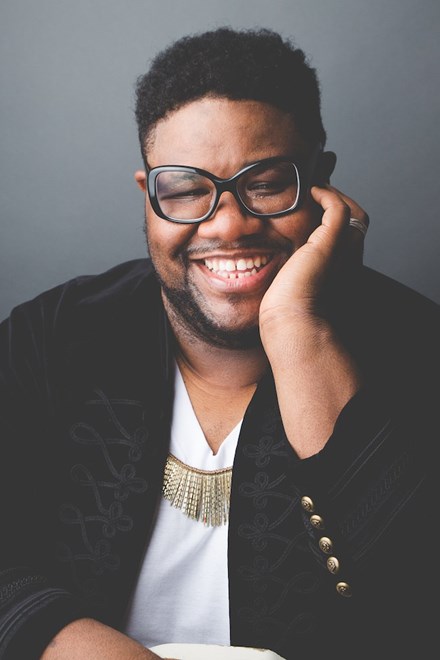
Welcome back to Honing In and to my interview with Dr. Eric Darnell Pritchard.
Dr. Eric Darnell Pritchard (they/them) is an award-winning writer, cultural critic, and Brown Chair in English Literacy and Associate Professor of English at the University of Arkansas. They are also on the faculty of the Bread Loaf School of English at Middlebury College. They earned their BA in English-Liberal Arts (magna cum laude) from Lincoln University, the nation’s oldest historically Black college and university (HBCU). They also earned an MA in Afro-American Studies and a PhD in English (with distinction) from the University of Wisconsin-Madison.
Here are some of the things Eric and I discuss:
- Eric’s journey of studying Patrick Kelly and relaying his life with honesty and compassion
- How studying an artist can help us re-see ourselves as artists
- Biography as an intensive labor of love, an ancestral relationship, and an act of necromancy
- The collaborative artistic partnership for Eric’s forthcoming picture book, Clothes to Make You Smile
- The classroom as place to create the world we want to live in
- Eric’s website
- Eric’s first book, Fashioning Lives: Black Queers and the Politics of Literacy
- Pre-order Eric’s forthcoming picture book in collaboration with illustrator Shannon Wright, Clothes to Make You Smile: Patrick Kelly Designs His Dreams
- Eric’s chapter in The Oxford Handbook of African American Women’s Writing
- Eric will be speaking on October 9th for the School Library Journal Day of Dialog
- Eric will be signing copies of their book at the National Council of Teachers of English (NCTE) Conference in Denver this November
- The Community Literacies Collaboratory and their magazine, The Sandbox
- The Uses of Anger: Women Responding to Racism by Audre Lorde
- Big Magic: Creative Living Beyond Fear by Elizabeth Gilbert
- How to Not Always Be Working: A Toolkit for Creativity and Radical Self-Care by Cody Cook-Parrott
- Ella Baker and the Black Freedom Movement: A Radical Democratic Vision by Barbara Ransby
Transcript
Kate Henry [00:00:00]:
Welcome to Honing in a podcast for creative Thinkers where we’ll hone our skills, explore our passions, and nurture our dream projects into being. Hi everyone. Welcome back to Honing in. And I can already tell that today’s episode is going to be a really beautiful, special, meaningful one. Today I’m interviewing Eric Darnell Pritchard, who is an award-winning writer, cultural critic, and Brown Chair in English Literacy and Associate professor of English at the University of Arkansas. They are also on the faculty of the Bread Loaf School of English at Middlebury College. They earned their BA in English Liberal Arts, Magna Cum Laude from Lincoln University, the nation’s oldest historically black college and university. They also earned an MA in Afro American Studies and a PhD in English with distinction from the University of Wisconsin, Wisconsin Madison.
Kate Henry [00:01:04]:
Dr. Pritchard’s research and teaching focuses on the intersections of race, queerness, sexuality, gender and class with historical and contemporary literacy, literary and rhetorical practices, as well as fashion, beauty and popular culture. Originally from Queens, New York, they are an award-winning writer, teacher and cultural critic and self-described black queer feminist alchemist. Their newest book, Clothes to Make You Smile: Patrick Kelly Designs His Dreams, will be published on January 13th. Thanks for joining me today, Eric. It feels so lovely to read your bio. How does it feel to hear it back?
Eric Darnell Pritchard [00:01:46]:
It feels great, especially that last part about the book coming out. It’s, you know, Patrick has been with me for such a long time. I’m sure we’ll talk about it. So it’s just nice to have a bio that says something is coming will be in people’s hands, you know. Yeah.
Kate Henry [00:02:04]:
And it’s already, we can already see photos of it. Like I saw your unboxing on social media, you know, so it’s, it’s coming, it’s real. I’m excited. Well, I’ll open us up because this is a podcast about creative projects and I would love to hear how you feel about the concept of a project. Like is it something that is a helpful framework for you or is there a different framework or like language you use when you’re thinking about projects? Cause I know you’re working on a lot of them and ones over a long period of time. So I’ll just kind of open it up. How do you feel about that word? How does it work for you?
Eric Darnell Pritchard [00:02:38]:
It’s really helpful for me, but I think for me I think of it as always multiple, and I think really also like of projects as both macro and micro. Right. So the macro project for me has always been, well, I shouldn’t Say, always been. I think there was a time where I worked without it, and I couldn’t articulate it. And then at a certain point, I realized it was helpful for me to be able to say, like, this is what I do. So my macro project has been the excavation documentation, celebrating, sharing Black queer life, culture and history. That is what I do. And it’s what I do in the classroom.
Eric Darnell Pritchard [00:03:19]:
It’s what I do as a writer, it’s what I do as an advocate, you know, in my community, accountable work, what I do in my friendships, in my family. And so that’s helpful for me to kind of always know, like, where I am, you know, and what my intention is. And then micro for me is then just the little kind of like bites of what that looks like. Right. So it’s whatever the essay is I’m working on or the book that I’m writing or the class that I’m, you know, developing, you know, the community partner I’m working with in literacy work. And that, you know, helps keep me organized. I like organized. And, you know, always to have a true north, you know, a thing to kind of go back to.
Kate Henry [00:04:07]:
I haven’t heard projects described, like, on the podcast or like, in, like, folks who I’ve talked to with this, like, macro overarching, like, you know, not like mission and vision, but like personal values approach, you know, to like, this is what I want to do in my life. And then like the micro approach to, like, this is what I’m doing in my time block work sessions. And I really appreciate it.
Eric Darnell Pritchard [00:04:27]:
I think a way that really helped me to also think about that was my sister, my friend, collaborator, Carmen Kinnard. One of her mentors, Suzanne Carruthers, says that there’s a difference between the work and the job. And I think that that has helped me also to sort of see the value and the significance of a project. Right. Because the project is the work. It’s the thing I do, you know, regardless, you know, the job is for me anyways. It’ll be different things for different people. But for me, it’s the thing that lets me do the work.
Eric Darnell Pritchard [00:05:03]:
And sometimes it overlaps. And those are the really exciting things when the job can be the work. But, you know, I’m really, really clear. And so I think, like, you know, the sort of precision around, like, what a project is for me also allows me to be really clear about, like, again, my intention and not confuse that for the thing that I get a W2 for.
Kate Henry [00:05:26]:
Yeah, totally. I feel this working for myself now, and I Feel like in academia as well, when I, like, my time in academia ended when I finished the PhD, and I can sometimes struggle with, like, I work from home. I can literally work anytime. I, like, care about the work that I do with individuals. I feel like it’s helping people. Right. And then it’s like, I really appreciate Cody Cook Parrot’s book, how to not always be Working, thinking around what is the work that I’m doing, the labor for my job. And then when do I cut that off and be like, no, I’m shifting to pleasurable activities or connection or community.
Kate Henry [00:06:04]:
And what is the boundary between that? Or even with writing or research, that’s a tricky thing. Especially when it’s pleasurable and fulfilling to do that kind of work.
Eric Darnell Pritchard [00:06:16]:
Yeah. I think, you know, a book that has been helpful for me or was helpful for me in thinking through that was Elizabeth Gilbert’s Big Magic. Creative Living Beyond Fear in the sense of, like, you know, what she talks about that I really love was. I mean, there’s really active things, like when she talks about seducing the muse, which I really love that because I do that. Like, I sometimes, like, when I’m writing, Like, I dress to write. And it’s not just because I write about fashion. It’s just about how I feel and just the energy. Like, I’m trying to, like, cultivate what I’m doing it.
Eric Darnell Pritchard [00:06:46]:
And so it was really great to hear that somebody else thinks of it in that way. But she also talks about just this kind of, like, space for discovery, for providence, you know, And I really think that, like, that’s a under respected, underappreciated, you know, sort of part of the creative process is that kind of time to, like, not be working that will benefit the work, but you have to actually intentionally commit to it as a thing. I’m not here for that. And what I have found is that, like, you know, you’re gifted by the muses, by spirit, whatever it is you want to call it, like, with just a little something right. For the work. When you do go back to it, it could be inspiration. It could be just energy that you actually have the energy to do it again tomorrow. But I do think you have to kind of be really clear about when you’re doing it and when you’re not.
Eric Darnell Pritchard [00:07:38]:
I do think it also ultimately just this helps the thing, you know?
Kate Henry [00:07:42]:
Yeah, I agree. I feel like. I remember. I think it was in Big Magic where she talked about, like, just go put on some lipstick and come back. Yeah. You know, And I’m like, okay, I like this vibe. Let’s do it.
Eric Darnell Pritchard [00:07:53]:
You know, it’s a caftan for me. Like, when I get to, I guess what people would call writer’s block, I think of them more in the Morrison way as, like, it’s not a writer’s block. It’s more like a spiritual block. You know, I go and put on, like, one of my riding caftans, you know, I. I feel comfortable, I feel luxurious, I feel confident and like, I can just kind of do my thing and I’m in my space, you know, so that’s my. That’s my lipstick.
Kate Henry [00:08:22]:
That’s beautiful. I love it. Okay, well, I could talk about this fun stuff for forever, but I want to think, look back at your bio, which I was, again, just I find so magical to read. And you describe yourself as a black queer feminist alchemist. So I’m curious to hear or how does this influence your approach to your projects? I think you touched on this a little bit, but I was, like, really drawn to the concept of alchemy here. So tell me a bit about that.
Eric Darnell Pritchard [00:08:47]:
Yeah, so alchemy, I mean, you can reach back and think of it in terms of the ancients, right? And so it was just kind of like this process of taking something that is, you know. Well, it’s different registers, right? So in the material world, right? Taking like, these, like, metals and making them something noble, maybe making it something like gold on the spiritual sense, right. It’s taking something that feels kind of, you know, flat and making it something that’s, you know, just kind of really like high vibrational, high energy. I think for me, my way of thinking of it is actually a bit of both. So as a black queer feminist, you know, I look at so many things in this world, you know, in the actual world, in the academic world and the different creative spaces that I’ve entered, educational ones. And I just always try to approach it from a place of. Just like, how do I make room for myself and make room for other people who don’t feel like they could have a place here? And that, to me, is what I mean when I say black queer feminist alchemist. I often.
Eric Darnell Pritchard [00:09:51]:
My life has been going into situations where, you know, I’m not anticipated, sometimes not necessarily welcomed. But, you know, I engage in a process of, well, this is an alchemist word, transmutation.
Kate Henry [00:10:07]:
Yeah.
Eric Darnell Pritchard [00:10:08]:
You know, I make it into what it needs to be for me to be able to flourish and thrive. That doesn’t mean magical thinking. You know, it’s real work. It’s real internal work. It’s real vibrational work and connection to others. And so, yeah, that. I think that is the ultimate heart of it for me. It’s just about taking something that is sort of given to me or has been held back from me and making it into something that’s going to be usable, you know, And I think a lot of people talked about that in many ways.
Eric Darnell Pritchard [00:10:41]:
I mean, if I had to think of it in terms of a black queer feminist who I think talks about alchemy in this way, it would be. Audre Lorde talks about the uses of anger. Right. Anger is not something that we think of as something that is, like, you know, usable. And she says, like, it’s not really the greatest thing, but sometimes it’s all you got. And so when. When it’s what you got, you make use of it. You make it work.
Eric Darnell Pritchard [00:11:03]:
I think the other, you know, thing that comes to mind for me is more this is like my children’s lit picture book kind of thing is like Rumpelstiltskin. Right? So spinning straw to gold, you know, and, you know, like, if you just, you know, you work with what you got and make the thing, you know, that you need, make the thing, that is the noble thing. So really see black queer feminism in that way. Right. It is a noble project.
Kate Henry [00:11:33]:
Thank you for walking us through that and using these different metaphors and, like, touch points for it. Like, hearing you describe this, it feels like agency in a way that is, like, really intentional and soft. I don’t know. Like, these are the words that are. That are coming up for me with that.
Eric Darnell Pritchard [00:11:49]:
Yeah, I aspire to it. You know, some days I get it right, some days I get it wrong. But that is. I mean, I thank you for saying that and reflecting that back to me. That is my intention for my life. That is how I want to be experienced. That’s what I hold for other people, you know, just an easy life, you.
Kate Henry [00:12:09]:
Know, I want that for all of us. I want us to all just have ease and not. And be able to not work as much as we do. And we do and, like, just spend time with our loved ones. Yeah. That’s what I want for everything.
Eric Darnell Pritchard [00:12:23]:
Yeah. I think that’s part of the frustration for me. It’s like, you know, if I have a daily frustration, it’s that it’s like I look around, and I’m reminded every single day that we literally could have heaven on earth. There’s enough, you know, that is what, for me, real mutual aid looks like, is our recognition of that. And then you know, and for all of us to just be able to do the things we love with the people we love. And the fact that we have enough for that to be true right now and it’s not really bothers me every single day.
Kate Henry [00:12:53]:
I hear you. I hear you. So, like, my friendships are the most important thing to me, and I feel so grateful for that and like, the conscious of the effort that I put into checking in with everybody, even, like, folks who live in California. Yeah, I. I don’t know. Anyways, I could also. We could just talk about our, like, loving care and wanting to like, have that be the work that we do to care and make sure our community is cared for. But I do want to talk a lot about Patrick Kelly.
Kate Henry [00:13:23]:
I also researched someone for, like, have been researching someone for over a decade and it’s just like, as we were talking about earlier, like, such a. For me, like an act of love and care and magic and how wonderful it is to just like, have literally just like been in this person’s archive and like, immersed yourself and held the things they’ve held. You know, it’s really just like, so moving. So I’m excited about your research on Patrick Kelly for lots of reasons. And like, one of the things that I think is so cool that you’re doing is that it’s like spanning different audiences, spanning different genres, different purposes, different, like, lengths of publication. And I love if you could tell us about just like your general journey of studying Kelly. How did you discover his work? What’s it been like for you researching one person so intimately? And then I’d love to hear a bit about, like, developing, you know, a book manuscript about this, developing the children’s book about this. So I’ll just hand the mic over to you and talk forever about this.
Eric Darnell Pritchard [00:14:27]:
Because I want to hear everything, you know, studying Patrick. Like, you know, I think I always tell people, I think the first time, you know, was when I was 8 years old. It’s the first time I ever saw him was on television. This is in the 80s and he was on TV all the time. He was an icon. And, you know, I just felt so curious about him because I’d never seen anyone like him on tv, especially not in a role where they were like a fashion person, because he looked like the most unfashioned fashion person out there. That’s actually what like Gloria Steinem called him. She said he’s the most anti fashion fashion person.
Eric Darnell Pritchard [00:15:07]:
Overalls and, you know, wore a T shirt and his Converses and he was. Wore baseball Hat. And so he just didn’t, you know, like, have the. The look right as some of his other peers. But he was very much so in the spaces where I saw him through, like, Good Morning America and Today show and things like that growing up, like, someone of note and someone who was different in so many different ways. I mean, even his very deep Southern accent, his just, like, his playfulness, he just was really, like, interesting to me. And so I think that’s really where the seed was of wanting to, like, know more about him. It wasn’t until about 2010, I was working on my first book, and the research for that was at an archive, the Somberton, which has some of Kelly materials, a lot of Kelly materials.
Eric Darnell Pritchard [00:16:06]:
And I had finished the work that I was doing, and I was like, well, I got three months left in this archive. What am I going to do? And I just, like, was looking around at all the different finding aids, and literally, like, I didn’t see his finding aid, but I just remembered seeing it, like, popped into my brain that, like, there was the Patrick Kelly archive, that it was here. And I went over to the. The archivist, and I said, am I making this up? Do you all have Patrick Kelly, you know, materials here? And they said, well, like, we processed the majority of it, but not, like, all of it. This is what we have available. And I just sat and I looked at everything, you know, that was available, you know, for the remainder of the time that I had on that fellowship. And I still have that piece of paper. I mean, it was literally.
Eric Darnell Pritchard [00:16:52]:
It wasn’t much that had been processed. It’s a single sheet of paper on the back and front in pencil. I took notes each day that I was there, you know, of things that just were interesting to me about him. And then a couple years after that, you know, I just decided it was going to be my next project, and I knew that it was going to be a biography. I’d never written a biography before. That’s always a really important thing for me, in terms of finding my way through things, is it’s better for me not to know how hard a thing is before I start doing it. But, you know, like, I’ve read biographies my whole life, but I completely took for granted and now apologize to every other biographer for not realizing, whoa, like, this is a lot. It’s a lot.
Eric Darnell Pritchard [00:17:41]:
Whether you have someone who kept meticulous records, you know, like a Du Bois who knew he was going to be famous since he was 12 years old, and, like, had all the things, and it’s hard if you have someone like Patrick who was, like, really committed to being both an enigma and feeling open, right. And didn’t necessarily write and keep records about himself personally and things like that. It’s just hard all the way around. And so I said, okay, I’m gonna do this biography. And I just started talking to people and trying to make the connections about folks who can tell me as much about him as possible. I had no roadmap for how you get it done and all of those things. I just mostly felt that the most important thing was to talk to people who actually knew him. To just have casual conversations that, you know, didn’t even feel like traditional interviewing, to try to just know him as intimately as possible, you know, and that felt to me like it needed to be, like, people talking about their friend, not talking about the icon, like, we’d get there, we’ll get there, right? You know, not talking about, you know, their boss.
Eric Darnell Pritchard [00:18:53]:
We’ll get there, you know, but just someone who was like a friend of theirs and just was in their life in a real way. And so that’s, you know, where the research began. And then I just kind of filled it out with all the other things. All, you know, the access to the archives, the papers, the costume and textiles, the connections with his, you know, partner. And to this day, I mean, see, you know, I’ve gotten to see materials that are not even in archives. And that really has made all the difference in the kind of story I’ve been able to tell and how I’ve been able to tell it. The other part of this is the relationship. I think of all my work as ancestor led and community accountable.
Eric Darnell Pritchard [00:19:32]:
Everything I do, I think biography, it feels even more so that because this is a single individual who I did not know in life, who, you know, my entire purpose here is to kind of get in their head, really, right. And also into their life and times. And I take very seriously ancestral relationship. So part of this for me was also taking my time to cultivate a real connection with Patrick Kelly as an ancestor. Right. And I’ve written about ancestorship and some of my other work and how important that was to, you know, black queer folks who I interviewed for my first book, you know, on black queer literacy. And so, you know, I learned a lot from my research participants on that book about what it meant to actually, you know, create such a relationship for myself. And, you know, why that might be important for someone who’s engaging in the work of biography.
Eric Darnell Pritchard [00:20:35]:
And I think that, you know, he, to me, you Know, this is all again, me, I can’t speak for him. I’ll never be able to speak for him. But, you know, it felt to me as if as an ancestor, he was saying, yes. You know, I remember going to. And I talk about this in the book, going to Pere Lachaise, where he’s buried in Paris, with the intention, you know, doing something that, you know, a lot of folks do in black diasporic traditions, which is you pour libations, which is you offer water to the ancestors. And just as like a, you know, a blessing and a thank you. And, you know, my sort of thing that I said was, you know, if you want this to happen and you want me to do it, make it. Do everything to help it be possible.
Eric Darnell Pritchard [00:21:22]:
Because this is gonna be really hard. And if you don’t want it, you know, make it impossible, take it. I can live with it. And I think everything. The work itself has been hard but getting the things I need to do it has always come with ease. No, you know, I. I mean, his partner was a first and immediate. Yes.
Eric Darnell Pritchard [00:21:44]:
All of his assistants, first and immediate, yes. You know, friends and clients. And, you know, many of them busy, really busy people were really open and amenable to me talking with them about someone who at this point, had been gone physically from their lives for decades. Many of them also are doing this under what I came to understand, you know, it was a kind of mourning, you know, practice. Right. I mean, he passed away in 1990. You know, so many people were passing away, you know, from AIDS related complications, so much so that people would go into multiple funerals a week. Right.
Eric Darnell Pritchard [00:22:26]:
And so a part of my conversations with them was actually their first time to really kind of mourn because they, like, really didn’t get the time, you know, to kind of do that before they had to move on to the next person who sadly had passed away, you know, later that same week. Right. And so this might sound strange to people, but, like, I do think there was a kind of, like, a lot of this, like, work of biography, at least for me. And it might be because of the places where I share identity with Patrick as a black queer person and remember, you know, living like, through the 80s and 90s. And my mom, a lot of her best friends were black gay men who died, you know, from aids. A lot of this for me was about dealing with grief, too, that ultimately also came to bear, like, in real life, in my life as well. My mom passed the summer I actually started the project. I think part of it was also A way for me to kind of devote myself to something, you know, else.
Eric Darnell Pritchard [00:23:34]:
And something that she knew that I was, like, excited about as well. And so, yeah, I just really very grateful. And I think that anyone who does biography would say the same. We don’t always, like, biographies are different. They’re all different. You know, sometimes we don’t like the people.
Kate Henry [00:23:55]:
I mean, this is why I have like. Like when I finished a Ph.D. I was like, I’m not doing a biography. That sounds so hard. I am like, this is why I did archival research, to, like, not talk to people. I’m too shy to do this. And so I really commend and can only imagine that different kinds of, like, mental, emotional work that’s involved in that.
Eric Darnell Pritchard [00:24:20]:
And it changes over time. I’ve come to think of it. I mean, this is real witchy. But, you know, shout out to all the witchy people. You’ll get what I mean by this. You know, it is a kind of necromancy. You know, it’s raising the dead in some respects.
Kate Henry [00:24:36]:
I feel you on that. I feel like it’s like telepathy. I’d love to hear your thoughts on this, too. Like in researching Lisa Ben, who did in her middle age, sort of like retreat from queer community. Community was quite isolated. She didn’t have romantic relationships and like the, you know, like, mid part of her life on, it’s like, I feel quite protective of her, like, even to the point, like, there’s some things in her archive, like, around her health that like, I’m like, do I share this? She’s saying in the archive that she’s like. She’s quite protective of it, but she’s now passed. You know what I mean? So, like, when I was writing the dissertation, and even now, like, I feel like there’s like this intuitive psychic, like, checking in that I do with myself to be like, does this feel okay to do this? Because I don’t need to be famous.
Kate Henry [00:25:21]:
I’d rather feel like I’m doing this in a way that feels like caring instead of extractive, you know. But it’s like a. It’s a thing that I. Having not done a biography and having, you know, now I’m working on a book project that’s like, you know, memoristic, like historical, archival. But that is something that I’ve struggled with over time, being like, having to check in and be like, would Lisa Ben feel okay about this? I’m not going to just. I’m not going to do anything that doesn’t feel ethical right. So it is kind of like a telepathic. Like, is this okay? Do you resonate with that?
Eric Darnell Pritchard [00:25:54]:
I do, but I, you know, I also think that, like, you know, a decision that I had to make was that, like, I was not going to be a ghostwriter for a ghost too, right. That. That, like, wouldn’t actually serve him. Part of it was, like, with Patrick, you know, he held a lot of things back in his life because it was just kind of painful for him to process. And so he would. It’s not that he wouldn’t talk about it, he just wouldn’t talk about it with every. Any one person, Right. He would plant a little this and plant a little here, plant like.
Eric Darnell Pritchard [00:26:34]:
So it was almost like he wanted someone to know, but he never quite really trusted any one person enough to tell him the whole thing. And so I think that with me, you know, I felt a responsibility first to myself, right, to be honest about how I saw him, to not sort of fall into things that could amount to, like, hagiography, you know, and things like that. That. That’s not, you know, serviceable. You know, I really believe, like, you know, part of the responsibility we have to our ancestors, which is also our responsibility to ourselves, is that if there is something that is unhealed, you know, we have to get at that. Right. My friend Alexis, Pauline guns, her dad, you know, once said, you know what, you heal for yourself, you heal for all of us. Right? And so that is how I looked at Patrick’s life.
Eric Darnell Pritchard [00:27:30]:
And I did find a lot of, like, unhealed things. There were things about him that I just was like, oh, Patrick, you know, but I felt the responsibility to share those things with as much compassion as I could for who he was at that time in his life. Right. So that. That’s useful to creatives now who are similar places in their life or will be, you know, have you not as a judgment, you know, that’ll be for other people to decide what they want to do with that. All I can do is present it with as much honesty and loving kindness as I can. And I do believe that maybe as a human being, no, Patrick Kelly would not want that because he hid it for a reason. But like.
Eric Darnell Pritchard [00:28:19]:
But as an ancestor and, you know, or whatever it is people believe, celestial being or what have you, I think he understood fundamentally, because he really worked toward it, that his story was going to be important and. And that people needed the totality of it, right. To really root themselves in his life and his work in a way that’s going to Be helpful for other people. So that is how, you know, I’ve tried to approach it. And I think part of it also is then also me. You know, I’m an artist, just like he is an artist, you know, and he was very, very, like, protective of his, like, art space. And I think that that was a thing that I had to sort of come to understand in the process. And it also, I think, met up with how I began to think of my.
Eric Darnell Pritchard [00:29:14]:
Myself as a creative. You know, there were so many things that changed in the process of me writing this book. I began to not think of my office as an office, but as a studio. I began to call myself, you know, like an academic, but a writer or an artist myself. Right. I feel like, you know, if there’s anything that I got from the process of writing about an artist, it was that I began to understand myself as an artist. And that let me kind of, like, have a certain confidence in dealing with him in this one-to-one thing as biographer and subject of just kind of like, okay, here’s your story. This is the things you did, but this part is mine.
Eric Darnell Pritchard [00:29:55]:
This. This draft is for me. Right. And to really kind of hold that space. And I would like to think that he would, you know, understand and appreciate that as an artist himself.
Kate Henry [00:30:06]:
Yeah. Oh, my gosh. Thank you so much for talking to me. I feel like I’m at, like, Creative Scholarship Church right now. This is. So. I’ve been jotting down a couple of things, like this idea of, like, wanting someone to know. Right.
Kate Henry [00:30:20]:
And, like, doing, like, the healing work that, like, was not done or, like, how we might do that through the writing. Yeah. This is really. I’m feeling really inspired and really soothed right now thinking about my approach to my scholarship.
Eric Darnell Pritchard [00:30:35]:
And I do want to say, though, like, I only. I can only speak for myself. Like, I do want to give other examples, you know, for folks who are listening out there, and also for you. I remember being in graduate school and hearing Barbara Ramsby give a talk about Ella Baker. It was like, just before her. Her Ella Baker biography came out, which is an extraordinary biography. It’s one of the, like, the blueprints. And she’s just a great biographer, you know, in general, her book on Islander Robeson is also amazing biography.
Eric Darnell Pritchard [00:31:04]:
But I remember, like, people asked her, like, there were so many things that people didn’t know about Ella Baker. You know, she just kept so much to herself. And, you know, there were questions about, like, her sexuality and, like, her marriage. And, you know, most of it was like, really, like, personal stuff. And she said, you know, I decided that certain things, like, I would speak about and then other things, you know, I think it’s okay that it just remained between sisters because it wasn’t necessarily germane to the thing that I’m trying to say about her life. So, you know, what. What does it have to do, you know, with anything? And if people ask me direct questions about it and things like that, that’s different. But does it have to be a part of, like, the scope of the.
Eric Darnell Pritchard [00:31:47]:
The argument I’m making about her life and the meaning of it. No. So, you know, it’s okay for it to not be there. And so I do think that that’s. There’s that, too. And I just want to also kind of, like, honor, you know, that as a choice that people also make. And also, you can’t get everything in a person’s life and work in a book. It just can’t. You just can’t.
Eric Darnell Pritchard [00:32:07]:
No one’s gonna. No one wants to. I mean, I would agree.
Kate Henry [00:32:11]:
Yeah.
Eric Darnell Pritchard [00:32:11]:
You have to have multiple volumes to really. I mean, as you just think about it, right, like, in terms of what you can do, what you do every day, if somebody were to go and to try to, like, you know, cover that, it would be, like, a lot. Some of it would be very interesting and great, and some of it would. For me, it would be just a lot of, like, sitting around reading novels. I know and petting my dogs. Now, a great writer can make that narrative and make it really, like, great. But, you know, it’s a lot of work on them to do it, too, so there’s also that.
Kate Henry [00:32:45]:
I appreciate you bringing up the example, thinking about Ella Baker, because, yeah, that does feel like. There are certain things about Ben that I know because I’ve just spent so many years with her papers, and, like, there are things that I’m, like, cool. That’s between me and her and whoever is in the archive, you know, that’s the experience there. Yeah.
Eric Darnell Pritchard [00:33:01]:
You have your why. I think that’s more important. You have your answer why. And that is the thing that, you know, that we ground ourselves in and move forward.
Kate Henry [00:33:12]:
Yeah. I feel good about my why. I feel super solid. Yeah. What was the story of clothes to make you smile? Like, tell. Tell me a bit about how that came into life and, like, working with the artist and, like, how did you make that happen?
Eric Darnell Pritchard [00:33:30]:
I’ve always wanted to write a picture book. I love picture books my whole life. When I tell people. I love biography. I love every iteration of Biography. I love the long cradle, the grave, 1,000-page ones. I’m reading the Mark Twain one right now. I love the Slice of life ones, and I love the picture book biography ones.
Eric Darnell Pritchard [00:33:51]:
And I also just love picture books in general. And my agent at the time said to me, you know, like, have you ever thought about just writing. Just writing a nice little cute picture book that could be, you know, introduce, you know, people. You know, little people to, you know, Patrick? And I was like, yes, every day. I don’t know how to do that, but yes, of course. And she said, well, just try. Just give it a try. And I was like, okay.
Eric Darnell Pritchard [00:34:17]:
And, you know, I just kind of put it aside for, like, a couple months, and then it was around the holiday break, not probably holiday break. So it was November. November. Said it was about 20, 22. Yeah. And I just didn’t have anything that I was working on, and I was like, well, let me just. Let me try. And I sat down and just, you know, worked on one draft of it, worked on another.
Eric Darnell Pritchard [00:34:44]:
They ended up being two different versions of, like, his life, different approaches. And so, you know, I ended up sending two picture books, you know, to my agent for them to look at. And they, you know, responded and was just like, these are both good, especially for someone who’s never done this before. We’re gonna scrap one for parts. Yeah, sounds really, you know, we want you, like, go keep going with this. And I just kept working on it and finally got it to a place where I felt really good about it. You know, my agent took it out, brought it to some folks, and, you know, you know, people were really interested in it, in publishing it, and I. I’m very, very grateful for it to have landed with my editor, Courtney and Abrams, who’s publishing the book, because it’s a, you know, a place that really just understands as the tagline is the art of books, you know, and so they’re.
Eric Darnell Pritchard [00:35:42]:
They’re really the perfect place to have a book like Patrick or, you know, any kind of. Especially a very visual creative. And a part of that process is, you know, I’m an author. I’m not an illustrator. I respect art very much. I actually collect children’s book art, my partner and I, so I know a lot about it. I have favorites. You know, Jerry Pinkney is, you know, one of my favorite children’s book artists of all time.
Eric Darnell Pritchard [00:36:08]:
And so part of the process is you get to look at different artists work and say, like, you know, who you think could kind of do the thing that you imagine when you’re writing this thing. And Shannon Wright was one of the folks, you know, that we were looking at. And I was just like. I just knew it in my spirit. I was like, it’s her. Like, I. Like, Shannon has such a very. She’s so talented.
Eric Darnell Pritchard [00:36:35]:
She’s one of these visual artists that can do anything. Like, she has a thing that’s like, her thing. Like, you can look at it, at least for me, as somebody who looks at children’s book, you know, work, I know it’s Shannon, but then also, she’s just so talented that, like, she. She does, like, cartoons, and she can do more editorial kinds of things. And in the case of the Patrick book, like, there’s lots of collages and, you know, and all of that. And I was like, she’s the one. Like, I don’t know if she’s gonna be available, you know, or anything like that, but she’s it. And, you know, she loved the book.
Eric Darnell Pritchard [00:37:10]:
She agreed to do it, and we were off and doing it. And literally, while she’s working on it, she then starts, like, winning all these awards for, like, other work that was coming out. And I was like, ah, I’m glad I got connected where she got so super famous and busy. So I’m very grateful for good. For good timing. And she brought it to life both in ways that I saw it in my head when I was writing it, and then things that are beyond my, like, wildest dream, that I just could not imagine, because it takes someone to. With her skill set, with her own heart for Patrick. Right.
Eric Darnell Pritchard [00:37:50]:
You know that she developed through her own research and getting to know him to do the thing that she did. And so it was just a really good connection to partnership. I hope we get to do it again. And, yeah, it was just a really great experience, I think, just in terms of. If I could say one thing about, like, you know, the creative sort of aspects of this, what I learned from it was really trust, you know, and humility. Right. Because what you have to say as a writer is, like, this is a thing that. This is a story that I’ve told, but this story is actually meant to be told in text and image.
Eric Darnell Pritchard [00:38:28]:
So there are limitations to what I can actually do here. Right. And there are actually ways in which I could try to insert myself into it. Right. Because you get to make artist notes and things like that that could actually make this not great, you know, so, like, I’ve learned a lot about just the humility, you know, that comes in collaboration, the vulnerability of Taking a thing that you have loved for so long and just like, handing it over and letting someone else love it as much and trusting that they can do that and meet you there. And the reason why it just came out, in my opinion, you know, so extraordinary, was just that, just kind of letting us both be us in the process and trusting Courtney as our editor to, you know, really keep things rolling. So it’s been really great and I’m really happy to be in the picture book, you know, middle grade YA world now.
Kate Henry [00:39:25]:
Oh, this is amazing. And are pre orders open now for yes. Oh, my gosh. Everyone pre order. I will include the link to this. I can’t wait to get copies for all the kids in my life.
Eric Darnell Pritchard [00:39:36]:
Guys, please do, please, you know, pre order it. You can, you know, order it at your libraries too. You can ask your indie bookstores to carry it. Teachers at schools carry it. There’s a lot of ways to support and help us. So thank you.
Kate Henry [00:39:50]:
Yeah, my gosh, my pleasure. This is thrilling. Okay, so we’re talking a lot about Patrick Kelly, which I honestly could just listen to you talk about this for 10 hours. But I do want to switch and think about other projects that you have going on, which is thinking about your role as an educator. So I was first introduced to you reading your work in graduate school. And I attended a queer archive seminar that you co facilitated with other queer archival scholars. And it was a really awesome experience just being with other folks, you know, who are as interested in this and asking questions. And now as an educator, your role spans different again, audiences and places.
Kate Henry [00:40:31]:
So you’re working with grad and undergrad students at University of Arkansas. You’re also teaching writing at the Breadloaf School. And Tom, tell me a bit about, like, how you conceptualize your role as an educator. And like, is that something that you feel is like, well, again, I had this, like, macro approach to this across all spaces. Or like, how does that shift when you’re, you know, working in different spaces?
Eric Darnell Pritchard [00:40:55]:
Yeah, no, I think it’s all, for me, it’s all the same, you know, so, like, the project is still the project even in the classroom. I think that the sort of thread of that, you know, that I am most able to do something with in the classroom that I think is a little bit harder, at least in the writing process. Not necessarily. Once a book is published is that like, every single time you go into a classroom, like, it’s happening, right? You know, like with a book, it’s kind of like it’s a marathon. You Know, like, you’re kind of like going, oh, yeah, pushing that boulder up the hill and then it’s there, right? With the classroom, it’s like, here we are, you know, And I think of the classroom as a place where we, like, are creating the world we want to live in, right? And I believe in the classroom. One of my spiritual teachers, you know, has this thing where I forget where it comes from, but this, like this, she calls it the Horatio Hornblower aphorism, which is like, you want to begin in the way in which you wish to continue. And I think that with education and higher education in particular, there’s so many, I think, over determined things about what a classroom should be and should do that we just all kind of like, are in danger of just like being on autopilot and just doing it the only way we’re told to do it. But what is actually required, I think for me to make this part of my project is to make room always for creativity as part of it.
Eric Darnell Pritchard [00:42:47]:
Even though I don’t think that there’s no reward for it. I think that you actually do better when you kind of, you know, it’s easier. You just kind of, like, do the thing that you’re given to do. And so for me, you know, I actually go into the classroom with this notion, okay, here’s a place where I can make the world, I want to live in. Where do we start with that? And so, so for me, we, you know, we start first by making space to remember that we’re human. You know, we gotta, like, kind of shrug off, get rid of some of the, you know, whatever anxiety energy it took for us to get into that room, right? So that we can be in the room and be there together and start together. So I do, you know, we do a section in both my grad and undergrad classes. We call it breathing lessons and breathing Breathe.
Eric Darnell Pritchard [00:43:38]:
Well, sometimes I call it breathing lesson. Other times I’ve called the breathing room. And we just, you know, take, you know, ancestral mantra and just like, sit, sit with it, breathe with it. You know, you can free write. Think about what comes up for you. Yesterday in my grad seminar, Community Literacy, it was Audre Lorde. I am who I am, doing what I came to do. And, you know, sometimes people have something able to share, sometimes they don’t.
Eric Darnell Pritchard [00:44:03]:
We also begin with dedication, right? And so all of my classes begin with each of us dedicating our presence of participation, right, to someone, something as to why we’re there. And this is something that I learned in Undergrad at Lincoln, one of my professors and mentors, Dr. Babatunde, who was the director of the honors program, he always said, if your education is any good, it doesn’t belong to you, it belongs to your people. And so I always like to do dedication because sometimes I can’t be in the room just for myself. That’s not enough to get me there or to stay or to engage. But I can stay there and engage if I put it in the name of someone who I love or care about or who taught me something. Right. It also reminds me of the responsibility that I have to the community, the community ability aspect of being an educator.
Eric Darnell Pritchard [00:45:04]:
And then also making room for, again, not just for me to be creative, but for students to be creative to engage. Questions that I would, that we would never talk about if only I got to sort of, you know, sit at the steering wheel, you know, to do assignments that look a little bit different than the traditional, like, okay, we’re going to write a 30 page paper, no shade to anybody, for whom that’s like the thing you do. But it’s just not my way. Like, you know, I, you know, try to always mix it up and just do something that lets people have a lot more room to just kind of begin to see themselves as an, as an artist too and take responsibility for the educational experience that they are having. Adrienne Rich says, education isn’t given, it’s claimed. And I really see my role as to create the most favorable and encouraging conditions under which my students can claim their education. So imagine what they can do with it outside of the space, the kinds of spaces where I’ve been an educator, why those things have been different. I really just believe in just transdisciplinarity, disciplinarity.
Eric Darnell Pritchard [00:46:25]:
And so I don’t put limits on myself that aren’t real. I had to learn to do that. And I think that’s true for the classroom. It’s true for my, my creativity. You know, I just try to live a life that is abundant. And so that means that, you know, for other people, they’re just like, now, how are you doing literacy and rhetoric? And then you over here doing fashion and then you’re doing. I’m doing it because I’m doing it. Yeah, right.
Eric Darnell Pritchard [00:46:53]:
I’m doing it because I’m doing it. And it feeds me. You know, I’ve worked toward it, I’ve done the words. My, it is what I’m, I’ve been given to do, you know, and I’ve said yes to. And so I Think that the classroom is another place of where. Where that. Yes. Has been, you know, given by me.
Eric Darnell Pritchard [00:47:14]:
And I just try to find a way to make it part of the bigger constellation.
Kate Henry [00:47:20]:
Yeah. It’s so meaningful, heartfelt, like, earnest. Hearing you talk about this, I’m, like, brought to tears thinking or about your exercise around, asking folks for their dedication, for who they’re showing up for there. Like, I feel like in academia or. I don’t know, not to. I don’t want to be like, one of the people who, like, left. Academia is not like, academia is terrible. But, like, I do remember, like, I did sometimes just have a feeling of, like, what’s the exchange value? Like, I’m like, what am I putting in? What do I get out of this? You know? And it’s like, that question expands that and really has me drop in in a different way.
Eric Darnell Pritchard [00:47:56]:
Yeah. I mean, and that. I mean, that’s alchemy. We are changing the space, you know, into what it can be, what it needs to be to do the thing that we are here to do. And that is not always going to match what, in my case, the Arkansas Department of Higher Education wants it to be, which is just, like, get us some more workers. You know, I mean, that’s great. You’re going to get your workers. You’re just not going to, you know, get docile bodies.
Eric Darnell Pritchard [00:48:26]:
Not for me. That’s not my pedagogy. So. Yeah.
Kate Henry [00:48:30]:
Oh, my gosh. Okay. I have a couple more questions I want to ask you today, and I would love to hear, like, continuing in this vein, how your role as an educator led you to become the founding director for the Community Literacy Collaboratory. So I’d just love to hear about your passion for literacy and the work that the organization is doing in Arkansas or beyond. And also, is there things that we can do, like folks listening can do, or either in their space or through the collaboratory?
Eric Darnell Pritchard [00:49:01]:
Yeah, absolutely. I mean, my passion for literacy advocacy comes from being someone who. And I write about this in my first book, who had a really challenging time learning to read. You know, I would not have learned if I did not have a mother who was a single mother who was, you know, working two and sometimes three jobs, but was just like, no, like, you’re not gonna, like, leave my child behind. And so I really am just very passionate about literacy and what other people want to do, what people want to do with it, and also how they acquire it. You know, I’m passionate about what, like, we think of at the CLC as, like, applied literacies. Right. You can get this if you’re interested in sewing, and you can get it if you’re interested in gardening.
Eric Darnell Pritchard [00:49:48]:
And you can get it if you want to be a poet. And you can get it if you just like to read books. But, you know, what difference does it make? What matters is that you get it, you know, and that it brings and fills your life with joy. It helps you to tell your story, the stories of others connect with other people. And so, you know, it’s connected to my work as an educator, I mean, and as a researcher, but, you know, as an educator, because, you know, I really think of what we’re doing is kind of creating a community classroom, really. Right. And. Or supporting people who have already done that work, you know, in Arkansas and nationally.
Eric Darnell Pritchard [00:50:30]:
I mean, there’s so many ways for people to be involved. We have a journal, which is called the Sandbox, Short Papers, Big Ideas on Literacy and Learning is the full title. And we publish literacy autobiographies. We publish short research essays on literacy policy, memos about literacy, learning and education, book reviews, you name it. Compensate all of our writers. And everything is also still peer reviewed. We compensate also our peer reviewers. So if anybody’s interested in contributing, you can go to our website, communityliteraciescollaboratory.com, you know, look at the Sandbox page and, you know, submit some work to us.
Eric Darnell Pritchard [00:51:10]:
If you’re interested in being a reviewer, just, you know, you can email us and say, I’d love to review for you all and let us know what you would be interested in reviewing. And as things come in, you know, we would send those things out to you. There’s also grants. We offer grants for community literacy like programs and organizations. We support also research literacy research. So we have scholars all across the nation who won one of our research grants. We’ve been doing the grants since 2023, and we have supported literacy programs and literacy scholars, you know, as close to home as here in northwest Arkansas to, you know, youth programs in New York, in Philadelphia and Jackson, Mississippi, in Houston, Texas and Iowa. We, you know, just had really great impact in a very short, you know, amount of time.
Eric Darnell Pritchard [00:52:06]:
And it is a. We. I don’t do it, you know, by myself. You know, I have an amazing team, graduate assistants and an associate director and an assistant and then colleagues in the department, you know, and specifically in the rhetoric and composition area who really support us. And then we have an advisory board, some of the most amazing literacy advocates and scholars, school librarians, high school English teachers, literacy scholars, people who do Prison education who truly advise me. It’s not like lip service. They really are there. They review applications, they review articles for the journal, they give me advice, and I listen to them.
Eric Darnell Pritchard [00:52:49]:
So, yes, go to our website. Lots of ways to be involved. We offer workshops on grant writing and all kinds of things.
Kate Henry [00:52:57]:
Oh my gosh, this is amazing. And I love how far the reach is and how folks can be involved and engaged in different ways. I feel really inspired hearing this. Well, I’ll start to close us down for today. I love to ask folks what they’re honing in on. So what do you feel like is something you want to be honing in on?
Eric Darnell Pritchard [00:53:18]:
What I’m honing in on is currently is working on a project that requires me to write in a genre I’ve never written in before. And I am just really proud of myself for saying yes to something that feels really scary. It always feels scary. But I think the more I do it, the more I realize that, like, you know, if you. Well, if you hone in, eventually you do kind of get it. You know, I’ve never been. My husband has said this. He said, you know, you enjoy your writing so much, but you do know it would be easier if you would just write a book like the previous book, the next.
Eric Darnell Pritchard [00:54:04]:
But he’s like, but not you. You write like a scholarly book about literacy. Then you go write a biography and then do a biography. You’re like, I’m going to work, write a memoir. Okay, I’ve written a memoir. Okay. I’m writing a picture book. So like, you know, but I feel nourished, right? So that’s what I’m honing in on is trying to become nourished by doing something else I’ve never done before.
Kate Henry [00:54:29]:
That’s a lovely place for us to close the questions. So I’d love to. I’ll share your website in the show notes. But are there other places where folks can find you online or things that you have coming out? I know that the Clothes to Make you Smile will be coming out in January, and folks can pre order that. So are there places or other things you want to point folks towards?
Eric Darnell Pritchard [00:54:50]:
Yeah, I actually just learned yesterday there is the Oxford Handbook on African American Women’s Writing is being published and they publish incrementally so they put pieces up as they’re ready and then the full actual hardcover comes out at a later time. So I wrote an article about Community Accountable Literacies and the Combahee River Collective. And so that is now available through Oxford Handbooks. And I’M going to be doing a couple of different speaking things that are free and I can also share those. One is for the School Library Journal. They do what’s called the Day of Dialogues. They do an all-day conference, and they’ll have different writers who do work on picture books and middle grade and ya, I think Jason Reynolds is one of the keynotes. And so I can share that, and people can see me on a panel there talking about people with other people, amazing folks who do work on picture book biographies.
Eric Darnell Pritchard [00:55:54]:
And then in November I’ll be at the National Council for Teachers of English signing copies of those to make you smile. So if you’re someone who attends the National Council for Teachers of English or knows someone who attends that, it’ll be in Denver this year and I’ll be there with Abrams Carpenter’s Immable.
Kate Henry [00:56:10]:
Oh my gosh, this is fun. This is so magical. Well, thank you so much for taking the time and for such a nourishing for me as well conversation. It was really lovely to talk to you about doing biographical and like archival scholarship. And it feels, it’s just really meaningful for me to see the example that you’re doing and doing this in a way that is heartfelt.
Eric Darnell Pritchard [00:56:34]:
Well, thank you so much, Kate. I really appreciate you having me. You know, it’s as you know, I mean, writing in general, but biography in particular, you’re just so just like in it, it’s not completely lonely because at least you’re there with the person you’re writing about. But it is still like you’re kind of like doing your thing. And so I always loved being able to talk to people about just making work and about biography in general and also like connecting those dots. You know, there’s something very edifying for me, you know, because of the questions you’ve asked about just kind of feeling like I’m, I’m on the right path. Right. Like, you know, I can see.
Eric Darnell Pritchard [00:57:18]:
Yes. Like the writing and then the classroom and then the literacy advocacy. I knew it when I started, but it’s nice to be able to kind of take stock. Excited to see what I can do after this, you know, now having that awareness. So thank you for that.
Kate Henry [00:57:34]:
Oh my gosh, my pleasure. All right, thanks so much, Eric.
Eric Darnell Pritchard [00:57:37]:
Thank you.
Kate Henry [00:57:39]:
Thanks so much for joining me. You can learn more about honing in and my work as a productivity coach on my website, kate henry.com take good care.
Newsletter
Sign up below to access my free newsletter, Tending with Dr. Kate Henry.