
Rekindling The Relationship to Your Creative Practice with Catherine LaSota
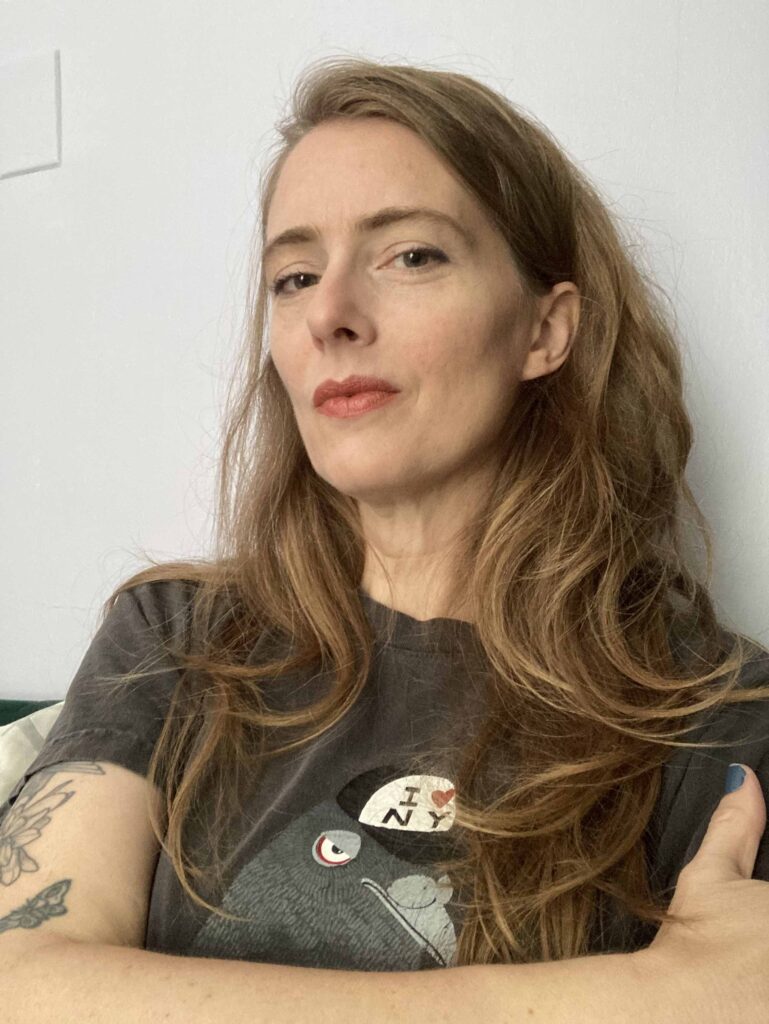
Welcome back to Honing In and to my interview with Catherine LaSota.
Catherine LaSota is a badass creativity facilitator, and she is here to help you build and sustain a creative practice that works for you, taking into account your resources, capacity, deep desires, and unique vision. She parents two young children in Queens, NYC, and in addition to her MFAs in Sculpture and Creative Nonfiction, she is trained as a coach and has a variety of music education and performance experiences. Catherine is a certified advanced SCUBA diver, former bartender and retail manager, and the founder of the LIC Reading Series and Resort writing community. She also brings a couple decades of experience working in higher education into her practice and currently serves as Associate Director of Social Practice CUNY. Catherine offers 1-on-1 coaching for writers and anyone building a creative practice; online workshops; in-person writing parties; and occasional retreats. She likes being in conversation and listening deeply, and you can hear more from her on Feed the Art, her podcast about nourishing your creative practice.
Here are some of the things we discuss:
- Projects and assignments as scaffolding to support your creative practice
- Why your creativity should be treated as a fluid, long-term relationship
- On being your own daddy and following your own vision
- Moving beyond scarcity to understanding there is always space for you
- An invitation to try bizarre techniques to spark creative inspiration
Resources & Links:
- Catherine’s website and weekly(ish) newsletter
- Feed the Art podcast
- Part of the Practice podcast
- LIC Reading Series
- Dorothea Lasky’s chapbook Poetry is Not a Project
Big thanks to Softer Sounds Studio for podcast editing and support.
Transcript
Kate Henry [00:00:00]:
Welcome to Honing in a podcast for creative thinkers where we’ll hone our skills, explore our passions, and nurture our dream projects into being. Hey everybody. Welcome back to Honing in. I am Dr. Kate Henry, and I am recovering from a cold. So if I sound a little like Lindsay Lohan, that is why I hope I do as a mean girls lover. Today I am interviewing someone who I really wanted to have on the podcast as my first guest of 2026, and we’ll talk about that later. But today I am interviewing Catherine Lasota who is a badass creativity facilitator and she’s here to help you build and sustain a creative practice that works for you, taking into account your resources, capacity, deep desires and unique vision.
Kate Henry [00:00:58]:
She parents young children in Queens, New York City, and in addition to her MFAs in sculpture and creative nonfiction, she’s trained as a coach and has a variety of music education and performance experiences. Catherine is a certified advanced scuba diver, former bartender and retail manager, and the founder of the LIC Reading Series and Resort Writing Community. She also brings a couple decades of experience working in higher education into her practice and currently serves as Associate Director of Social Practice, CUNY. Catherine offers one on one coaching for writers and anyone building a creative practice, online workshops, in person, writing parties, and occasional retreats. She likes being in conversation and listening deeply. And you can hear more from her on Feed the Art, her podcast about nourishing your creative practice. I love all of this. I did not know that you were an advanced scuba diver.
Catherine LaSota [00:01:58]:
So surprise.
Kate Henry [00:02:00]:
I mean it’s very. I don’t wanna say on brand that sounds so corny, but it’s very cool.
Catherine LaSota [00:02:06]:
Like okay, but I wanna know why.
Kate Henry [00:02:09]:
Well, cause I don’t think of you as a brand. I don’t think you having this like cornucopia of activities that you do is just a brand. I think it’s that you’re. I’m assuming you are just someone who is just naturally really curious and has fun doing all of these things. Not because you’re like, this looks cool to tell people. I’m a scuba diver. So that’s what comes up when I think of being cool.
Catherine LaSota [00:02:32]:
Yeah. Thank you. I am going to go ahead and credit a lot. Well, I don’t know. I think that the relationships in my life have fostered that creativity and curiosity in me and we can get into that maybe. But I’m just really excited to be here, Kate. It’s so exciting. I brought my favorite coffee mug so that I can sip and chat with you.
Catherine LaSota [00:02:49]:
Like, we’re on a sofa together, even though we’re in different states.
Kate Henry [00:02:53]:
I’m so excited. And I’m so excited. I was reflecting too, today, prepping that, like, this is so fun. Cause I’m like, productivity, you’re really fascinated with creativity. And like, my purpose for creating this podcast is like, I’m interested in that overlap of those two things. And I’ll start us out by asking the question that I always ask, which is, what is your concept of a project? What is your concept of a project? And is that something that’s helpful for you? Is there another kind of word or framework let you know? I was gonna ask this question I shared with you. Dottie Lasky’s poetry is not a project, which I’m fascinated about. That’s what the whole first episode of the POD is about.
Kate Henry [00:03:35]:
So I wanna hear from you, what do you think on project? And then also, let’s talk a little bit around, like, creative projects and how we feel about that as a concept.
Catherine LaSota [00:03:44]:
Totally. And I love that you mentioned this intersection of creativity and productivity as well, because I think that a lot of people end up coming to work with me because they’re worried they’re not producing something. And we get them into the creative practice of, like, this is where the emphasis goes. And then as a result, you produce things. So we can talk about that. But I really loved reading this Dorothy Alaski piece and we could talk the entire time about it. But I will just to say about the word project. It is a word that I use.
Catherine LaSota [00:04:20]:
I use the word project, and I use the word practice a lot. But I want to be clear about what I mean by project, because I think a lot of what came up in the Laski piece really helped me to clarify this thinking. I think of it more like a container in a way where I think maybe some approach to project could be, this is my assignment and I have some to do items for it, and I’m going to create this thing. Whereas I see a project as a way of creating scaffolding for your creative practice. And this is something I talk about a lot as well. So, yeah, I don’t think that a project needs to be definitive. And I think we can talk about this more if we get into the last key piece.
Kate Henry [00:05:07]:
Yeah, it was interesting hearing you just say thinking about, like, an assignment versus a container. I am someone who loves an assignment. Like, I’m very, like, beta energy. I love being told what to do and then doing it and getting my gold star. Okay. So, like, that’s my Interest in like, oh, I like that. But also like, I imagine with creativity, it’s like, not just like, here is the perfect way to do this well, and to like, you’ve been creative, check mark, you’ve done it. Right.
Kate Henry [00:05:35]:
Like, it sort of grows and is an iterative and creative practice.
Catherine LaSota [00:05:39]:
Right.
Kate Henry [00:05:39]:
So there’s not really a question there. But I’m curious, like, what you’re thinking about that.
Catherine LaSota [00:05:44]:
Yeah, I think to clarify that a bit more is maybe in terms of the parameters we set for ourself in a project. I think, much like in this Lasky piece, I think if I could just expand upon what I saw there. If we set up parameters for ourselves in a creative project and those become the important thing, then what are we doing? Are we needing to make a 70,000-word manuscript? Because that’s the way you’re supposed to put an idea of a certain length into the world? Or is the purpose of our work to share a certain idea and however it ends up coming into being, that is the way it happens. A project or parameters can be set up so that we have kind of a direction to start on the path, but we don’t know where the path is going to go.
Kate Henry [00:06:38]:
Like, something that’s been challenging for me, learning how to write, not being in academia anymore after doing the MFA and then the master’s and PhD is like, when I was writing in academia, it was always to get a gold star, like feasibly. Like, I would get an assignment, I would do it and I would get a good grade on it. Right. And like now that I’m trying to write a book and like doing other writing, like, I could write a book proposal and a manuscript and it’s not like I’m turning it into a professor and they’re like, good job, here’s your book contract or something, you know, so like, that has been sort of like a, I don’t know, kind of like, not like harsh awakening, but like totally welcome to the real world. Like being outside of academia and doing creative writing and stuff.
Catherine LaSota [00:07:21]:
Yes, absolutely. And as you’re talking, you mentioned the MFA there. I think about when I have two MFAs, one in sculpture and one in writing, as you mentioned. And there’s a real problem when people leave the programs of just not working for a minute because they don’t have, well, for sculpture, one, the tools that they needed in the studio that are so expensive. But yeah, that getting the gold star thing. I have a question for you about that, actually, and there’s not a right answer here, but those gold stars, I’m sure felt really good when you got them. But I’m curious about the lingering good feeling. Like, does that really sustain you after the fact?
Kate Henry [00:07:59]:
No, it doesn’t for me. I like, decided when I was a little kid that I was going to be a writer. And then when I was a teenager, I was like, I’m gonna be a professor. And so like my expecta and I’ve always done incredibly well at school. And so the expectation of myself was that of course I’m going to get the grade. Of course I’m going to win the award, you know, like, fit like I really was like had a big fish in a small pond sort of feeling. So like the gold star or the like excitement feel good. But like, I definitely within academia from when I was a little kid, that gold star mentality, the lasting satisfaction didn’t really stay as much as it was just like, well, that’s just what we do.
Kate Henry [00:08:48]:
This is not good. I’m also like, recovering workaholic perfectionism, you know, but it definitely was fueled and it was rewarded in academia.
Catherine LaSota [00:08:57]:
Absolutely. And you’re talking to a former straight A student, I don’t think. I think in any of my schooling, I’m like, I’m an A student. Right. And it’s still really like getting an assignment like you and like working hard at it. But what I’m hearing is, and I think I also had this going on for a long time, was getting the gold star. Yeah, it felt good, but it wasn’t like, here’s this thing I got, and I feel great about it, was this thing you needed to get to maintain the status quo because you expected to get it. You’re like, you’re supposed to get this.
Catherine LaSota [00:09:32]:
You had to get it.
Kate Henry [00:09:33]:
Yeah, no, I feel like failure was not an option for me. And then I became chronically ill and was like, okay, cool, this is not real. And then I decided to leave academia. Then things really shifted. But yeah, it definitely was like, my whole identity is. Was tied to the success in academia. And even now, like, my business is based around like writing and coaching writers and like my clients are all, almost all in academia. So it is still realm that I know how to navigate very successfully even though I’m not there.
Kate Henry [00:10:04]:
So I want to shift and ask you a little bit more about like, the creativity coaching and facilitating that you do. We just talked a little bit about, like our MFAs and I read your amazing, as I said, like, cornucopia of activities that you do in your bio. So it’s no surprise to me that you’d be drawn to help folks with their creativity and have that be like a cornerstone of the work you do. As a coach and facilitator, I’d love to know some behind the scenes of, like, how did you come into doing that work and developing this as your career and your business? What kinds of clients are you supporting? What are the kinds of projects they’re bringing to you?
Catherine LaSota [00:10:46]:
Yeah, thank you for this question. I really believe that a lot of us who go into this work and supporting other people are doing the things that we need for ourselves or have needed or continue to need. As you nod your head vigorously by saying that, you know, I ha. I do have this cornucopia, as you say, of different things and different creative practices and things that I’ve done. I’ve come up against a lot of really hard things and difficulties and, oh, this is how it could be better. And I want to help people through that. For example, I moved to New York City right after finishing college. I had just turned 20, straight A student plowing through school fast.
Catherine LaSota [00:11:29]:
Yes. And I was like, I’m gonna go to New York and be an artist. Plop in the middle of this very exciting, stimulating, ambitious metropolis. And I just floundered. I like, what was I doing? There were too many options. There was. I didn’t know myself. I didn’t have a community.
Catherine LaSota [00:11:53]:
I didn’t know people. And there’s always gonna be somebody who’s doing more than you. It doesn’t matter. I mean, in New York for sure, anywhere, right? There’s just too many people out there. There’s gonna be somebody doing something better than you. And so that was kind of a seed of just finding my own way. And over the years, I started leaning into my strengths of doing different kind of gathering spaces. I think it was in my bio you read that I had the LIC reading series, which was five year monthly, where I brought in three writers and had panel discussions with an audience.
Catherine LaSota [00:12:31]:
We also turned it into a podcast. It really scratched the itch I have of being on a stage and performing. I love holding space. I love making a comfortable space for people to be together. And what I realized in those spaces was people would come month after month because it was making this community. And it was a lot of writers in the room hearing from writers about their practice and feeling less alone. And there was no gatekeeping. And that was all really important.
Catherine LaSota [00:12:59]:
And then I started an online writing community when 2020 came around and the in person live events just weren’t happening. And that online writing community was really important for me and for other people in the early years of the pandemic, especially during lockdown, meeting regularly, just sharing resources with folks and just talking through our writing together. And as I kept doing these things and over the years having a lot of interviewing experience in different contexts, hundreds of interviews in podcasts, in print, in online, like, I’ve had the pleasure of chatting with some really amazing people like Min Jin Lee and Joyce Carol Oates and like Vivian Gornick. And I even interviewed the tattoo artist Ed Hardy at one point. So I like chatting with these quote unquote famous people and also with like any artist. We are all just people, right? So I started leaning more into these one-on-one conversations with the writers I was supporting. And I decided to do formal training as a coach to develop the skills for these one-on-one conversations. And that all has informed the practice I have now where it’s group work is still super important to me.
Catherine LaSota [00:14:21]:
And I work one on one with people, not just writers now, but anyone developing a creative practice. And often people who come to me saying that they want to write and end up doing another creative practice by the time we’re done.
Kate Henry [00:14:34]:
Oh, wow. That was going to be. One of my added questions I wanted to ask you is like, what kinds of creative work are the folks who are coming to you wanting to do or explore? Like, are there, are there folks who have like, oh, I used to do this and now I’m returning to it, or like I’ve always wanted to do this or I don’t have feel like I have time to do this or like, what are some common experiences for the folks who you work with?
Catherine LaSota [00:14:59]:
But yeah, I love this question. Also on something else that I wanted to make sure that we chatted about here around why people come into creativity coaching. And then what ends up happening is a lot of times people come because they feel disconnected from their creative practice or they haven’t touched it in years. How can I even get in there? And they want to get in raring, like, I wanna write the book, I wanna do the thing. And I’m like, whoa, whoa, whoa. You have a relationship with your creative practice, and you can’t be like, you’ve ghosted them on text for months or years and all of a sudden you guys wanna go off to Paris for two weeks together for a solo, you know, whatever, vacation. Let’s ease you in. And so we do a lot of work in just getting the practice going again and not putting pressure on it.
Catherine LaSota [00:15:53]:
Too much, too soon. And also, really importantly, thinking through why this creative practice is important to the person because there’s so many stories about what it should look like, and it’s really hard to see your own. It’s also hard to see what makes you incredibly unique because it’s just like your life. So that’s a. That’s a big thing that I think happens in creativity coaching with me is we get into what a person’s life looks like, what their experiences are, what their unique resources are, what their point of view is, and leaning into it and trusting it to get into their practice in that way.
Kate Henry [00:16:36]:
This is so exciting. I want everyone to work with you as their creativity coach. You just talked about, like, folks real lived experience and like thinking about their creativity for that. And that’s something I really love about your work and my introduction to Feed the Art, your podcast was listening to a podcast episode about capacity, and I was just like, it was such a soothing balm and so validating to hear you claim that folks should be thinking about their, like, physical and mental and emotional capacity when they’re doing their work and creating a creative practice that accounts for those. So it was really important for me to bring you on at the start of the year because I suspect a lot of listeners are. Well, maybe not. I don’t know. I’m guessing that folks are like, new Year, new me, new resolution.
Kate Henry [00:17:27]:
I’m going to write my book. I’m going to do this thing right. Do you have some compassionate suggestions for them? I doubt you’re going to be like, you got it. You got to hustle, you guys. You got to put your nose to the grindstone, and you just got to work all day, you know, like, if.
Catherine LaSota [00:17:43]:
You’re listening to this podcast and not working on your book right now, turn us off and get to work. No, no. Absolutely not. Look, I also love the change of seasons and the change of year, and I use a paper planner every year. And there’s something really exciting about opening. It’s fresh. This year could be anything. What do I want to make it be? I mean, I also feel that around my birthday, maybe, maybe more so than the turn of the year because it’s my new solar return and all of that.
Catherine LaSota [00:18:12]:
But I will say that again. I’m gonna go back to this idea of it being a relationship, and if you’re starting at the top of the year and you’d be like, now I’m gonna do it now I’m gonna make it happen. Let’s go. And it has to be this way. I’m like, yo, relationships are so fluid. They ebb and flow. Think about all of the relationships in your life. Your friendships, your romantic relationships, your family relationships, your community relationships.
Catherine LaSota [00:18:43]:
There are people with whom you may be committed in relationship. And that relationship doesn’t look the same now that it did two years ago, five years ago, 10 years ago, last month, last week. Right. Sometimes relationships fade away and they’re not really, quote, part of your life anymore. But if you’re committed to it, you’re committed to going through the changes. And if you’re committed to your creative practice, you don’t have to get it all done at the beginning of the year. Also, you’re committed to the long haul, right? So it doesn’t have to look a certain way at any point in time. It just has to be that you are committed enough to devote yourself to return to it and return to it and return to it.
Kate Henry [00:19:29]:
I feel like a sense of relief hearing you say that. The pressure has been let go. You don’t need to finish it all then. And also with that is a reminder that like creative practice and, or projects like they don’t. Maybe you do have a project that you need to finish by like March 1st or something like that. And sure, then you have a strategy to do that. But also it’s like I find this now working on a book where it’s like, oh man, like this is gonna take a long ass time. Especially if I wanna submit a proposal and I wanna go with, you know, like working with the press versus self-publishing.
Kate Henry [00:20:04]:
Like, this is not like a. I just hammer at it and then it’s done. Like these are, this is like a long process and like accepting that that is, that has been tough. Like I try to walk my talk with not leaning into urgency and also like wanting to publish a book. I do, I struggle not to be. Like, I need to do it first. What if someone else does it first? You know, Like, I know better. My values and my politics teach me better.
Kate Henry [00:20:33]:
But I still struggle sometimes with that like urgency or scarcity mindset for like, we live in like a patriarchal white supremacist culture. So it’s not surprising that I feel that way. I don’t know. Do you have any guidance?
Catherine LaSota [00:20:45]:
Yeah, no, I have so much, I have so many thoughts on this. And also, Kate, no one is going to be claiming the gold star that’s yours. First of all, like, your book is going to be your book when it happens and you’re bringing something else up here. That’s I think about maintaining excitement through a long-term project as well. You’re, you love this idea, you love this project, want to work on this, you want to move forward. And so yes, be gentle with yourself on the progress and the long-term ness of it and know it’s going to be a slog at times. And because of that, how can you maybe even schedule in pieces of it that are especially exciting and give you those little bursts of joy along the way? Can you share pieces of it? Can you talk about it with people, so it’s feels more real? Can you do co working sessions to get it written? You know, just ways to bring it outside of your head and make it real without it actually being a physical book in the world. There’s so many ways to make it real before it’s the physical book.
Kate Henry [00:21:48]:
Oh totally. Yeah. And like I’ve set up some of them. I’m not turning this into a coaching message for myself.
Catherine LaSota [00:21:54]:
Well, I’m happy to, but people need to also work with Dr. Kate here if they need to set up some productivity because she is the best with that.
Kate Henry [00:22:02]:
Yeah, I’ll help with the productivity and the time management and stuff. But like the, I mean I primarily my work is with like the folks who are like I gotta finish this dissertation or go up for tenure. But no, that’s, that is like a helpful reminder, and this is something too like for myself that I am like part of it is like not necessarily even like the willpower but like kind of kicking my own ass to be like, okay, like, yeah, like this book is not going to write itself. I do have to do the work, or it will not get done. And like that is okay. But you know, like there is like a level of like accountability for, for myself in that way which I think I, I can set up with co working or you know, other things like that will be helpful. Yeah. And in the meantime, I could.
Kate Henry [00:22:47]:
I have like an Instagram where I talk about my research, but I don’t. I haven’t posted on there in years. You know, like there are other things that like keep the excitement and spark going on that I am going to be learning more from you later this week at your Be your Own Daddy Intensive workshop. I am very excited. I’ve. I’ve. We haven’t shared this before on the podcast in the last however long, but we were both in business group together and so that’s how I met you. And I was so stoked when you shared about this that I was like, oh, I want to let folks in my community know about it.
Kate Henry [00:23:21]:
And now that you’re doing this workshop, I am excited to do it. So could you tell us a little bit about Be you Own Daddy? And you know, how this came to be, what your experience has been like with it. And then I’d also love to hear you talk a little bit about other group offerings that you’ve done. Cause I can tell that’s important to you. It’s come up multiple times as we’ve been talking.
Catherine LaSota [00:23:44]:
Yeah, thank you. Thank you for that question. And it was literally on my mind as you were just chatting before about your book. And nobody’s going to make me do this but me. I’m accountable to myself, and I’m a yes. I’m like, yes. Dr. Kate, this is.
Catherine LaSota [00:24:01]:
Is actually really exciting that you are in charge of this. You are your own daddy for this project. Right. So that can be a little disorienting because we have so many systems in place that tell us what to do, that we have to adhere to, to pay our rent, to eat food, to have our jobs, to get our whatever commitments in our lives that we can get out of practice being an authority in our own situation. And that’s part of what led me to create the Be your Own Daddy workshop and program. It’s also because I’ve realized over time that this is a mantra that I use for myself. Be your own daddy. And literally.
Catherine LaSota [00:24:48]:
I don’t usually use the word literally so much, but here I am, literally as a writer. I’ve used it in ways that even at that time, when I moved to New York City, my father was pissed off at me. This is not what he wanted his daughter to do. I’m like, so from that age, I’ve been my own daddy, but not as confident in how I’ve been doing it. And I’ve gained that confidence over the years. And I kept practicing, following my own vision, being true to it, even when it was hard, even when somebody said I should do it a different way. And it was just over the past couple of years, I’m like, oh, Be you Own Daddy is really a thing in my head now. And I started bringing it into client sessions, and it was really resonating with people.
Catherine LaSota [00:25:38]:
So I was like, okay, this is. Has got some legs, right? And we get in there, and there are a lot of really powerful writing prompts. Because I love a good writing prompt.
Kate Henry [00:25:50]:
You write really good writing prompts. I’ve answered other writing prompts. You have written and got a lot out of them.
Catherine LaSota [00:25:55]:
Well, then you’re gonna get a lot out of Be your own Daddy. I’m really excited. I know it’s happening, like, a couple days after we record this, but I do plan on offering it again and other group programs. But, yeah, there’s a lot of really powerful writing prompts to get the editor and the other daddies out of your head and get you in touch with why your work is important to you, what your values are, what you’ve experienced in the past that maybe you’re pushing back against, and how can you be not reactive? And how can you come in with your own thing? And we go through a process of looking at some artist manifestos and then making our own personal artist manifesto, which I’m really excited about, because you can get really funky with that. You can make it into a little art piece you put on your wall. You can, you know, whatever you want to do with it, but just to get that going. And then we all make some commitments to what our next steps are based on this, excavating into the roots of our creative work. Okay, what’s the next small, feasible step to keep it moving forward in this direction? Because it is so hard to stay in touch with your personal vision with all these outside forces.
Catherine LaSota [00:27:01]:
So we move at the pace of moving the ship slightly in the right direction and doing the next step and the next step and the next step. And I love having a group of people in there because you’re doing it alongside other folks. You’re doing your own thing. But even though I say be your own daddy, that doesn’t mean live on your own isolated in the world, and don’t listen and be in community with people. It means follow your own vision and support one another in doing so.
Kate Henry [00:27:28]:
Yeah. Oh, that’s good. I can already, like, feel the excitement that will be there with other folks. You know, like, it will be electric. I can’t wait to learn more about this. So this is Be your Own Daddy workshop. Phenomenal. Tell me about other group stuff that you do, because I know, like, are you an extrovert?
Catherine LaSota [00:27:45]:
Oh, that’s such a hard question to answer.
Kate Henry [00:27:48]:
Or are you just really good on? You’re like, I can. I can rock a stage. Which we know you can do well.
Catherine LaSota [00:27:54]:
Thank you. I remember taking a test when I was in college, which is a long time ago at this point, as we know. Since I graduated from college right after turning 20, and I’m 47 now. I think I took the Myers Briggs back then, and I was an ENTP at the time for if folks aren’t familiar, it’s extra. What is it? Extrovert, Intuitive, thinker, perceiver. Is that right?
Kate Henry [00:28:16]:
I think so. I don’t know much about it. I listened to the maintenance phase where they, like, tote episode where they, like, totally, like, took down the Myers Briggs, so. But whatever. I like personality quizzes. We take them with a grain of salt. But anyways, absolutely.
Catherine LaSota [00:28:28]:
Yeah. And, you know, I took it in the 90s. A lot of things have been debunked since the 90s.
Kate Henry [00:28:35]:
Yeah.
Catherine LaSota [00:28:35]:
But I love being on. I’m very comfortable on a stage. I’m very comfortable on a group. And once I met the person who’s now my husband, I’m like, oh, no, he’s an extrovert. He feels tired and he’ll go to a party and feel more excited and revved up. I need to rejuvenate on my own. I love facilitating groups and doing that kind of container. But don’t ask me to do it every day because I will be so tired.
Catherine LaSota [00:29:06]:
I will do a group like Be you Own Daddy, and I’ll be like, that’s the most fun, best thing I did all month. And I love it so much. And there’s a reason it’s three hours long and then it ends.
Kate Henry [00:29:17]:
Yeah, totally. That makes sense. I will ask you about other group stuff, but I am an introvert, and my spouse and I are both introverts who are both Libra risings. So we’re like. We’re introverted, but we also want people to, like, give us attention. I don’t want someone to notice me in public, but if they do, I want them to be like, girl, you look so good.
Catherine LaSota [00:29:39]:
No, I totally feel that. And it’s actually a good segue into talking about other group stuff. I do like to have a good astrology talk, if anyone’s curious. I am a Taurus Sun, a Capricorn rising, and a Pisces Moon.
Kate Henry [00:29:56]:
That’s so solid. I love it. I know.
Catherine LaSota [00:30:00]:
But I’m also a Venus in Gemini. I love talking with people. I love hearing different points of view. I. You know, that’s. That’s a. I think it’s why I love podcasting. Feed the Art is my fourth or fifth podcast.
Catherine LaSota [00:30:15]:
Like, I’m. I’m really comfortable in that realm. But in terms of. I bring that all up in the astrological interest because the other workshops, I do come in at different angles to create writing prompts for people. And this is not just writing prompts for writers. This is more like journaling prompts. I tend to do writing workshops around different phases of the moon throughout the year. I love a good new moon writing workshop.
Catherine LaSota [00:30:44]:
I got like a Waning Moon writing workshop of Shedding things. I do a yearly writing workshop that’s inspired by the Tarot card of the year. So this year we took the themes of the Hermit and brought it into our creative practice. Coming up, it’s gonna be the magician in 2026 was very exciting. Yeah. And I have done these single workshops one offs where it’s just a one and done thing. I’ve also done programs that span a summer. I did one that I really loved called Summer of Support where we came through each week and just like touched base and chatted with each other.
Catherine LaSota [00:31:25]:
And every week I brought in a different friend of mine who was an editor or a publisher or whatever for an AMA all summer long. And that was lovely. And it’s another thing that’s really important to me. I’ve been so lucky to work in many different realms of creative life and in publishing and in indie stuff and all of these interesting industries that have a lot of going on in New York City. I’ve met a lot of really cool people. I have a lot of good relationships, and I have no interest in keeping that all to myself.
Kate Henry [00:32:00]:
Yeah, I can only imagine in New York, like I remember when I was in the MFA and this was like, I don’t know, 2010, how many presses were out of New York? You know, like I can only imagine how like I’m in Boston, which there’s a lot of stuff here too. But I don’t know, there must be like something to do every day should you want to. How do you, how do you choose what you are participating in?
Catherine LaSota [00:32:23]:
How do I personally choose what I’m.
Kate Henry [00:32:25]:
Doing when there’s so many riches? Like how are you like, like either like on things that you participate in or like what you’re offering or with whom you’re working. Like do you tend to like think of things as like a cycle or do you tend to plan things by quarter or year or something? This is kind of an abstract question.
Catherine LaSota [00:32:42]:
Hahaha. The planning.
Kate Henry [00:32:44]:
No, you’re not a planner.
Catherine LaSota [00:32:46]:
Okay, well I do, I do like to plan things out and I do identify strongly with my Taurus nature and my stubbornness of like this is what it was supposed to happen and it’s not now.
Kate Henry [00:32:58]:
What?
Catherine LaSota [00:32:58]:
I don’t like this. I’m just laughing because so much is out of my control now. Having a kid who’s nine and a kid who’s six, like, that’s not. Yeah, I can’t really map out a whole quarter and know it’s gonna go that way at this point. But it’s funny because I think I texted two different friends over the past couple weeks with the same sentence. Like, New York City is an embarrassment of riches. Like, they were having an event, I was having an event. We couldn’t go to each other’s events.
Catherine LaSota [00:33:26]:
There was this other thing that I didn’t know about until after it happened. And if it would have been something I would have planned for if I’d known. You know, just what’s coming to mind now is when I first moved to New York City, the Village Voice was still a very important print newspaper. Like, you would line up and get the print newspaper when it came out and look for your apartment listings and look for job listings. And I had to not look at the Village Voice sometimes because there were so many cool things going on that I was broke. I was new to the city. I couldn’t do a lot of things. So I just stopped looking, realizing that it was always going to be there.
Catherine LaSota [00:34:03]:
I’m not missing out on life. If I don’t go out tonight, life is still there tomorrow.
Kate Henry [00:34:09]:
I tend to be like, oh, I’m gonna go to that show in three months. I can’t wait for that one thing. Or, I’m gonna go see Boy genius next year. Or like, something like that. To be like. Like, I. I definitely am, like, an under planner. I’m certainly busy, but, like, I don’t know.
Kate Henry [00:34:26]:
I’m not going out and doing as much stuff here.
Catherine LaSota [00:34:28]:
I have the benefit again of I. I could walk outside my door and find something right now in the middle of the day on a Wednesday. I’m sure, like, it’s so much. When I started the reading series, I will say it was when I moved from Brooklyn to Queens, and I was so used to a reading series happening, like, almost every night of the week. And they were in Manhattan and Brooklyn, and it was like, Brooklyn’s the literary borough and all of this. And I moved to Queens, and I thought, there are writers here, too. What’s going on? Like, what’s. And I really wanted to start a reading series, but I did my due diligence.
Catherine LaSota [00:35:05]:
I researched what was going on in the borough, and I had coffee dates with other people who were running literary events in Queens to see what they were doing. I didn’t want to duplicate. I wanted to bring in something that I could bring in that wasn’t there that it seems like people would want. And so that really informed how I created the LIC reading series to bring in marquee authors who were on book tour and just not stopping through Queens because it had some kind of reputation as something not the literary borough. Like, there are actually a lot of readers here and a lot of writers here. So that I will say there’s a lot going on in New York City and there’s still space to make something new. Always.
Kate Henry [00:35:48]:
I love that. That makes me also think about earlier when I was like, oh, scarcity, urgency. Like, there is enough space and room for all of these reading groups or all of these writing groups. I’ll start to close us up for today. And I want to close by asking you to share something that you’re honing in on. We know that you have the cornucopia of all the things, right? So, like, what is your. What is something that you’re honing in on right now?
Catherine LaSota [00:36:17]:
Okay. So I was thinking of this question because I knew it was coming this morning as I was making my breakfast that I’ve been making, like, every morning for weeks now. I don’t know. I just really. I honed in on this breakfast, Kate. This is not why it came up. I think, you know from our communications in the business group we were in together that I live around the corner from a Trader Joe’s and frequently shop there and get different treats there. But I just get a pack of the Trader Joe’s everything bagels, some cream cheese and some delicious tomatoes and some, like, sea salt.
Catherine LaSota [00:36:53]:
And I toast a bagel and cream cheese and tomato and salt, and I give myself permission to have lots of salt all the time because I have low blood pressure and it’s delicious. But what made me think of this question is I use this knife a lot to cut the tomato. And I got out my honing rod to sharpen the knife because it needed some. Well, it needed some honing. And it put me in this little research hole this morning, Kate, where I was like, okay, what exactly is honing versus sharpening? And honing is this thing that you need to do to a knife, right? That. I’m sure you know this because it’s the name of your podcast. But, like, you need to, if you’re using it frequently, to re. Get the sharpened edge back in place, basically.
Catherine LaSota [00:37:43]:
So it makes me think with this question of, like, what am I doing so much that I keep needing to come back to. To reassess? Like, is it on the path? I want it to Be on. What do I need to check in with on a regular basis? Not what I’m getting, not what I’m getting more and more narrowed in on. But like, what am I checking in on again and again? And I guess I didn’t really have an answer to that before I started talking right now. But something that has happened this year is my own definition of my creative practice. Because I’ve had a creative practice my entire life. It’s looked different ways. And earlier this year I made a list of all of the things I was committed to.
Catherine LaSota [00:38:28]:
And it was so long, there were so many things on it. I mean, parenting takes a lot, but just all the different projects. And I was working on a book, I still am. I was working on all these other things. I was doing podcasts, I was doing some literary events. I do still do in person events that I might want to mention. One actually that’s super fun. But I thought there’s too much here.
Catherine LaSota [00:38:58]:
And then I noticed I have a part time job that wasn’t even on my list. I forgot that I had a job. Like, I’m doing too many things. And I was starting to feel bad about myself for not getting further progress on some of my creative projects or containers or assignments, however we want to refer to it. I thought, Catherine, your coaching and facilitation work can be your creative practice right now. Like, that’s what is your creative practice. And that felt like such permission. And also it felt right.
Catherine LaSota [00:39:30]:
Like I really do think anything can be a creative practice. And if I was trying to define it in a certain way in the midst of everything and try to do everything, nothing was getting done well. So I’m always honing in on what my creative practice is at any given era of my life.
Kate Henry [00:39:49]:
Thank you for sharing that. I’m sure it feels good too. For folks who are listening who are like, hmm, I want to work with a creative facilitator or coach who is also thinking of her own creative practice. You know, like we are like working on these things ourselves too. So that’s cool. I have a suspicion that I know which event you were talking about that you want to mention. Is it your so called life work that you’re doing?
Catherine LaSota [00:40:14]:
Yes.
Kate Henry [00:40:14]:
Yeah, tell us about it.
Catherine LaSota [00:40:16]:
It’s on my mind because one just happened last night. It’s one of the rare things I still do in person right now. So it felt important to mention because there is a certain kind of energy that happens in person and it is related to the tarot workshops and the lunar workshops in that it provides a space for people to enter writing through a different angle. And the angle is we watch clips from the best television show ever made, My so Called Life, which only ran one season in 1994 and 1995, starring a young Claire Danes and Jared Leto. And I show clips from the show and then offer themed writing prompts inspired by the show clips. And we do a series of them throughout the night. And it’s been like the most beautiful thing. I had a bunch of fiction writers come in last month and they all used the prompts for characters in their work and cracked open chapters in their novels or essays or whatever they were working on via My so Called Life, a show that was on ABC for one season in the mid-90s.
Catherine LaSota [00:41:14]:
Like, you never know where the creative inspiration is gonna come from. Just try something that seems completely bizarre. Like that’s, that’s what I’ll leave it with. Like just try something that you would totally not think would be connected to your work and it can be magical.
Kate Henry [00:41:30]:
Oh, that is cool. I’m gonna try it. I’m gonna see. Maybe not with your so Called Life, cause I’m not there with you. But do you ever offer that online as well, or is it fully in person?
Catherine LaSota [00:41:40]:
I’m. I am now I’m. I realized because I was going through the season sequentially that the next episode is like the holiday episode. And I thought, I can’t go through this when we’re recording. It’s in December right now, you and I. So I am gonna do the holiday episode online next week. But after I finish the live events in January, February, March, and the in person events, I mean, I am gonna finish the last two episodes of My so Called Life as online events so that people who are not in New York can participate in the early to mid-spring so people can look for that if they’re interested. I know it’s not everyone’s show.
Catherine LaSota [00:42:15]:
I also say you do not need to have any knowledge of this show to enjoy what happens there. Believe me, it’s teenagers in high school having feelings.
Kate Henry [00:42:26]:
I have not seen it before, but my spouse, who is six years older than me, will mention it sometimes. And I’m like, I don’t get that reference at all, you know, so. But that’s okay. I’m still welcome at the writing. Oh, this is so fun. Thank you for chatting with me. I really could chat with you for a long ass time about all this stuff and we could dive real deep. And it’s fun to talk to someone who’s thinking about creativity both in like a tangible, actionable way and also like, I don’t know, in like more.
Kate Henry [00:42:58]:
Not like theoretical, but like fun. What do these words mean? What does this experience feel like kind of way?
Catherine LaSota [00:43:06]:
Thank you. I feel the same way about being able to talk with you forever and ever. I think your work is so amazing. I’m so, so grateful that we crossed paths through that business group together. And it’s just like here is another example of how it’s important to be in community with people who are on similar but not the same paths as you are. Oh, I love it.
Kate Henry [00:43:31]:
Well, where can folks stay up to date on what you’ve got going on? I’ll share all the information for your site and things in the show notes, but where can we stay up to date and is there anything we should keep an eye out for in January or February?
Catherine LaSota [00:43:46]:
Yeah, thank you for asking that question. People can go to my website, Catherine lasota.com, which has a lot of information about me as a coach and some information about my one-on-one coaching offerings. And I do list workshops there and there’s some information there. But the best way to get all of the up-to-date stuff is to be a person on my newsletter list. I send weekly ish newsletters with inspirations and stories and prompts and different resources so that that’s definitely a place to go. And then Feed the Art, which will be entering season two in 2026, is a place I would love to be in community with anyone here who listens to Honing In. I think you’ll enjoy Feed the Art and you can find that on all the different podcast places. So I would say that’s the biggest things and definitely would love to see you in any of my online workshops cause you can join from anywhere and we have a lot of fun.
Kate Henry [00:44:46]:
Yeah. And I’m gonna be there probably. So those will be fun. Thank you Catherine. This was so such a delight and I can’t wait to see you later this week at where I Learn to be my Own daddy.
Catherine LaSota [00:44:58]:
Thank you so much Kate.
Kate Henry [00:45:01]:
Thanks so much for joining me. You can learn more about Honing in and my work as a productivity coach on my website, KateHenry.com Take Good Care.
Newsletter
Sign up below to access my free newsletter, Tending with Dr. Kate Henry.