
When Coffee Becomes Your Career: From Barista to Author with Morgan Eckroth of Morgan Drinks Coffee
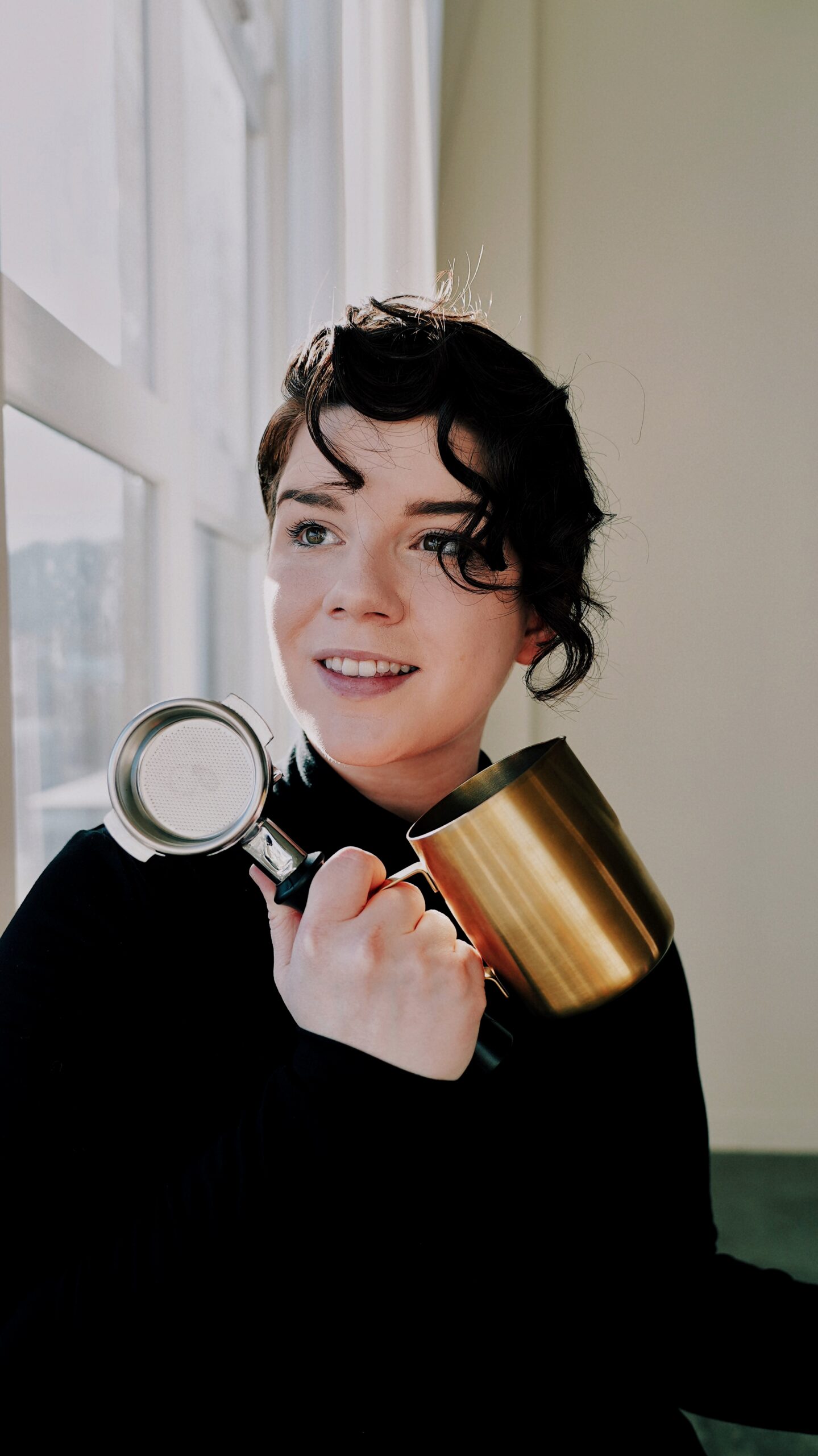
Morgan Eckroth (they/she) is an internationally awarded barista and video creator with the handle @MorganDrinksCoffee on TikTok, Instagram, and YouTube. They specialize in signature coffee drink recipes and coffee education with an approach that’s grounded in warm hospitality and inventive flavors. They currently live in Portland, Oregon, and have the titles of 2022 US Barista Champion, World Barista Runner-Up, and two-time US Barista Runner-Up. Morgan also works at Onyx Coffee Lab as the Director of Onyx Academy.
As a lover of coffee, books, and creatives who dare to share their work with the world, today’s guest is a literal dream come true! Morgan Eckroth, a Portland-based barista and creator who has amassed nearly 8 million fans sharing coffee tutorials, inventive drink recipes, and barista stories online, is here today to talk about their new book, Coffee, For Here.
After landing a job at their local coffee shop as a teen, Morgan fell in love with both coffee and the hospitality involved in becoming a beloved neighborhood barista. Eventually, Morgan would take their talents out of the coffee shop and onto the stages of the world of barista competitions, winning the title of U.S. Barista Champion, 2022 World Barista Runner-Up, and two-time U.S. Barista Runner-Up.
Knowing that not everyone can dedicate their life to learning the art of a perfect pour-over, Morgan wrote Coffee, For Here, a practical handbook and a guide to building real coffee skills at home. Today, Morgan joins me to talk about tender memories of coffee, what it takes to go from barista to content creator to published author, and how they have distilled their love of coffee into a blooming career.
You’re going to want to brew a fresh cup for this one!
Together, we hone in on:
- Morgan’s ever-evolving content journey, starting with their signature Barista sketches
- How the COVID Pandemic impacted their experience in the service industry, and eventually moved their work online
- Deciding which parts of their process are for the public, and what should be kept private
- The barista competition track and making it all the way to the global stage
- Behind-the-scenes details about their book-writing process, especially the extensive recipe testing process
- Why their new book, Coffee, for Here, is about so much more than coffee itself
More from Morgan
- Instagram: @morgandrinkscoffee
- TikTok: @morgandrinkscoffee
- YouTube: @morgandrinkscoffee
- Website: https://morgandrinkscoffee.com
- Newsletter: Coffee for Here on Substack
- NEW BOOK: Coffee, for Here
More from Kate:
- ⭐ Productivity Coaching with Dr. Kate Henry
- 💌 Sign up for Kate’s free newsletter
- 📚 Download Kate’s free Sustainable Productivity Planner
Never miss an episode of Honing In! Sign up HERE to get new episodes sent to your inbox.
Theme song by Melissa Kaitlyn Carter.
Transcript
Kate Henry (00:50.742)
Hi everyone, welcome back to Honing In. I’m Dr. Kate Henry, PhD, and today I am interviewing someone who was actually on the list of dream guests that I had when I first started this podcast in January 2025. So it’s a real treat to get to interview them. I’m going to be talking with Morgan Eckroth, they/she, who is an internationally awarded barista and video creator with the handle at Morgan drinks coffee on TikTok, Instagram, and YouTube. They specialize in signature coffee drink recipes and coffee education with an approach that’s grounded in warm hospitality and inventive flavors. They currently live in Portland, Oregon, and have the titles of 2022 U.S. Barista Champion, World Barista Runner-Up, and Two-Time US Barista Runner-Up. Morgan also works at Onyx Coffee Lab as the director of Onyx Academy. Welcome, Morgan. Thanks for taking time to chat with me.
Morgan Eckroth: Of course. Honored to be here. Thank you so much for having me. my gosh.
Kate Henry: Of course. Okay, I’m gonna dive us right in because there’s so much I want to ask you about today. This is a podcast where I’m thinking about productivity and creativity and projects. And I’d like to start the same way I always do by asking you how you feel about the concept of a project, capital P in quotation marks project. Is that something you like? Is that something that is helpful or not helpful? I was scrolling your Instagram just to get up to date before we chatted, and I was like, Morgan’s a Virgo. Maybe they like projects.
Morgan Eckroth: It’s so funny. Whenever like someone finds out that I’m a Virgo, they’re like, yeah, I already knew that. Like that made sense, like a thousand miles away. You know, this was a fun question to kind of like simmer on a little bit before coming into this conversation. Cause I don’t think I’ve ever like asked myself that of like, how do I feel about just the capital P projects? And I think it’s something I really resonate with when I think about.
Over the last like few years of working what is like kind of a strange coffee career, I very much view the different stages of what I’ve been doing like as projects. And I think I’m always looking for the next project. It’s kind of interesting now as my book project, for lack of a better word, is kind of like coming to a close. You know, I’m very much like forward thinking as to like what’s the next thing, you know, like what’s the next like activity? And I think like project fits very well into that.
Kate Henry: You have a lot of projects, and we’re certainly gonna talk about your book today. Congratulations on Coffee, for Here. When this episode comes out, I think it’ll be 13 days before your publication date. It’s October 27th, correct?
Morgan Eckroth: Correct.
Kate Henry: I love it. Wait, does that mean your book is a Scorpio.
Morgan Eckroth: I think so. My like astrology knowledge is like very limited off the top of my head, but I think you’re right.
Kate Henry: I think it is. I think that we’ll be switching from Libra to Scorpio.
Morgan Eckroth (03:46.306)
Yes, correct.
Kate Henry (04:01.94)
I love that. It’s a deep book. It’s very rich. So the book, Coffee, for Here. Some of the questions I’m gonna ask you today, you actually do go into some really lovely depth in your book talking about them. But for folks, obviously, who haven’t read it yet, I’d love to just know why coffee. It’s a very broad question. And like I love coffee, but as like an amateur person who didn’t know a lot of the terms for what makes coffee or why I like it. And I found some of those in reading your book. So what brought you to coffee and like loving it and then deciding you wanted to study it and make a career with it?
Morgan Eckroth: Completely. So it was kind of an interesting journey. I weirdly enough didn’t grow up drinking coffee at all. My family doesn’t drink coffee. My grandparents don’t drink coffee. Like that was never part of my life growing up. But I was about either like 15 or 16 when a special day coffee shop opened up in Corvallis, Oregon, where I had grown up and then eventually went to school. And, you know, I went in there for the first time, I think like after getting my driver’s license. Like I was like finally like free to go explore on my own time. And I was like, I’m gonna go to the coffee shop. That feels kind of rebellious and, you know, never been there before. Like we’ll be fun, an adult, and I’ll get to be a grown up a little bit.
And I went into that specialty coffee shop. It’s called Tried and True Coffee. It’s no longer open, but I went on to work there for many years afterwards. And during that very first like coffee shop experience, I think the thing that really connected to me even before, you know, the beverage and the coffee and all of that was really this element of like really warm hospitality. the shop had some absolutely incredible baristas who, you know, I walked in there as like kind of a unknowing 16-year-old had no idea how to order, like, didn’t like know really how to navigate the space, you know, anxious, nervous, all the things. And that was like the first time I’d ever interacted with people in hospitality that were just like willing to meet me where I was and like make me feel very comfortable in the space. And that really sparked that initial interest of like, I want to spend more time here. I want to figure out like why I feel this way in this space. The love for the beverage kind of began to coincide with that. Like I was, you know, teenager, I loved sugar. I drank like a 16-ounce mocha most days. But even at that level of like, you know, basically a hot chocolate with a little bit of coffee sprinkled in, I still also had this interest of like, you know, they’re creating this beautiful La Terre on top. There’s so much time and effort put into every single step of this beverage, like beyond just the hospitality.
I really wanted to understand what made certain coffees different from, you know, like your, like your Starbucks or like your casual, like really quick, you know, very utility coffees. With that, I really wanted to be a barista. I thought it would be like, you know, a college job. I went to school for marketing in Corvallis. So I knew I was staying in town and I just kind of started applying to tried and true. I was like, I’ve got no experience. I’ve got no availability. You know, I am like 17. Please hire me. And I did that a couple of times. I became friends with a lot of the baristas. And then eventually I got a call back and they were like, we’re opening up our second location. Would you like an interview? I was like, I’ll be there. I’m there tomorrow. You know, like just let me know when. of course I want an interview. And so I was lucky enough that they took a shot on me and hired me. And I think pretty quickly after I started working that job, I was like, I need to figure out how to do this forever. Like, coffee is as cool as I thought it was. I love, you know, working in hospitality as much as I thought I would. Like it just was like everything clicked all at once. And one of the kind of like interesting, tricky things that forced me into what I get to do today, which is a lot of online content, was the COVID pandemic. I was finishing up my last year of school when that happened. And so you know, tried and true shut down because of regulations. We like weren’t serving customers anymore. You know, school was completely online. It was just a complete toss-up of food and beverage. And so, kind of alongside all that happening, I really like looked at what I loved about coffee and was like, how can I do this online? Like, how can I take all the things that I love about this experience and like continue doing them just in the venue that I’m forced into for the time being? And so that’s what like really prepared Morgan Drinks Coffee to become what it is today. And I feel really lucky that like my love for coffee and just hospitality in general hasn’t dimmed. You know, there’s always like ebbs and flows through a career. You, you have like stages of burnout. And like I think with creativity, that’s just inevitable and part of the cycle. But, you know, still to this day, I feel like so lucky to say that I’m like doing what I love every single day.
Kate Henry:
Thank you for talking us through that and bringing us on that journey with you. It brings me like such a joy to hear it. And it also like hearing you talk about your experience at Tried and True makes me think of some of my tender coffee memories. I remember like when my dad took me and my sister to like a coffee shop restaurant and I had my first mocha and I was also probably like 15 or something. It was very sweet. Like that’s a sweet memory. Or like at my wedding, I don’t drink alcohol. And I was like, I really want a shot of espresso at the end of the night. So we hired a person to come and you know, pull espresso and make drinks and stuff at our wedding. Like just really sweet memories that come to my mind. And I imagine as folks are listening, they have their own like sweet little memories that are coming up. Do you have some that come to your mind, like sweet memories of coffee?
Morgan Eckroth:
I do. You know, I I remember even though I didn’t grow up like drinking coffee at all, like my dad has always been someone he likes a treat. He likes a fun, you know, beverage. And so as kids, you know, we would we would go to coffee shops and we would all order hot chocolates, like my parents included. And I think so many people have these like little points of contact specifically with like beverages. And I think often it’s through coffee, but you know, tea, hot chocolates, like all of these like comforting, warming, like I always call them like little luxuries where they’re not something that you need to operate, but they’re accessible enough that we get to like enjoy them on a pretty regular basis for a lot of us, like every single day.
And I think the beautiful thing about like the coffee industry and like baristas especially is like we get to facilitate these, these special little moments that, you know, may be like very everyday, maybe like very recurring, but like build into these like memories that people hold on to, whether you know that in the moment it’s gonna be that or not.
Kate Henry:
I agree. it’s so sweet. I’m like, I do love coffee. I just my coffee is just like one cup of a like black pour over in the morning.
Morgan Eckroth:
I’m the exact same. Yes, I feel like, and that also makes my love of coffee, it has to be good. You got one shot every day. Yeah. So it has to be good.
Kate Henry:
Last year my spouse got me for Christmas like one of those like you get a different locally roasted coffee a month or every two weeks or something for a year. It was fun. There was some that I was like, I don’t like.
Morgan Eckroth (11:29.806)
You learn very quickly what you like and what you don’t.
Kate Henry:
Yeah. And like writing in the calendar and being like, this one gets four stars. This one’s like, I don’t like, you know.
Morgan Eckroth:
Such an adventure. I love it. It’s great.
Kate Henry:
So you mentioned that you studied marketing, which doesn’t surprise me to learn that about you. Because, as I said, like I learned of you and your work through Morgan Drinks Coffee on Instagram. And you’re developing, you know, short form content for that, but also you like obviously you’re a writer, you have a book that’s coming out, right? But you also have an like excellent newsletter where you’re sharing about things there. And I’m curious, like, when you’re developing the short form content, like how do you decide what you want to share or what you want to share across different mediums? Because the kind of a side question for this as well is like, I see like in your newsletter, you’ve and I think on Instagram as well, like I’ve shared other things about your life. Your dance practice, for example. So I’m curious, like, we know that COVID was something that was like forced you online to share about content there, but I’m curious to learn more about the practice of creating the short form content, the shorter, like the newsletters, things like that.
Morgan Eckroth:
Yeah, my my content journey has been very interesting and like very ever evolving, especially in the last few years. A little bit of like history for folks who like maybe haven’t followed over the years.
So I started creating short form content was like the first thing I ever did. That was back in 2019. So like right, I was doing a little bit of it like before COVID. I was in college, you know, with marketing. I had a background in photography, but it was becoming pretty clear that video was the direction everything was going. And so it really came out of a sense of like this is another like hard skill that I should probably get a little bit under my belt before I jump into the job market post-college. And so initially what I was creating were these like, what I always just kind of referred to like barista sketches. For a very long time, like early in my career, they were like very humor-based, kind of like a little self-referential, like kind of poking fun at a lot of the barista tropes and just like kind of the silly interactions that can come out of that sort of work. And then over the years evolved into something that was a little bit more reflective and like less humor-based and more just like a moment. This is just like a pocket in time. There’s no punchline. It’s just like, something you might see in your everyday. And those barista sketches for me came out of kind of a want to like re-ingratiate myself with why I loved working in coffee, especially around COVID times. Like for those, you know, two to three years when we were really, really in the thick of it, you know, I had like some really, really awful experiences working in food and beverage due to like COVID restrictions. Like I got maced at work, which like is now like a fun fact in my life.
Kind of crazy, but like just like weird stuff happened just because like tensions were high, everyone’s stressed. And so for me, I really kind of got to this point where I was like, why am I doing this? Like, why do I like doing this? Why are we still all trying to make this work? And so really focusing my content around these kind of like soft, beautiful moments in coffee for me was very important of like reflecting back on that, that core, you know, not ignoring all the like, bad stuff and hard stuff that comes with it, that stuff’s very real. But I was like, if I’m gonna be public figure, if I’m gonna be like putting things out there, like the stuff that I want to focus on is the good stuff. And so for a long time, that was like a very big bulk of my content. And then in the last, I want to say probably like four years, I think now, I kind of got to a point where I was like, I need, I need to figure out what this all can grow into, you know, like, MorganDrinksCoffee for so long was just barista stories. And that is still, you know, something that is incredibly important to me and like exists a little bit more in my newsletter nowadays. But you know, behind the scenes, I was doing all this competition. I was doing tons of recipe development. Like there was so much else, so many other things in my coffee life that I just wasn’t talking about online. And so I started to kind of slowly make this shift into like a bigger push into coffee education, teaching people how to brew, and also sharing a lot of the signature beverage work that I was doing. Just because, you know, from a very practical and like kind of business-minded standpoint, I was like, I can’t do barista sketches forever. You know, this needs to grow in order to be sustainable. But also, I was just like, I want to, you know, kind of show the fuller scope of how I view and interact with coffee. And so that’s led me to what I’m doing a lot of today, which is, I think, a pretty 50-50 split between signature beverages and coffee education. And, you know, there’s definitely some friction through that of, you know, having to tell people and have people experience that what I am creating will be changing. It can’t feel the same forever. You know, even if I could just make those sketches forever, you know, I would run out of things to say or like people would get tired of them. Like that that change is inevitable and very important. But I think also I’ve had the opportunity to like teach a lot of people about coffee who might not have like, you know, interacted with kind of like the deeper, more industry focused, like specialty coffee side of it. So it’s been a very fun journey, but it’s ever evolving. And I foresee, you know, while I love all the content I’m doing today, I’m like in two years, I’m like, it’s probably gonna look completely different.
Kate Henry:
Yes. I know. It has been fun too, like as someone following your work from the early days, like what you call like the barista sketches, which are like always so cozy.
Morgan Eckroth:
Like such a special place in my heart, truth. Yeah.
Kate Henry:
Like so sweet and cozy and like just made me feel good to see them. But I also like to, as someone who’s like curious about coffee, but like I certainly don’t have the like capacity or interest to have it become a hobby, even though I’ve considered that. I do like this transition that you’ve made to be like offering like bites of education or just like, you know, and you do this excellently in the book as well, to be like, okay, here’s how you would use this particular machine to make this particular thing of coffee or like, did you know you can, I don’t know, make jelly cubes out of this, you know?
Morgan Eckroth:
Which is a real thing in the book.
Kate Henry:
No, it is real. And I want to make them. They look really good. These seem delicious. Thanks for talking us through that. That’s very freaking cool. You mentioned the barista competitions, which it also has been like vicariously fun to like as you take viewers of your content and readers of your work through that journey with you. And like I imagine there are folks listening who are like, wait, competitive coffee? Like I didn’t know that was a thing.
Morgan Eckroth:
I always tell people there’s a competition for everything.
Kate Henry:
Yes, there totally is. And how did you go into this in the book, but like how did you decide that you wanted to compete? Like, was it some yeah, I don’t know. I’ll just I’ll just leave it there, like instead of adding qualifiers. Like, how did you decide and like also like did you know you wanted to bring like your viewers and readers along with you? Was that something that ever felt stressful or did that feel like actually motivating for you?
Morgan Eckroth:
Yeah, that’s a really good question. As far as how I got started, I kind of fell into it on accident. The competition that I am a part of is called the US barista Championship. It’s part of a larger global world barista championship, and it’s kind of an interesting format.
So you, as a competitor, you prepare a 15-minute presentation where you serve a panel of sensory judges three different courses. You have to make four espresso, four milk drinks, and then you also have to do four signature beverages. And while you’re doing that, you are, you know, pontificating on whatever theme you are presenting to them. You have your coffee that you have hand selected that you’re preparing, and then there are technical judges around you evaluating like your flow through the workspace and kind of all those additional elements. And so it’s a very interesting kind of format, it’s very structured, very rehearsed. And I stumbled upon it about a year into working as a barista. I think I was about 18 at the time, and genuinely just I found it on YouTube. Like it was in my recommended videos of like Aga Rojuska, World Barista Championship. I was like, what is that? So I was kind of like thrust into this world of just crazy, coffee creation like I’d never seen before. And I was lucky enough that the owners of Tride and True that I was working at the time, they had both competed in previous years in the US Barista Championship. So they were super familiar with it. And when I started to express a lot of interest, they were like, we are willing to like help you if you’re if you’re very serious about wanting to give this a go. And so I was a very fresh, like newbie barista, just throwing spaghetti against the wall, you know, barely reading the rule sheets. But, you know, I walked into my very first barista competition and had so much fun. And I was like, great, I’m gonna do this also forever. And so I got the bug that first time around, you know, made tons of mistakes, placed super poorly, but just had the best time of my life. And then I went on to continue competing. I won in 2022 and then I’ve like kind of continued competing and like judging periodically in the last few years. But I think a really interesting question you asked was also like how the effect of like bringing people along for those competitions has been. For me, it’s always interesting. The first the first year I really showcased competition online was 2022. For a long time, you know, I had kind of kept it offline because I was like, you know, I don’t wanna be someone who’s like, I don’t wanna be back there with a camera. I don’t wanna be making, you know, I don’t wanna be the one.
making other people like uncomfortable or like trying to make it the Morgan show. Like I just want to be very careful about that space. But 2022, my entire theme for my routine was this idea that we’ve had a monumental shift in the industry due to COVID. We’ve had a huge surgence of like home brewers and people who are making incredible coffee at home and wanting to like give some attention to that and also, you know, open up what is pretty like historically a pretty like exclusive competition. You know, you can go watch barista routines online, but like actually understanding what the rules are, what they’re doing, like all of that is like kind of gatekeeped by a lot of like rules-based language. And like you have to go seek it out. It’s not there for you. And so for me, I just wanted to like showcase this really cool thing that happens in the industry. And going into that season, there was a lot of pressure because, you know, it’s like, what if I got out in the first round? You know, like I’m talking up the big game, you know, showcasing all these things. And I’m like, what if I place last? Like there’s just that could happen. You never, you never really know. I feel very I I don’t know if lucky is the right word. I definitely feel lucky that I won that year on that theme. because it it ended up working out very nicely. But it was definitely an additional level of pressure that was applied that I don’t think. I would have felt if I if I’d just been doing it on my own without talking about it. In the last couple of years since winning and continuing to compete, I I usually do share a good amount of what I’m doing for competition. That pressure has definitely lessened, you know, just as I get used to navigating what it’s like to prepare for competition while actively, you know, kind of showing the behind the scenes. There have been years where I’ve intentionally shown less, just because I know mentally I’m not in a place where I can accept like kind of outside feedback or criticism or just like, no, I just I’m not in a state where I can kind of show it to other people yet. So it’s it’s very much a year-by-year sort of basis.
Kate Henry:
Yeah. That makes total sense. I mean, also like you’ve already, you know, performed so well that like even if you do like that, you’re like, it’s fine, it’s fine. I already have already gotten it. I’ve already got it. It definitely helps.
Kate Henry (23:54.988)
You were the 2022 US Barista Champion and also runner up for the World Barista Championship, which is that was wild. Cool. So cool. Like tell me a bit about that. Was your preparation for that similar or was it different? Were you like, my gosh, going against people who are Italians working with Italian coffee? Like who said you know, like what was the process like for the World Barista Championship?
Morgan Eckroth:
Honestly, I was exactly like that. It was you know, it it was really interesting thinking back to kind of the the stage I was at at that point because 2022 I had been working as a barista for starting 2017. So like four and a half, kind of like five years. So, you know, I hadn’t been like working in the industry for a very long time. I also that was my only third season ever competing. So as far as like competitors go, that’s like pretty early on. And so I like just didn’t even have the World Barista Championship like in my mind. I had never made it past round one of nationals. And so to suddenly have like won the thing, I, you know, I was kinda like, we did it. It’s great. And my coaches were like, no, we you she doesn’t even know what’s coming next. And so there was like a very brief moment of celebration, but then we immediately like turned around and started preparing for the World Barista Championship, which like everything was super surreal because, you know, I I follow these competitions kind of like they’re sports. You know, I’ve got like all the competitors I keep track of. You know, I’ve got all my favorites over the years. And to kind of have this realization that I was gonna go be on stage with them and like be backstage with them. And all of that was, you know, I was like, don’t freak out, don’t fangirl, like be be cool, be cool. It was very hard, you know, I think one of the things that’s interesting about the World Barista Championship that is very different from a US level is you are suddenly competing in front of a very global set of palettes. And so, you know, down to the minutiae of part of the scoring in the barista championships is you you give flavor calls for all of your courses and then you are scored against how accurately the the judges perceive those flavors. You know, for example, at nationals in the US, I had a milk drink that was very sweet. And one of the flavor calls that we gave was yellow cake batter. You know, in my mind, I’m thinking of those like Betty Crocker boxes, you know, it’s kind of like a vanilla cake. Like I think a lot of like American palettes are pretty familiar with that. But you say yellow cake batter to like a panel of international judges, you know, maybe a few from Asia, maybe some from like Italy, and they’re like, what do you say?
Kate Henry:
“That sounds disgusting, actually. Why would I eat cake batter?”
Morgan Eckroth:
And so, like, we had to not only deep dive on like every single aspect of the drinks and the words and all of that, but also, you know, when it came down to flavor calls, where it it becomes this weird game of mental math and like strategy behind building those flavor calls that are as accurate as possible while also trying to thread the needle of, you know, no matter where my judge is from, they’ll have a frame of reference. And it gets down to like, you know, you think about like pineapple, like my version of what a pineapple tastes like is very different from someone in like Central or South America who has like more ready access to like actual delicious, you know, fully ripe off-the-tree pineapples versus, you know, pineapples that have been like shipped in like across the world. All of that was very interesting to tackle. But, you know, also the other side that I mentioned before of just being like grateful to be in the room, but also kind of stunned and like awestruck to be, you know, prepping on a table alongside, you know, someone I’d watched online competing for like five years before.
Kate Henry:
Wow. That is so freaking cool. I, yes, as a vicarious person who’s not going to learn about coffee who’s like, we’ll learn about coffee through your book. I feel like you just like download it all of these like delicious, I don’t know, factoids into my brain. It’s really satisfying to hear.
Morgan Eckroth:
It’s a fun, weird competition. I there are a lot of coffee competitions nowadays that focus on, you know, a lot of different, like, different venues of coffee preparation. You know, not all of them are as rehearsed and kind of curated as the Barista Championship is, but there’s something about just how dramatic and like fun and like over the top that one can get that has just always appealed to me.
Kate Henry:
Mm. Yeah, and thinking about the world like global audience here, something I really appreciated you did in your book is talking about like literally here’s where coffee comes from. And like here’s all of these like different places and here’s what, you know, the floral tastings or whatever, you know, maybe associated with these different places. Because I think when I like, I don’t know, go to Whole Foods to buy like a pound of coffee, I often just am like, let’s get a medium roast that says chocolate on it. I tend to like that, you know?
Morgan Eckroth:
Totally.
Kate Henry:
But like without really having known these things before, just being like, ooh, I don’t think I would like citrus coffee. But like not actually knowing what that means.
Morgan Eckroth:
Well, you just don’t have like a frame of reference for it. I think like we are especially especially in like the US, like so far like separated from a lot of like our supply chains, especially for coffee. Like we, you know we technically grow some of it in we grow a little bit of coffee in California, some in Hawaii. And the other day I read Florida is maybe growing coffee.
Kate Henry:
It’s like its climate change. The equator’s getting bigger.
Morgan Eckroth:
And it’s just shifting. Yeah. But we’re just we’re so far, you know, separated from like where coffee begins with that for me, especially in the book, I was like, we’re gonna get into the signature drinks, we’re gonna get into the brewing, like we’ll do all of those things, but we gotta start at like what is coffee with a capital C.
Kate Henry (29:56.428)
Hmm, cool. I love it. I think everyone should read this book. So let’s talk about the book. This book is about more than just coffee. I imagine there was just so much behind the scenes tasks that went into this. And maybe you’ve been working on this book for like books take forever to make. We know that, right? So this is again a very broad question: like why coffee? Sort of like what was the process like to create this book? Did you always know you wanted to make this book? Did a press reach out to you or an agent reach out to you to say, like, hey, we want you to make a book. Like, I imagine it just took so freaking long. And like you probably had just like a whole board of like, okay, record the video, make the QR code, do this, write this, try it. People have to try it. Like, I imagine it was just so many tasks. So tell me about making this book.
Morgan Eckroth:
Yeah, it was, my gosh, it’s been a very long process. I definitely always wanted to write a book. I love just creative writing. Like it regardless of coffee and before all of that, like I I remember being like 12 and writing like Lord of the Rings fan fiction. Like I’ve just always had like some sort of writing project going on. And once I really like stepped into coffee as being my career, like a coffee recipe book was definitely in my mind, but I think I lacked a lot of the confidence of like, I didn’t know how to put together a proposal. I didn’t know like anything about the publishing process. All of that was a complete black box to me and I was lucky enough that after winning the US Barista Championship in 2022, the wonderful Susan Roxborough over at Clarkson Potter reached out to me, just with like the question of like, have you thought about writing a coffee book? Like, is that something you have ever been interested in? And I was like, Yes. Like, I would like to write one. I have no idea how. And so that kind of like was the kickstarter to everything. I spent a very, very long time working on the proposal.
I think one of the most fun parts about the entire process just collectively has been how collaborative it has been. You know, going into it, I was like, my first draft of the proposal was I was kinda like, here’s what I think I wanna write. Like I, you know, maybe recipes, some signature drinks. And it was a really cool process to work with Susan to really like hone in on who this book was going to be for. That was the biggest question. I was like, I know what I am capable of writing, but I don’t know how to structure it. I don’t like know who the reader is. And so we were able to really hone in around this concept that this was going to be a book for like at home like baristas, like kind of like someone who just got their first espresso machine and is wanting to like really dive deep on this as a hobby, which led to the structure of this book being very much like, what is coffee? How to set up your bar, how to brew in a ton of different ways to hopefully give you at least like one or two opportunities with the tools you have, and then packing in like all the fun signature drinks as well. So ideally it acts as kind of like a guide through all of that. Another really interesting part of the process was how many hands have gone into this book, even from like a recipe aspect. This book was my very first time working and hiring recipe testers. That was a very nerve-wracking part of this process was, gosh, I think it’s probably like one and a half, maybe close to two years ago now, when we were like wrapping up the manuscript stage of this book, and I had to like send off all these recipes that I thought were done, quote unquote, to a bunch of people to test them just in homes practically. And it was such a humbling experience to get like all the notes back of like, this is not done. You missed this. I have questions here of just, you know, when I’m building recipes by myself, you just you look at something for too long and you just like miss things or you take things for granted that you know that is not inherent information for other people. And so I think going through that whole process was so, so awesome because it just taught me how to build better recipes in a way that I’d never been forced to before. And genuinely like going through all that was so transformative for what is in the book currently.
I think also like the funnest part was the was the art direction. Like I gotta work with a photographer who I’d been following for a very, very long time. He wasn’t even on my list of dream photographers. I was like, there’s no way that’s ever happening. And when my publisher brought him up, I was like, if you can get him, like, we’ll do that. And so working with Eric was fantastic. I gotta work with a really good friend of mine who’s an incredible illustrator. So just like there’s this, I think this sense at the end of this all that.
It’s like my name’s on the cover. I wrote the words, but like this is like it it was a village. This is like our book that we all made together. And that feels like super special and was kind of a, you know, not something I anticipated feeling at the end of all of this.
Kate Henry:
Mmm. Yum. I love all of that. The photos are stunning. Like it’s just like it’s very like it’s like what a classy, fun book. Like I know it’s gonna like go on my bookshelf next to like my spouse is very into cocktails. We have like the Death and Company brand.
Morgan Eckroth:
That was top inspiration there.
Kate Henry:
Yeah, like that comes to my mind thinking about like the like the visuals of the drinks and stuff like that.
Morgan Eckroth: I’m so glad you like connected that in your mind because that was genuinely so much of the inspiration visually in this book was kind of the discussions were like the classic coffee photography is like very warm. There’s like sunlight. There, it’s like on your kitchen counter. And you know, like that is definitely like a direction we could have gone. But I was pretty firm on like, I want this to feel like kind of a different world. Like I want this to feel like aspirational in a way that I think sometimes like coffee photography can lead a lot more homey. So I’m really, really glad to hear that that worked out.
Kate Henry:
Yes, it’s a comp title in my mind for your book. Could you tell us that I mentioned earlier, like the coffee cubes, you know, like which is like they’re like, but tell could you tell us a bit about like, I don’t know, maybe it’s hard to pick some of your favorite recipes, but like maybe like some that were like particularly fun to create, or like a, you know, even if it’s one that you’re like, this is a classic, or like something that like you is like a new recipe that you created that you love from the book.
Morgan Eckroth:
Gosh, it’s like picking favorite children.
Kate Henry:
We could just say like it’s like favorites today.
Morgan Eckroth:
Yeah. Like no, I there’s a lot of recipes I love in the book. I kind of the way w one of the things that was really important to me in like the structuring of the book was I didn’t want it to feel like the recipes were like an afterthought and kind of like shoved at the end. I wanted to make sure they felt like they were woven throughout like in equal parts with all the coffee brewing kind of harder technical stuff.
So with that, there are recipes for each and every brewer type. And then there is a milk chapter of recipes, kind of a fun chapter of recipes, and then barista championship recipes. A couple favorites. There is, you know, one of the brewers that I do give instruction for, whether or not anyone has one at home, we’ll see. This is definitely one of the lesser-known brewers, but is a siphon or a vacuum pot, which is a very, very cool, very technical brewer. And for that signature drink, there is a beverage where you essentially you brew your coffee with apple cider and then you infuse orange peel and like warming spices into it. And so you essentially get something that is almost like. it’s like a spiced coffee apple cider at the end. And it is the most fun drink to watch being made. I really, really love that one because it was, I think, one of the most visually interesting ones to do. There are, at the very end of the book, is the most complex signature drinks.
We tried to provide a big range of drinks. You know, there are two ingredient every single day drinks that will take you no time at all. But then there are the more complex ones. They’re all shoved at the back. And I think honestly, all of those are like my absolute favorites. They’re the ones I expect people to make the least. I will be so thoroughly impressed if someone goes through all of those because they’re they’re a little bit more labor-intensive. But a lot of those drinks are specifically from the Barista Championships. And so they have like hundreds of hours of R&D poured into them. Really special place in my heart. Trying to think like one more. There’s some really fun milk drinks. There’s the milk steaming and latte art chapter has all of the lattes in it. And there is one that has like a lemon oleo sacrum. It uses a little bit of goat’s milk and a little bit of olive oil to create this like sweet and savory combination that like just hearing it sounds kind of interesting. Like it sounds a little bit challenging, but it’s a really, really delicious, super rich latte. And that’s probably one of my favorites as well.
Kate Henry:
Ugh, yum. I said yum. I’m saying yum a lot today. Usually I say delight. Well, delight today. I’m yum. This is there’s a local or my favorite local restaurant to go to in Boston. It’s called Field and Vine. Very good. Check it out. But they have where they had like a like labna olive oil salt ice cream. And then the chef, like, I think moved to New Orleans and they’re like, we’re not gonna serve it anymore. It was his recipe. But like, yes, that drink sounds exquisitely delicious. Ugh, I am so excited for this book to come out and for everyone to get a copy. How delightful.
I always like to close my interviews by asking folks what’s one thing you’re honing in on. And I’m curious to hear what yours is.
Morgan Eckroth:
It’s a good question. That is something I have been asking myself a lot lately, especially going back to our like very first question of like projects. What’s the next project? And I think the thing I am honing in on right now is creating more in-person experiences.
I have spent like a lot of my career in the last like six years, like solely in the digital world, which I love and will I think always kind of be a part of my career, like no matter what direction it goes. But I am very, very interested, especially after this book, of like what does the next iteration of Morgan drinks coffee look like and doesn’t reincorporate like actual barista work and service of coffee to people? And I think that’s probably where it’s going and just trying to figure out what that looks like nowadays.
Kate Henry:
Well, if you come to Boston and you host an event to teach the community how to do stuff,
Morgan Eckroth:
Invite immediately.
Kate Henry:
Thank you. I would love to come and learn. Like there’s like, you know, cheese making or like fermenting or classes or things like that. Coffee class. That sounds like a blast. my gosh, I’d love it. I’d love it. And then I could know how to tell what citrus actually tastes like and coffee tastes like, you know.
Morgan Eckroth:
You don’t have to make anything yourself. I’ll just I’ll make everything for you.
Kate Henry:
God, even better. Okay, yes. I’d pay a lot of money for that. That’s delightful. I’ll close this out today by, of course, asking where folks can find you and stuff, but I know you have a book tour coming up as well. Could you tell us a bit about that? Like what you’ll be doing with the release of the book and any events that are coming up with that.
Morgan Eckroth:
Yeah, absolutely. So we are going on a a pretty fun book tour about a week or so after this podcast comes out. There is all the all the dates and information and tickets are available at morgandrinkscoffee.com, but we are doing a West Coast branch first. So we’ll be visiting Palo Alto, San Francisco, LA, Seattle, Portland, all over the West Coast. And then in December, we’ll be visiting Dallas and I think Dallas, Atlanta, New York, and maybe one or two other cities. We’re still kind of like figuring out that, but all of that’s available at at morgandrinkscoffee.com.
Kate Henry:
How perfect to be going in the wintertime to the warm places.
Morgan Eckroth:
Truly. New York will be chilly, but everywhere else will be pretty nice.
Kate Henry:
Yeah, that’ll be sweet. I bet that everyone in in in Portland’s gonna be so excited for you for this for the release. How special. Well, we can find you on Morgan Drinks Coffee, and we’re going to I’ll make sure to link to your newsletter and all of the other exciting things in the show notes for today.But is there anything else that you would like to share with our listeners before we close up?
Morgan Eckroth:
I think those are all the all the main things. Such a treat to be on here today.
Kate Henry:
This has been so much fun. My pleasure. What a lovely experience. And how yummy. And now I want to go make a cup of afternoon coffee. Thanks, Morgan.
Newsletter
Sign up below to access my free newsletter, Tending with Dr. Kate Henry.