
Guiding Clients Towards “Good Enough” with Erica Ando, PhD and Michelle A M Miller of Interval Paper
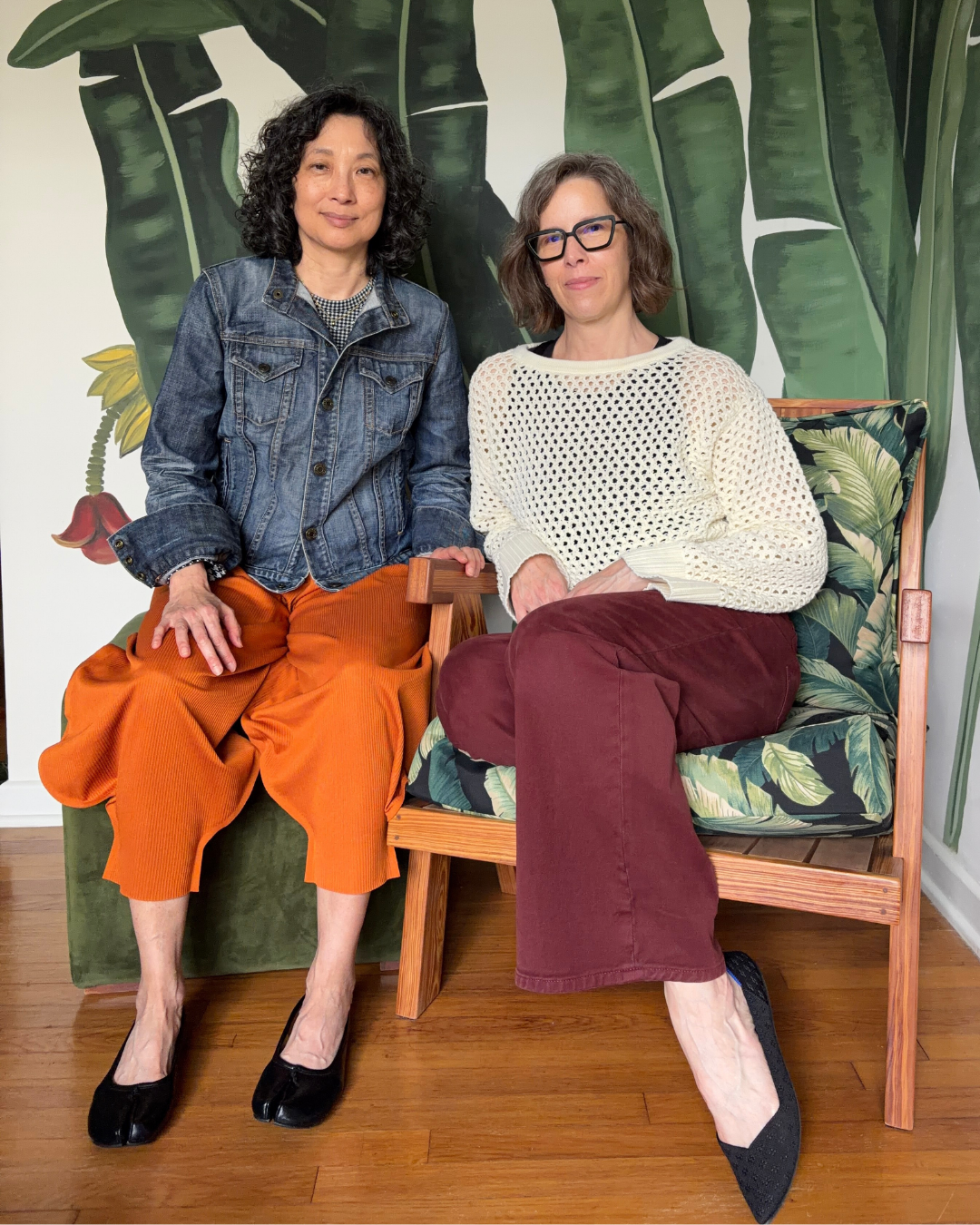
INTERVAL PAPER is a collaborative coaching project founded by Erica Ando, PhD and Michelle A M Miller that helps people step out of “Never Enough Culture” and build more fully engaged lives. Erica Ando, PhD (she/her) is a coach and writer who works with women at consequential turning points in their lives. Her approach is shaped by three decades of study in somatic learning and a Buddhist meditation practice. Michelle A M Miller (she/her) is a coach, interdisciplinary artist, writer, and End-of-Life Doula whose work explores memory, mortality, and meaning through somatic practice, mindfulness, and reflective inquiry. Drawing on decades of meditation and journaling, she helps thoughtful people engage life’s hardest questions with greater presence, honesty, and care.
We’ve all heard the term “coach,” but what happens when we challenge the structure of a coaching container and invite it to be a truly collaborative experience? These curiosities are the inspiration for the collaborative coaching project of Interval Paper. Founded by coach, certified somatic practitioner, and writer Erica Ando, PhD and coach, interdisciplinary artist, writer, and End-of-Life Doula Michelle A. M. Miller, Interval Paper helps people step out of “Never Enough Culture” and build more fully engaged lives.
In today’s conversation, Erica and Michelle share how their work has evolved as a result of being in an ongoing collaborative relationship. They also share how they “named their villain” (Never Enough Culture) and how that inspired them to create a resource that counters cultural conditioning called the Good Enough Guide.
We talk about the pressure of academia, the health consequences that follow, and the ultimate decision to reject external pressures and to honor internal care. You’ll also hear about their upcoming summer retreat with an exclusive discount for listeners!
Together, we hone in on:
- How Erica and Michelle lean on projects to create discrete boundaries in their work
- The origins of Interval Paper and the many benefits of being in ongoing collaboration
- The Good Enough Guide and how it counters the cultural conditioning of never enough
- Why “one percent change” is an effective and gentle approach to setting goals
- Moving past academic success to honor lived experience and internal success
- How somatic practices help to stay grounded in both personal and client work
More from Interval Paper:
- Interval Paper Website: https://intervalpaper.com
- Summer Retreat – Get $100 off with code HONING100
- Workbook: The Good Enough Guide
- Free Resource: 5-Minute Permission Slip
- Blog post: “Good Enough is the most radical practice”
- Blog post: “Exhaustion Isn’t a Personal Failure”
- Erica’s website: https://www.ericaando.com/
- Michelle’s website: https://www.wisemortal.com/
More from Kate:
- ⭐ Productivity Coaching with Dr. Kate Henry
- 💌 Sign up for Kate’s free newsletter
- 📚 Download Kate’s free Sustainable Productivity Planner
Podcast editing and support by Softer Sounds Studio.
Theme song by Melissa Kaitlyn Carter.
Transcript
Kate Henry [00:00:52]:
Hi, everyone. Welcome back to honing in. I’m Dr. Kate Henry, and today I am going to be interviewing two people who are. Who are working together and working on their own to do some wonderful things. The project that they’re both working on is called Interval Paper, which is a collaborative coaching project, and it’s founded by my guests Today, Erica Ando, Ph.D. and Michelle a.m. miller.
Kate Henry [00:01:19]:
Interval paper helps people step out of never enough culture and build more fully engaged lives. Erica is a coach and writer who works with women at consequential turning points in their lives. And Michelle is a coach, interdisciplinary artist, writer, and end of life doula whose work explores memory, mortality, and meaning through reflective practice. Welcome, Erica. Welcome, Michelle. I’m so delighted to talk to you both today.
Michelle A.M. Miller [00:01:49]:
Yeah, thank you.
Kate Henry [00:01:51]:
I’ll start us out with a question that’s really the bedrock for this whole podcast, which is thinking about projects. So I’m curious how you feel about the concept of a project. Is this a helpful framework for you, or is there another word that you like to use when you’re thinking about your endeavors? So this could be personal, professional, creative. I know that makes it even more expansive, but I’ll turn the mic over to you and hear from one of you, both of you. You, as Interval Paper, however you think about projects.
Michelle A.M. Miller [00:02:26]:
I love this whole, as you say, bedrock to your podcast, Kate, because I think Eric and I, both coming from creative backgrounds, really think in terms of projects. So they have these discrete boundaries, perhaps their timelines, but it’s really a nice way to just create a container for a set thing, whatever it is. An experience, work of art, a bit of writing, a piece of music, a gathering, it gets to live on its own. And I don’t know, that’s kind of a nice way for us, at least for me, to approach projects.
Erica Ando [00:03:06]:
Yeah, what I like about projects, too. I mean, I love this question because, yeah, I think in terms of projects. And what I love is that a project can take on a life of its own. So we’re working together, and there’s no need for it to be me. You know, there’s no need for it to express this one single worldview. It can just be a slice of something, and that’s fine. And so it has discrete boundaries. Yeah, it has a life of its own.
Kate Henry [00:03:40]:
This is so cool to hear you both talk about projects. And I, like, I feel very comforted by projects having discrete boundaries, which is language both of you are using here. It was fun when I was prepping for today and researching more, a little bit more about Interval paper that you would call it collaborative coaching project. So is that. Obviously, it was an intentional decision to use that word instead of something else, but when you were thinking of how to describe. It’s not a press, it’s a project. Right. You know, so I’m curious, like, how did you decide to use that term for it? Or was there other language you were thinking of when you were trying to think of how to describe interval?
Michelle A.M. Miller [00:04:19]:
We’ve gone through several iterations of what to call what we are doing together, honestly, as I’m sure many people do. You know, what is it? What are we doing? What’s the goal? What do we hope to achieve? How can we be of service? So I think for us, it was bouncing around different ideas and just sitting, sitting with some options to see how it read for viewers and visitors to our website, but also in how we speak about what we’re doing, the conversations that we get to have about it.
Erica Ando [00:04:54]:
Yeah, it is ever evolving. And I mean, this is probably the story of this collaboration, which is a project, but it’s also, it feels like, like this ongoing project that is morphing and changing and, you know, and we’re changing too. I feel like that’s obvious. We’re changing too, through this project. And so the name changes, the category changes. It used to be a studio. It used to be this, it used to be that. And right now I’m happy with Project Same.
Kate Henry [00:05:36]:
I love that you’re approaching projects in a way, a way that has the, as we said, like, discrete boundaries in this container to exist in, but then within that there can be, like, the evolution or the morphing or the like, shifting as needed. That feels very nice to me. I feel very comforted thinking about a project like that. I mean, it actually bounces ahead to a question I was going to ask you later, but I feel so inspired to ask you now, which is since we’re thinking about you as guests who are doing a collaborative project together, I’m curious to hear your individual perspectives or how the work that each of you do, you know, as coaches, as artists, as folks who are supporting people in their journeys, and how that influences the work that you’re doing with Interval Paper. So I’ll hand the mic over to whoever would like to bravely share first, and I’m just so curious to learn more about each of you and your work.
Erica Ando [00:06:36]:
First of all, it’s directly related. So I’m a coach. I coach women. And I coach women over long periods of time, several months, sometimes years. And we first started out with making the Good Enough guide, and that just felt like a different way of working together that I don’t usually work. I’m not sure that I would have ever made that on my own. This little book, little guided journal, and even the programs now that we’re coming up with, I don’t know that I would make them on my own. There’s a sense, different sense of.
Erica Ando [00:07:15]:
Not that I don’t have fun when I’m coaching, but there’s this sense, there’s like a little correctly joyful, fun feeling that I have working with Michelle. And I think it comes out in the work we do. So what I bring from my personal work is the perspective, the experience. And then there’s this. In the collaboration, there’s this added thing of working with someone and working with fabulous Michelle. I mean, we laugh all the time.
Michelle A.M. Miller [00:07:52]:
Maybe too much.
Erica Ando [00:07:53]:
Too much. You said it.
Kate Henry [00:07:56]:
At the same time, that sounds like perfect work conditions.
Michelle A.M. Miller [00:08:00]:
Me, yeah, I. I can echo all that. I don’t know if there’s really much more to add to that, but there’s so many overlaps, I think, for us. So it’s, yes, it’s the lived experience. And then, you know, for me, my background being so bound up in the arts, just being a solo studio artist, I’ve, you know, increasingly sought out collaboration. And then once I became an end-of-life doula, the pull to turn towards community became really overwhelming. Like, I just felt like it was necessary to do that. And so part of that was creating a more durable relationship, working relationship with someone, and I’m over the moon.
Michelle A.M. Miller [00:08:50]:
Like, it’s just so fun how much fun we have together. And I feel like I’m always just learning and stretching in the collaboration. And Erica’s right. I don’t. I don’t think any of the things that we do together would have existed on their own. And so there’s something magical in that.
Kate Henry [00:09:07]:
There is something magical in that. It’s. I can feel that magic when you’re talking about it. I personally tend to not do very many collaborations because I feel so protective of my time and my energy and my community and who I’m going to bring in to them. You know, like, it can feel like quite protective and also quite like this is the way I like to do it. And I’m going to do it that way. You know, like, I do have an assistant who’s phenomenal and like, we collaborate on things like writing and creating and stuff. But, like, it takes a very special person for me to do a collaboration.
Kate Henry [00:09:43]:
So I. I’m delighted that you’ve found your person to do that with. Erica mentioned the Good Enough Guide, which is something that I have loved filling out over the last couple of weeks. It’s really a beautiful piece of art and the writing is amazing, the pacing is wonderful. The language is just first. Before I could just heap praise on this. But so folks can have some context, could you tell us a bit about the Good Enough Guide and how you came to choose to make it? And perhaps in answering this question, we’ll also think about, like, Never Enough Culture, which is something I definitely related to, coming from a background in academia where I really felt that. And that’s something that the Good Enough Guide interrogates and offers an alternative to.
Kate Henry [00:10:37]:
So I’d love to hear a bit about how the guide came about and how Never Enough Culture relates to it or informs it.
Michelle A.M. Miller [00:10:46]:
Oh, it’s such a rich question.
Kate Henry [00:10:49]:
I’ll.
Michelle A.M. Miller [00:10:49]:
I’ll start maybe, and then, Erica, you can flesh it out because you have far more academia experience or more experience in academia. So how it came about, it’s kind of a winding story. So I’ll try to pin it down in a way that will make sense. We were working independently, as we do, and almost simultaneously realized, oh, you know, kind of working on this new project, I don’t really know what it is, might be a guided journal. And it was like in unison, truly, oh, should we do that together? Kind of a thing. And then it just sounded kind of fun. And I don’t know, we had no clue really what we either of us was doing. We just knew that it was probably going to be more fun to explore it together and share the ins and outs of what is involved in creating a guided journal.
Michelle A.M. Miller [00:11:48]:
The practical ins and outs. And so we went down that rabbit hole and many iterations later and evolutions later, we ended up with something that’s far more, I think, profound in its simplicity than where we originally started out. And so it really became about our ability to curate and edit ourselves and the work we do together, really down to what’s. What’s truly essential for us to communicate the idea that we were trying to share. Yeah. So we spent a long time creating this project and then, I don’t know, I think Erica had this brilliant idea of like, you know, naming our villain, really, we, we needed to name it. So once you give it a personality, it was like all these sort of doors open up and there’s this whole other way to speak about the cultural conditioning that is never enough culture. So then we, we realized by giving it that title of villain, it provided us with an opportunity to provide an antidote.
Michelle A.M. Miller [00:13:03]:
And so that’s really what this is because it’s. People might hear settling when they see good enough. It’s not that it is profoundly. Not that I can only speak to my own experiences with this idea of good enough, but it actually creates more discernment. Your standards in a way actually increase. You know, at least for me, mine have increased dramatically. I’m. I’m more aware, more careful with the choices I make and the, the projects and the work that I do take on.
Michelle A.M. Miller [00:13:39]:
And I think very carefully and sort of sense and feel my way through just in a much kinder, more compassionate way towards myself.
Kate Henry [00:13:50]:
I feel that having used, I mean like you created this workbook, so you have or this journal, so you have so much more experience with it. But as just someone who read and answered the questions and was reflecting, I too feel this feeling of like shifting my perspective around what truly matters to me and like, kind of like having like a washing or like refreshing that, which was nice. Like even think I was re looking through the journal earlier today and then taking my dog out and was like, oh, I have so much to do. I have to do these things. And I was like, you already did like two of the three things you wanted to do today. And it’s like 11. Like you’re actually good. Like, it’s fine, you know, like I was thinking about that.
Kate Henry [00:14:33]:
Like I was already. I was almost through my to do list, but I’ve been like, well, what else do I have to do? And I’m like, you actually are. I’ve done way more than good enough, you know. So anyways, it was a helpful reminder. Erica, I’d love to hear your perspective thinking about this, whether it is informed through academia or if there’s more you’d like to share around thinking of this villain and hero of never enough and good enough.
Erica Ando [00:14:59]:
The way I’ve experienced it in academia too, it starts very, very, very young. We’re from the get-go. Or for me, I’ll say for me, I was always praised for doing well in school. I was rewarded for doing extra. I was rewarded for always showing up. I got, I remember like a perfect attendance award. I mean, I had a little certificate, you know, that said you had perfect attendance. And I look at that now and think, wow, you know, I was being told, you need to show up all the time.
Erica Ando [00:15:38]:
I was being told, if you don’t show up, you don’t get the reward. And so in some ways, you know, I got to a point where I felt like that’s pretty much all I had, was my effort. And my identity was tied to my effort because I knew that if I just put in more effort that I would get whatever I was supposed to get, whatever it is. And so the way we. I think, really our process through writing was just talking about our own experiences and what we learned from, you know, as children, as adults, as, you know, as daughters, as partners, as, you know, parents or whatever. You know, whatever our roles are, and how it kept being reinforced that we’re just not enough until we do that extra. Until we do that third thing. And, oh, I’ve done the third thing, but there’s probably something else I have to do, and that would make me extra great.
Erica Ando [00:16:41]:
Then I can rest. Then I can have, I don’t know, a piece of cake. Whatever it is, it’s so deep that I see it coming up still all the time.
Kate Henry [00:16:54]:
Yeah, it is so deep. Listeners have heard me bemoan about academia on many other episodes as well. But, like, I ultimately chose to leave academia after my PhD. Like, I knew a couple years before I finished that I was not going to stay in because of my chronic health conditions. I was like, I just don’t think this is sustainable for me. I saw my, like, colleagues and friends who were in the early stages of the tenure track and was like, poof. I don’t know if that is for me or if I want it to be. And went through, like, you know, a grieving process with that.
Kate Henry [00:17:30]:
Like, ultimately, that was my decision. There are many folks and folks who I work with who are. Are chronically ill and in. Are in academia. So, like, I think the concept of what is good enough is also a. You can let me know if you relate to that or agree with this. But, like, quite an intelligent strategy to take. Like, why unintentionally overwork when you.
Kate Henry [00:17:53]:
There are other ways you could conserve your energy or conserve your time. Like, like, to speak to a point, you. I think you said earlier, Michelle, like, folks hear good enough and think, like, ooh, why would I want to do a bad job? Or why would I not want to, like, get my gold star and be impressive? But I think it’s, like, quite wise to aim for I don’t know, good enough and not needing to do quote unquote more. Also, I say this, it took me a long ass time to get to this place, and it was difficult to feel that way when I was in academia when there was so much competition and feelings of scarcity and feelings of urgency. So I’m curious to hear if that. If either of you relate to that or.
Michelle A.M. Miller [00:18:36]:
Yes, acutely intimate with the pushing and that drive and that grasping that sort of becomes my identity. And so then I continue to pile on more and strive harder and grasp tighter. And so I was absolutely suffering health consequences from that. And, you know, that’s just the way it was. Just life, you know, just things with life. My parents got sick, they were aging and sort of imploded at the same time. And so becoming a caregiver overnight to two parents while navigating a pandemic, while trying to keep the family business afloat, while trying to be a professional visual artist out in the world. I was just putting life jackets on everything and everyone and saying yes and just pushing, always thinking I could do more because I am who I am, I’m capable, I’m smart, I can do hard things right.
Michelle A.M. Miller [00:19:40]:
And then my body was just going nuts. Just going nuts. Yeah. Of course there’s grief in this because there’s the loss of the before time and then you’re in this new situation and you, you think if you just push yourself harder, you’ll get to this bend in the road and you’ll get to see some like, magical things. The universe will open up and shower praise on you and rewards. But you have to get around that. There’s always another bend in the road and so you’re never actually enjoying the ride. I was always, I was always looking ahead, waiting, waiting for some, some special day that was going to come and, you know, relieve me of all these things that I honestly was choosing to do.
Michelle A.M. Miller [00:20:31]:
And so that was a big realization for me. Like Erica said before, it’s ongoing. This conditioning runs so deep and it is so pervasive and it’s so normalized that to step outside of that takes a surprising amount of effort and awareness. And it’s not like you can stop. Like the awareness really does for me, need to be ever present. And having someone to talk through with these things, you know, business partner, you know, I also have a wonderful somatic therapist. It’s endless, the just attending to myself and my health and my goals and values and clarity to not fall back into those harmful patterns. And they are patterns and they can be disrupted.
Michelle A.M. Miller [00:21:31]:
Not to sound all doom and gloom for your listeners, there is hope.
Erica Ando [00:21:37]:
I love that you were. You used the word grief. Because when I got diagnosed with a chronic illness, I had so much grief. Grief for who I thought I was. This capable, able-bodied person who could, if I need to, I’ll stay up and I’ll finish the project, you know, I’ll do it. I’m so reliable. I’m so this, I’m so that I’m so energetic. And it was tough.
Erica Ando [00:22:03]:
And I think that’s why really, it’s hard to make changes because our identities are so bound up in this. Even when we perceive that it’s harmful, we still keep doing it because our identities depend on it. Other people depend on us to be that way. And yeah, it was. I, I remember actually that moment, that moment in time when I just thought, I can’t, I can’t do this anymore. I really can’t do this anymore. And I just, I was angry, you know, I was angry at other people. I was just angry, of course, angry at myself for not being able to do things.
Erica Ando [00:22:47]:
Angry at people for not understanding all the things. And so, yeah, in terms of it being a pattern, it can be disrupted. And it’s hard.
Kate Henry [00:23:03]:
It took me, it’s still taking. Like I was diagnosed with chronic health conditions in 2017 and I’m still continually needing to, even though I’ve done so much work to undo my obsession with overwork and like, as you’ve been saying, like attaching my identity to my, my work or use the language like effort. Erica. Yeah, it’s a continual thing that I slip off and then need to get back on and do over and over. This makes me reflect on something I really liked. In the Good Enough guide was a few prompts where you ask folks, you invite folks to think of like a 1% change to describe an experience or an emotion around something and then like to envision like 1% smaller change, which felt like I couldn’t envision if I were really activated or upset or like, don’t tell me I can’t change anything. Like, which is not how I felt when I read the guide because I’ve been working on this for years. But I can envision some folks may feel that way.
Kate Henry [00:24:01]:
So like the 1% felt like a really like accessible, like I felt curious about that and open to that. So I’m curious, like for those prompts specifically, like, how did you come up with a decision to say, like, envision this and then envision What? Like a 1% shift or releasing or forgiveness or what would look like, like, compared to something like, okay, what’s the opposite? Make it happen. How did you come up with that approach?
Erica Ando [00:24:29]:
I mean, I think for me, it’s like, that’s just really how I work. It’s how I work with people. You know, I’ve been teaching for a while. I trained also as a Feldenkrais method teacher. So I learned. I mean, this is what we learn to do, is to work with people making small changes, tiny changes, and learning how to discern that 1% and learning how to see the change that happens when you make that 1% do something that’s a little bit different. And so this is just a normal way of how I operate with myself, operate with other people. And first of all, what it does is maybe you’re alluding to it.
Erica Ando [00:25:18]:
It makes you curious. So basically, you’re not being triggered and you’re not pushing through to make this big change. Your nervous system can actually relax long enough for you to be curious. Your nervous system settles down because there’s not this pressure of, oh, my God, I have to do this thing that is going to be really hard. Because what often happens is when you try to make big changes like that, you just bounce back because you can’t handle it. Your nervous system can’t handle it. So as you’re doing things in a gentle way, a slow way, you can ease into that change.
Kate Henry [00:26:01]:
I feel soothed just hearing you describe that. And I felt soothed when I was reading the book or working with the journal, rather. Michelle, do you have anything to add to that?
Michelle A.M. Miller [00:26:13]:
I mean, yeah, it’s that approach that Erica speaks so beautifully about. And right. Like, it’s instantly right, my. I feel it. I feel those words, and it sort of settles into my body. And I instantly just feel calmer thinking about it. And I’m tempted to think back to, you know, there’s the. Before, when I was totally programmed by never enough culture and not slowing down to that, you know, one step or that one percentage or that.
Michelle A.M. Miller [00:26:48]:
The smallest increment that I can do to keep myself moving towards this goal. My default might be to have this big mountain that I have to climb, this big project, this big deadline. And there’s then a list, like a roll, you know, like, you have, like, this list of all the things to get there. And then my mind would automatically catastrophize and go into all this constriction. Right.
Kate Henry [00:27:15]:
Like.
Michelle A.M. Miller [00:27:15]:
And I would steal it, you know, shallow breathing, my body would be tense and so we were so deliberate and so careful to infuse the Good Enough Guide with that level of slow, soft kindness. And I. I think despite its diminutive size, it has all those qualities in spades.
Kate Henry [00:27:45]:
It’s diminutive, but to me, felt like an art piece in that way. Like, it’s really beautiful. Even, like, the quality and, like, color of the paper, you know, like, feels quite intentional. That’s very beautiful. I will ask you about other things that you’re doing, but I’m really stuck on the things I love about the Good Enough Guide right now. Another thing that I really liked, and I appreciate this about your work, and I can see this just from, you know, the way that you describe your work on your website as well, is that the modeling that you do of your personal experience, like, within the Good Enough Guide, there are letters that you write to yourselves. Like, there are, you know, like, specific examples or things that you refer to or your own journeys. And I think that that’s just, like, a lovely modeling of this.
Kate Henry [00:28:31]:
I’ll speak for myself. Like, I can often turn to personal development books or guides or podcasts to be like, what is the one magical thing that all the best people do that I can do? And so I really appreciate when folks kind of, like, step out from behind the, like, wizard of Oz screen and they’re like, no, I’m a human being and I have an experience with this as well. That makes me trust writers and creators more. So I’m curious, is that something with the Good Enough Guide that you were like, oh, yes, of course. I’m going to write a letter to myself or I’m going to share my experience with this or what my examples might be. Is that something that felt. Obviously, it was an intentional decision. You wouldn’t have dedicated pages to it without.
Kate Henry [00:29:17]:
But I’m curious, like, what your thoughts were on that, certainly with a Good Enough Guide, but maybe if this is also something you think of and other work that you’re doing in terms of bringing the personal or, like, getting rid of that fourth wall.
Michelle A.M. Miller [00:29:31]:
So that was good editing. We had a really wonderful editor, too, who we bounced ideas around with. And so again, going back to that collaborative space where there’s this third, you know, body and brain and person with their lived experience and views. And it was weird because I think it’s easy to. To get so wrapped up in a. In a project, in the writing. And we were so focused on, you know, the ideas that we were trying to convey. So being able to just bounce things around with an editor.
Michelle A.M. Miller [00:30:10]:
And then, and then of course it was like, oh, of course we have these letters that we would write to ourselves because then people have a model to, to emulate or to be inspired by or get curious about and oh, you know, what would that look like? What would that sound like? How does that feel? There’s a vulnerability in that and I think related to that too, you know, we want to present ourselves to the world in a certain way as being this finished, contained, sort of shiny, pristine, being without all the flaws and the tangles and the cuts and the wounds and the messy parts. And I think within reason sharing some of those messier parts really does humanize us and our message.
Erica Ando [00:31:08]:
And I think especially if you’re coming from an academic background, there’s this notion of the expert. And then it feels, oh it feels very risky to not be the expert. I can even see in the evolution of our project of interval paper how I became more open to doing that. I think at first, oh like I need to show authority, and I need to show that I know what I’m doing. But I do wonder how much of that is never enough culture, you know, telling you you need to never show weakness. You must be perfect. And sometimes I think now all I have is my experience. Sometimes that’s really.
Erica Ando [00:31:51]:
I feel like all I have, even with all the whatever degrees, the certifications of this, blah blah blah, all I have is my own experience. And this is what I know best. And this is what I think actually in working with people I don’t pretend to know better than they about them. I always say you’re the expert of you. You are and you have the genius within yourself. I’m not the genius of you and I’m the genius of myself. I’m the genius of anxiety. I’m the expert of, you know, shame.
Kate Henry [00:32:38]:
Oh my gosh, that could be its own, its own page. Yes, thanks for sharing all of that Erica. I really relate to the feeling of needing to be an expert or like having trained to be an expert in academia and like I’m really very interested in how our lived experience is just as valid and important and reliable as all of the academic citations be citing. I really appreciate this about disability justice and activism literature, how we’re valuing folks lived experience as the evidence it doesn’t need to be backed up by peer reviewed article. So you know, like I love it. Never enough culture and the good enough guide are such a nice way to transition into hearing a bit about this very cool thing you’ll be offering in Summer called summer, this summer retreat offering. And I’d love if you could tell us a bit about it and what you’re looking forward to about it and also how you feel it complements the other work that you’ve been doing or the things we’ve been talking about so far today.
Erica Ando [00:33:59]:
So summer is. We’re calling it a retreat in three parts. It is online. And so throughout the summer, we’ll meet. We’ll meet in July, August and September. It’s an opportunity, really, to step away from what we’re usually doing in a restful way and in a way that rest isn’t complete collapse but is engaging and nourishing. So in July, we’ll be talking about joy and doing some things around that. We’ll be talking about enoughness in August, and in September, we’ll be talking about time.
Erica Ando [00:34:43]:
It’s very low pressure. You can come, you can share, you can listen, you can sit back, you can lie down. And throughout the month, we share poems, little readings, little contemplations that are not meant as homework, they’re just meant as companions.
Michelle A.M. Miller [00:35:07]:
For this season, it’s all invitational. And I love thinking about it in terms of an art project because there might be a temptation to create something that, you know, follows prescribed known formula or framework. I mean, we’ve experienced the tug of that compulsion to make something that appears like what people will recognize. People will know what this is because there’s this and this and this. And then you have this magical transformation. We really were struggling with that. And so I think approaching things from a more creative perspective and a more lived experience enables us to pause for a moment and say, what? What would we actually thoroughly enjoy? What feels like energizing and pleasurable to us? What feels spacious and not depleting, but energizing? And so thinking in those terms, that really does open up the lens of what becomes possible with these retreats.
Kate Henry [00:36:27]:
When I was reading about summer to prepare for our conversation, it felt like there was like a supportive scaffold around it. And it also was certainly not like a boot camp. It was certainly not like you have to work hard all week or all month to do this. And I that felt quite relieving because while I’m not in academia, I’m not. I taught for 10 years, but I’m not teaching now. Like so many professors who I know were even graduate students, summer is a time when, like, they finally have time away from responsibilities so they can hustle on their own projects, which is such a bummer. Like what I think when I talk to non-academics. They’re like, oh, must be so excited.
Kate Henry [00:37:09]:
It’s summer. And so many academics I know are like, well, I’m going to take a week off and then I can finally prepare to get tenure, or I can finally plan these three new classes I have to plan. So summer can feel like a time that is like stolen away from academics and perhaps other fields, folks in other disciplines or other institutions as well. And at least here in the US there’s certainly not a culture of we’re gonna take off in August or something. Summer is not. Folks may have vacation time, but I don’t know. So I’m curious to hear either Michelle or Erica. Did you think of academics when you were creating this as well? What would feel like sustainable support or the contemplations that be shared throughout, you know, to encourage that reminder to find joy or enoughness or consider time? Because that’s definitely what came up for me, is like, folks don’t want another super busy thing they have to go to every day, but this feels like an invitation to be nourished.
Michelle A.M. Miller [00:38:15]:
Oh, yeah, it was again, like all our collaborations seem to be. It’s started out, there was more intensity to it, let’s say, you know, there was a rigor to it. You know, we, we were thinking, oh, you know, we want people to have this experience, and we really do want to serve people and support them. And we thought a weekly cadence made sense. And then, you know, we’re thinking, oh, but people are on break. It’s summer. You know, it should be more pleasurable, more relaxed, less outcome oriented. Imagine that.
Michelle A.M. Miller [00:38:53]:
And yeah, no quizzes. There’s no, there’s no, there’s no homework. You will not be graded. There’s no certificate at the end. It’s low pressure, low optimization. Just show up and be welcomed, be seen, be witnessed, you know, share in an experience with other human beings who are also trying to do the same thing. I have this, like, fantasy, like, the conditioning is so pervasive and so systemic, so institutionalized. What if we could all start to disrupt that? What would life look like for all of us? So this is a start.
Erica Ando [00:39:33]:
Maybe I was thinking exact same thing, because I think people will hear arrest, you know, have it be easy. And they think that this is, I mean, just to go back to your point of settling, they think it’s, you know, you’re giving up somehow. But I do think it’s radical. I do think it’s even countercultural to say, what if this is enough? What if this is enough? And we are all busy. So we’re not all going to take three months off. But it doesn’t mean you have to put off these big questions. It doesn’t mean you have to put them off. We’re not bypassing problems.
Erica Ando [00:40:13]:
We’re not saying those problems don’t exist. But yes, here’s a relaxed space where you can explore these topics. And you don’t have to give up your life. You don’t have to wait till you retire. You know, you don’t have to wait until conditions get better to actually consider how enoughness might be showing up or not showing up in your life. And maybe it’s enough. Maybe it’s enough. It’s enough of a seed, let’s say.
Erica Ando [00:40:48]:
And you have the choice to water it, not water, it’s fine. You know, some people have more time than others. Some people have more intention than others or motivation. So I think we are really considering that people work, that people have busy lives. But it doesn’t mean that you have to put off these things or these, I don’t even want to say things or topics. Yeah. Invitations or just. You don’t have to put off thinking about what’s really important to you.
Michelle A.M. Miller [00:41:28]:
And what if it was like that all the time? You know, what if it wasn’t? Oh, I’m waiting for summer, I’m waiting for spring break. Like, we’ve all been conditioned to wait for these holidays, these sanctioned holidays by somebody who designated them. Right. What if it was woven into the fabric of our lives?
Kate Henry [00:41:51]:
Yes. I feel this as no longer an official academic. I mean, I think I’m like a public scholar. But even like being a business owner, I make the rules. I could be a quite a cruel boss to myself and work every weekend and not give myself time off. And you know, like, that is also quite tricky. This makes me think of. I actually jotted this down when we first started talking to today.
Kate Henry [00:42:15]:
I think it was you, Michelle, who used like in thinking about the different language for what could be a project like gathering, you know. So again, this makes me think too around like the modeling of or being vulnerable. That is done by both of you, I think quite expertly in the good enough guide, like creating a space where folks can share and witness and like model this behavior and see, it might be easier. I think it’d be easier for me to share space and feel like, yes, I believe my comrade here should certainly have rest and have care. You know, it’s much easier to witness someone else and want that for them than to claim it. For myself, I’m not sure if that’s something you’ve seen in, like, group places or offerings before, but that comes to my mind that I think the power of like a gathering or sharing space could offer this spark of reclaiming this for ourselves.
Michelle A.M. Miller [00:43:13]:
Yeah, I could speak to that a little bit, just because of the death awareness work I do that emerged from my studio practice. So when I became an end-of-life doula, it was really just to make sense of my dad’s stuff and to enhance my own knowledge and experience of that big, big, heavy topic that is sort of ever present and yet always ignored. And so the way I did that was to open up my studio to this death awareness conversations and projects. And I still host death cafes in my community. And every time people are brave enough to share a personal vulnerability or experience a story about grief or loss or fear, it changes the energy in the room, and it opens up the space. So then other people then realize, oh, I’m not alone in my suffering, in my grief, in my whatever fear and loss, whatever it is. There is something magical in that sharing with strangers, no less, that you realize you’re. You’re part of something.
Michelle A.M. Miller [00:44:30]:
You are part of something bigger. We are all connected in different ways. And so to experience that and to witness that is just profoundly moving for me every single time.
Kate Henry [00:44:44]:
We’ve covered such wonderful, like, the wonderful terrain of the work that you do individually and together collaboratively. And I’d love to close by asking you each to share something that you’re honing in on.
Michelle A.M. Miller [00:44:59]:
So I have been really trying to hone in on my centeredness. What I mean by that is the constant pull of never enough culture. It is ever present. It’s always, you know, creeping through the doorway, looking in the window. It is in all the messaging. It’s in community, friends, family, right, all these sources or beaming these messages to at least me. I feel it all the time. And so there’s this urge to, like, oh, let me, like, come off center, come out of center and react and respond to that thing with urgency or, you know, good intentions always.
Michelle A.M. Miller [00:45:48]:
But that tug away from my center alignment has become increasingly vital to me. And so this is where our somatic practices really come to play and really support that level of alignment. And so tuning into my body, is that a decision out of fear, anger? What’s sort of driving it? Where am I? Where am I feeling it? Can I sit with that for a beat and decide from a place of total groundedness and alignment that yes, that’s a yes. No, that’s a no. And I don’t need to justify any of it.
Kate Henry [00:46:33]:
Yes, I’m sure that that will be a wonderful experience.
Erica Ando [00:46:37]:
Honing in.
Kate Henry [00:46:38]:
Erica, what are you honing in on?
Erica Ando [00:46:41]:
I think I’m honing in on maybe not honing in so much all the time. Just finding space, opening up. And it’s a bit like what Michelle was talking about with being aware, feeling spaciousness that is always there, doesn’t need to be created, and moving through the world in a way that’s relaxed. And it is a project for me because I have this inner thing that wants to not do that. So it sounds great, but it is a project. And, yeah, it feels like the right time to do this.
Kate Henry [00:47:32]:
I love that answer to honing in. I’m thinking of, like, Michelle’s answer bringing us to center and Erica’s answer, like, opening up to possibility and exploring the edge of comfort with that. So that is very cool. Could you share with us where folks can follow your work and tell us a little bit more about the summer retreats? You’ve also shared some excellent writing pieces that I’ll make sure to link to in the show notes, as well as where folks can find the good enough guide.
Michelle A.M. Miller [00:48:04]:
Thank you. Yeah, people can check us out@intervalpaper.com that’s our main hub. We’re not so active on social media. You can look for us, but you might not find us. And you certainly might not find anything worth looking at. That’s a different conversation, Kate. So intervalpaper.com please. Yeah.
Michelle A.M. Miller [00:48:28]:
Join us. Subscribe to our emails. We do write them sporadically, not on schedule, but we do try to make each one pretty juicy. And then we occasionally write a longer blog post about a topic that feels like it needs to be out in the world.
Erica Ando [00:48:46]:
Right. So our summer retreat, I really want to tell people about this. It begins July 19th, and we would love to offer your listeners, Kate, a discount so your listeners can have $100 off our price. And to do that, they can put HONING100, h o n i n g 100 into the place where you put a code when you check out.
Kate Henry [00:49:18]:
That’s so generous of you. Thank you. So HONING100 for the discount. That’s so generous. Well, thank you both Erica and Michelle. This was. I know we’ve talked about somatics today, and I like to think about my somatic experience as a podcast host. And I feel really, like, meditative right now and, like, very bright at the same time.
Kate Henry [00:49:43]:
Like, it’s this luxurious experience. So, like talking to you both has been really effervescent for me today.
Michelle A.M. Miller [00:49:49]:
That’s lovely.
Kate Henry [00:49:50]:
Oh my gosh. It’s lovely for me. Thank both of you.
Erica Ando [00:49:53]:
Lovely for me. Oh my gosh.
Kate Henry [00:49:55]:
Wonderful. Well, thanks so much. And I hope you have a wonderful retreat and that folks who join you have a lovely time as well.
Kate Henry [00:50:33]:
Thanks so much for joining me. You can learn more about honing in and my work as a productivity coach on my website, Kate Henry dot com.
Newsletter
Sign up below to access my free newsletter, Tending with Dr. Kate Henry.